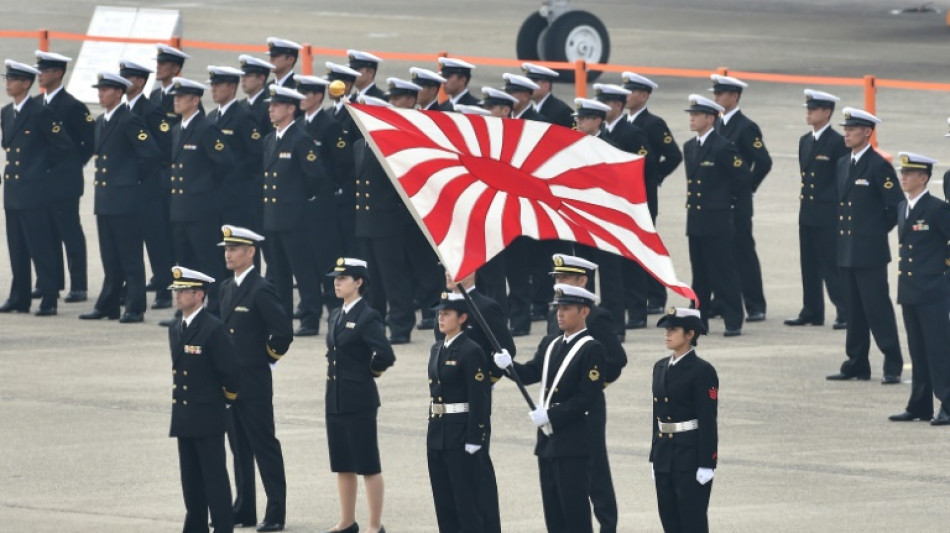
Counterstrikes and controversy: Japan's defence overhaul / Photo: Kazuhiro NOGI - AFP/File

 Man City chairman defiant over reported Premier League charges
 Germany ready to 'walk through fire' for Klopp, says Tah

 At least 16 killed in Russian and Ukrainian strikes

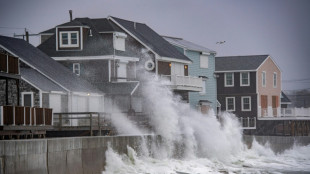 Powerful storm pummels US Northeast

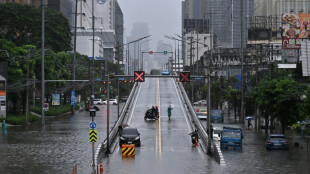
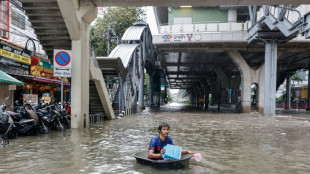 Bangkok declares disaster after homes flooded, roads submerged by heavy rain

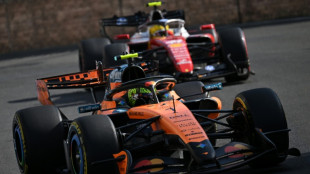 Norris calls for errant Colapinto to be banned for causing Baku crash

 Russell finds himself again and prepares to heap pressure on Antonelli

 South Korea hold nerve to win Asian Games basketball gold

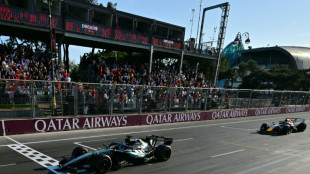 Russell holds off Verstappen to claim imperious victory in Baku

 Russell holds off Verstappen to win Azerbaijan Grand Prix
 India's Kohli says 2027 ODI World Cup will be his last

 Huge crowds cheer Pope Leo along Champs-Elysees ahead of Paris mass

 Putellas wants to bring 'winning culture and mentality' to London City

 Rare Italian opera returns to Moscow after nearly 120-year hiatus

 Pope to celebrate giant Paris mass after 'peace' appeal

 Homes flooded, roads submerged: Bangkok declares disaster over heavy rains
 Ahead of Paris mass, pope urges life together in 'dignity and peace'
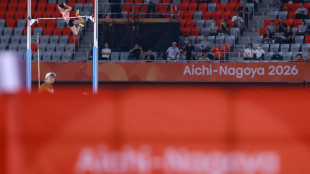
 Austria 'ghetto' language classes leave children to repeat school
 S.African women runners arm themselves after string of killings
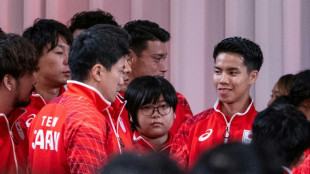 'I felt embarrassed': Japan eSports whizz-kid, 11, wins Games gold

 Indonesia fires threatens critically-endangered orangutan: IUCN

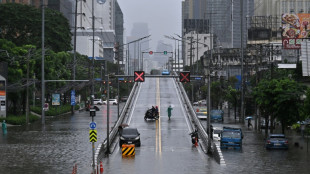 Bangkok declares flood disaster across city
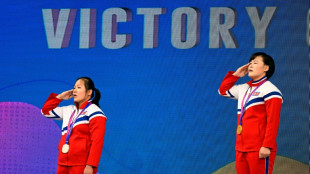 'World records not enough': North Korea weightlifters target Olympic gold rush

 Iran proposes Hormuz plan, Trump reportedly refuses
 El Nino rewrites the menu in the world's top restaurants
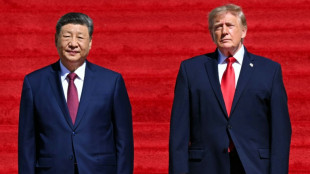
Japan has laid out plans to expand its defence capabilities drastically over five years.
The new security strategy marks a major shift, as Japan confronts China's growing military might.
- Why are the changes controversial? -
Japan's constitution, drafted by the United States after World War II, does not officially recognise the military, so moves to bolster its capacity are highly sensitive.
The constitution limits spending on the army, navy and air force to nominally defensive capabilities, and bans the "use of force as means of settling international disputes".
Although defence spending has risen every year for decades, the total has long hovered at around one percent of GDP, below the NATO standard of two percent.
That level "became symbolic of Japan's security policy that focuses exclusively on self-defence", Naoko Aoki of the Atlantic Council think tank told AFP.
Now Prime Minister Fumio Kishida has pledged to ramp up spending to two percent by 2027, although how to finance the rise is proving a political headache.
"Breaching this self-imposed cap does not mean that Japan is abandoning its policy," said Aoki.
"But it reflects the alarm and concern that the Japanese feel about their security environment."
- What is 'counterstrike capacity'? -
A pillar of the new strategy is to acquire "counterstrike capacity": weapons to destroy enemy missile launch sites during an attack.
The move is delicate "because it would exceed what Japan has traditionally considered necessary to defend itself", Aoki said, although polls show most Japanese are in favour.
The government has insisted for decades that carrying out counterstrikes under certain conditions would not violate the pacifist limits of the constitution.
Even so, questions remain about the efficacy of counterstrike missiles given the sophisticated capacities of China and other neighbours, said James Brady, vice president of Teneo consultancy.
"North Korea alone has recently been demonstrating multiple types of mobile launch platforms, including road, railway, and submarine," he warned.
"Even with counterstrike capacities, Japan's defence planners would face a whack-a-mole scenario."
- Why is Japan doing this now? -
Unease has grown in Japan over China's rapidly modernising military and North Korea's wave of missile tests.
Russia's invasion of Ukraine has also "reinforced Japanese concerns", Aoki said.
Japanese officials have regularly protested Chinese maritime incursions, and raised concerns about joint aerial exercises by Chinese and Russian planes.
Under President Xi Jinping, China has also become more bellicose toward Taiwan, which it considers a part of its territory to be taken by force one day if necessary.
So "a key question going forward will be the extent to which Japanese and US forces can better integrate planning to respond jointly to something like a Taiwan contingency," Brady said.
- How will the changes be received? -
Plans to bolster Japan's missile arsenal have faced some hesitancy from the ruling party's coalition partner Komeito, which takes a traditionally pacifistic stance.
"Similarly, neighbouring capitals have traditionally opposed the idea of Tokyo re-arming, worried that it might prelude a return to the military expansionism of the pre-1945 era," Brady said.
Japan's ties with China have already deteriorated in recent years, and Beijing has said it is "firmly opposed" to the overhaul.
Russia too will likely see the moves as a further nail in the coffin for ties.
Tokyo's key ally Washington, however, is expected to welcome the shift and play a key role in bolstering Japan's defences.
Surveys also show Japan's public is broadly supportive of efforts to boost defences, including through the counterstrike capacity, though there is opposition to new taxes to finance spending.
X.Matos--PC