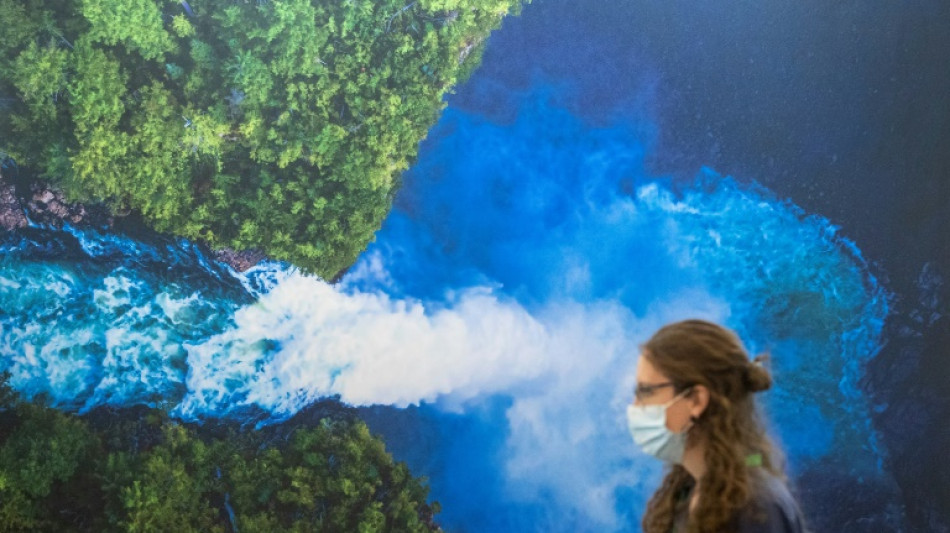
Countries agree historic deal to protect nature / Photo: Lars Hagberg - AFP

 USA trims International lead after Presidents Cup four-balls

 Russia accuses Europe of blocking Ukraine talks, as strikes drag on

 'He said hello': Families pray with pope on Paris avenue
 Pope celebrates giant Paris mass, flies to Lourdes

 Thousands march in Madrid over eviction of 87-year-old woman
 England women back to winning ways with last-gasp defeat of New Zealand

 Trump rejects Iran proposal for deal to reopen Hormuz

 England's Cox says injured Buttler leaves 'big shoes to fill'
 Ruthless Perpignan upset sloppy Bordeaux-Begles
 Deadly abbey attack feeds anti-Ukrainian sentiment in Poland
 Antonelli says he drove 'safety-first' on his worst weekend of season

 Fernandez fights back to reach Singapore Open final

 Giant statue of Pope Leo XIV takes shape in Peru workshop

 Ukraine crush holders Italy to reach first BJK Cup final

 Pope celebrates giant Paris mass in landmark visit

 Germany selects Munich for Olympics host bid

 Sagnol sacked as Georgia boss after Nations League upset
 Man City could face 'drastic' sanctions after reported guilty verdict: ex-chairman

 Furious Fury says row between rival promoters could scupper Joshua bout

 'Invincible' 223cm teen basketball player stars as China win bronze

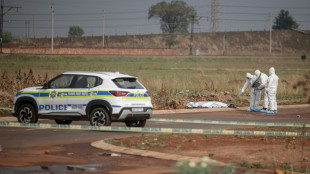 Tenth woman found dead in South Africa's string of killings
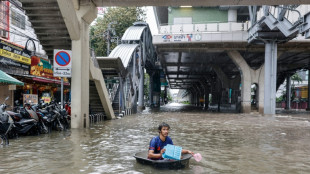
 Japan schoolboy, 11, wins gold while empty seats blight Asian Games
 Japan organisers 'not satisfied' as empty seats blight Asian Games
 Canals full, roads submerged as Bangkok declares flood disaster

 China, US to open AI 'communication channel' after summit

Countries approved a historic deal to reverse decades of environmental destruction threatening the world's species and ecosystems at a marathon UN biodiversity summit early Monday.
The chair of the COP15 nature summit, Chinese Environment Minister Huang Runqiu, declared the deal adopted at a late-night plenary session in Montreal and struck his gavel, sparking loud applause from assembled delegates.
In doing so he overruled an objection from the Democratic Republic of Congo, which had refused to back the text, demanding greater funding for developing countries as part of the accord.
After four years of fraught negotiations, more than 190 other states rallied behind the Chinese-brokered accord aimed at saving the lands, oceans and species from pollution, degradation and the climate crisis.
The deal pledges to secure 30 percent of the planet as a protected zone by 2030 and to stump up $30 billion in yearly conservation aid for the developing world.
Environmentalists have compared the accord to the landmark plan to limit global warming to 1.5C under the Paris agreement, though some earlier warned that it did not go far enough.
Brian O'Donnell of the Campaign for Nature called it "the largest land and ocean conservation commitment in history."
"The international community has come together for a landmark global biodiversity agreement that provides some hope that the crisis facing nature is starting to get the attention it deserves," he said.
"Moose, sea turtles, parrots, rhinos, rare ferns and ancient trees, butterflies, rays, and dolphins are among the million species that will see a significantly improved outlook for their survival and abundance if this agreement is implemented effectively."
Marco Lambertini, head of the Worldwide Fund for Nature, said ahead of the approval sessions: "It is the equivalent to 1.5C in climate and vital to catalyzing action toward a nature-positive world and holding everyone accountable.
"However, there still remain several loopholes, weak language, and timelines around actions that aren't commensurate with the scale of the nature crisis we're all witnessing, and importantly may not add up to achieve this shared global goal."
- Aid boost -
The text calls on wealthy countries to increase financial aid to the developing world to $20 billion annually by 2025, rising to $30 billion per year by 2030, while ensuring 30 percent of land and sea areas are effectively conserved and managed by the end of this decade.
It pledges to safeguard the rights of Indigenous people as stewards of their lands, a key demand of campaigners.
But it pulled punches in other areas -- for example, only encouraging businesses to report their biodiversity impacts rather than mandating them to do so.
The 23 targets in the accord also include cutting environmentally destructive farming subsidies, reducing the risk from pesticides and tackling invasive species.
- Funding dispute -
At times, the talks looked at risk of collapsing as countries squabbled over money.
The issue of how much money the rich countries will send to the developing world, home to most of the planet's biodiversity, was the biggest sticking point.
Developing countries, spearheaded by Brazil, had been seeking the creation of a new fund to signal the Global North's commitment to the cause. But the draft text instead suggested a compromise: creating a fund within an existing mechanism, called the Global Environment Facility (GEF).
Brazilian delegate Braulio Dias, speaking on behalf of the incoming government of Luiz Inacio Lula da Silva, had called for "better resource mobilization" -- technical speak for more aid to developing countries, a concern echoed by the Democratic Republic of Congo.
Current financial flows for nature to the developing world are estimated at around $10 billion per year.
Beyond the moral implications, there is the question of self-interest: $44 trillion of economic value generation -- more than half the world's total GDP -- depends on nature and its services.
The United States is not a signatory to the biodiversity convention due to resistance from Republican senators. US President Joe Biden supports the deal and launched his own "30 by 30" plan domestically, while the United States pays into the GEF to assist developing countries.
China chaired the conference but it was held in Canada because of China's strict Covid rules.
P.Queiroz--PC