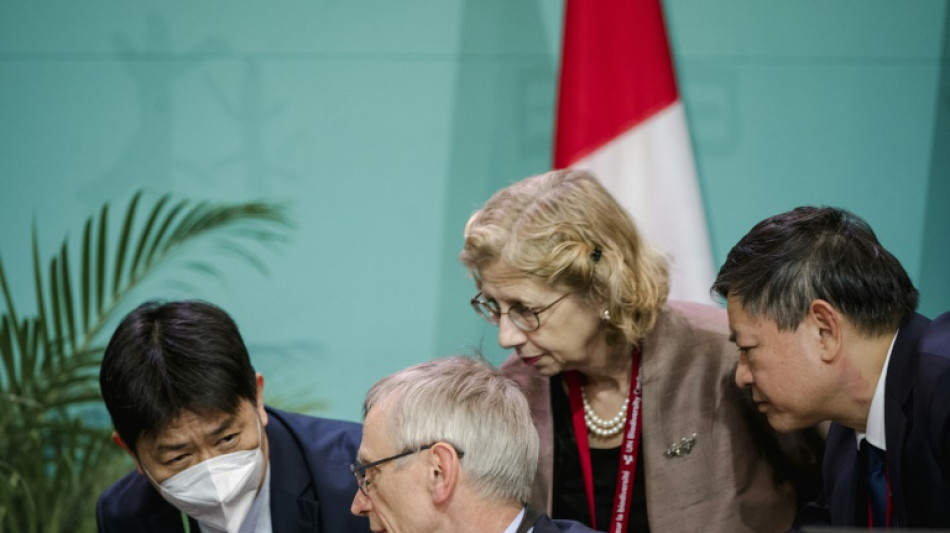
How Chinese diplomacy helped seal historic nature deal / Photo: ANDREJ IVANOV - AFP

 USA trims International lead after Presidents Cup four-balls

 Russia accuses Europe of blocking Ukraine talks, as strikes drag on

 'He said hello': Families pray with pope on Paris avenue
 Pope celebrates giant Paris mass, flies to Lourdes

 Thousands march in Madrid over eviction of 87-year-old woman
 England women back to winning ways with last-gasp defeat of New Zealand

 Trump rejects Iran proposal for deal to reopen Hormuz

 England's Cox says injured Buttler leaves 'big shoes to fill'

 Ruthless Perpignan upset sloppy Bordeaux-Begles
 Deadly abbey attack feeds anti-Ukrainian sentiment in Poland
 Antonelli says he drove 'safety-first' on his worst weekend of season

 Fernandez fights back to reach Singapore Open final

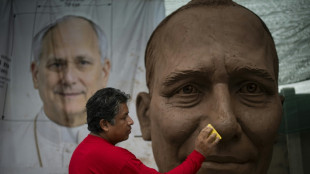 Giant statue of Pope Leo XIV takes shape in Peru workshop

 Ukraine crush holders Italy to reach first BJK Cup final

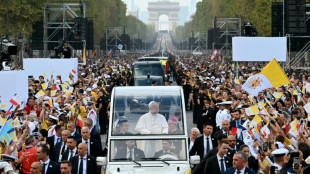 Pope celebrates giant Paris mass in landmark visit

 Germany selects Munich for Olympics host bid

 Sagnol sacked as Georgia boss after Nations League upset

 Man City could face 'drastic' sanctions after reported guilty verdict: ex-chairman

 Furious Fury says row between rival promoters could scupper Joshua bout

 'Invincible' 223cm teen basketball player stars as China win bronze

 Tenth woman found dead in South Africa's string of killings
 Japan schoolboy, 11, wins gold while empty seats blight Asian Games
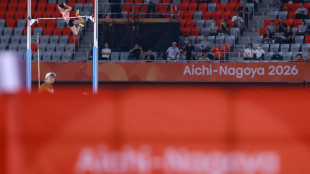 Japan organisers 'not satisfied' as empty seats blight Asian Games

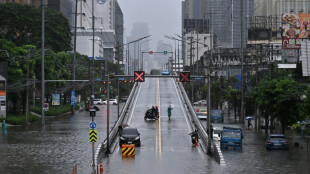 Canals full, roads submerged as Bangkok declares flood disaster
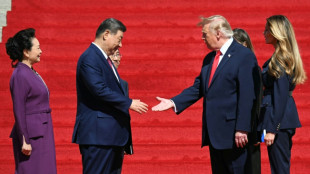 China, US to open AI 'communication channel' after summit
Expectations heading into a UN biodiversity conference in Montreal were about as low as they could be.
But a broad recognition that it was now or never for nature -- and a flurry of late diplomacy by China -- helped seal a "historic" deal on a night of high drama.
Dubbed the "ugly duckling" of global policy, the COP15 negotiations were snubbed by world leaders who had just attended a far higher-profile climate summit in Egypt.
Beijing, which held the presidency of the talks, at first appeared to have a hands-off approach, and the defining issue -- whether the rich world would pledge enough money so their developing counterparts could protect vanishing species and habitats -- seemed too great to surmount.
"For months, there was the question: Where is China?" a high-level source close to the matter told AFP.
What's more, relations between China and Canada, which had to step in to host the event because of China's strict Covid rules, have deteriorated in recent years.
Canada's 2018 arrest of Chinese telecommunications executive Meng Wanzhou at the request of the United States was followed quickly by China arresting two Canadians.
Just last month, Chinese leader Xi Jinping was caught on camera scolding Canada's Justin Trudeau over a sleight.
What's more, "it's strange to have a Chinese presidency on North American soil," said the high-level source -- and early signs did nothing to dispel assumptions that China in charge would mean a weakening of ambition.
In the first week, China let Canada run the show shepherding talks on the key issues, from finance to the cornerstone target of protecting 30 percent of land and oceans by 2030.
But as the clock ticked down, it was China that took charge of the text, in an approach described as "gentle" diplomacy: having subject experts and political representatives work in a calm, even environment, according to another diplomatic source.
"China closed out the deal and cornered the developing countries with the $30 billion financing pledge by 2030," said a third source, a European negotiator.
When countries of the Global North sought more ambitious targets from the South, China responded by telling them they'd need to up their financing. And Beijing acted as a neutral arbiter, not aligning itself with the Group of 77 as it normally does.
"They've taken the risk of putting their own reputation on the line for something many thought they weren't the natural leaders of," said Lee White, a British-Gabonese conservationist and minister of water, forests and environment of Gabon.
Nor is China a natural champion of environmental issues, having badly polluted its air and waters and degraded much of its land through agricultural production -- a process it is trying to reverse through a greenification campaign.
"Countries that destroy their biodiversity end up regretting it -- I think the Chinese probably got to that point and are now trying to put things right," said White.
- High drama -
The passage of China's compromise text wasn't smooth sailing.
A plenary session to ratify the text was postponed Sunday several times to accommodate last minute holdouts, though delegates were eventually asked to take their seats by around 9:00 pm, and wait. And wait, and wait, and wait.
Some left the main hall to take naps, with several Western delegates expressing irritation that the session was not being adjourned until the next day.
It was around 3:00 am that the session finally began. A new text had been uploaded, and participants were once more buzzing at the prospect of a "peace pact for nature." When delegates gathered in the vast plenary hall, drama struck.
A delegate from Democratic Republic of Congo refused to back the accord, demanding more funds.
The conference chair, China's environment minister Huang Runqui, brushed this off, declaring the deal "approved" and whacking down his gavel to loud applause. DRC's ally Uganda branded it a "fraud" and a "coup," but the accord passed.
An exultant Steven Guilbeault, Canada's environment minister, downplayed the drama -- insisting the process was upheld by the United Nations and disagreements on this scale were commonplace at such summits which he had been attending for 25 years.
"I've never seen a presidency text tabled and have so much support for it from the get-go," with the vast majority of countries signing up right away, he enthused.
On cooperation with China, he told AFP: "We both decided to set aside our differences... to focus on what unites us," adding: "What China and Canada have accomplished together in our relationship is symbolic of what we've accomplished here together, more than 196 countries."
While China took center stage, the United States participated only in a supporting role.
President Joe Biden supports the pact's goals and announced his own "30x30" plan domestically -- but political opposition by Republicans prevents the US from signing on to the convention on biological diversity.
L.Henrique--PC