Israel military integrates soldiers with autism / Photo: JACK GUEZ - AFP

 Alex Bodi and Prof. Dr Dieter Lazik sign a contract for ALPHA WHEY and BODI Energy Drink

 Swiss reject plan to toughen neutrality: projection
 UK police call in bomb disposal team near air force base

 Bangkok floods send thousands into shelters after days of rain

 Assefa just misses women's world record at Berlin Marathon
 Dramatic winners Zimbabwe to end five-year exile by tackling DR Congo
 Pope to meet victims of clerical sex abuse on France trip
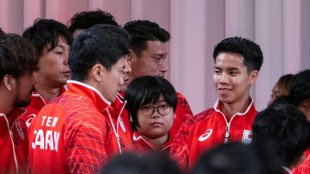 How young is too young as child prodigies win big at Asian Games

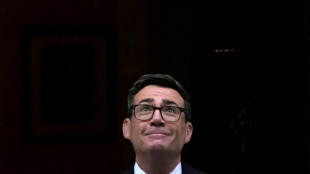 UK Labour party meets buoyed by Burnham but eager for concrete plans
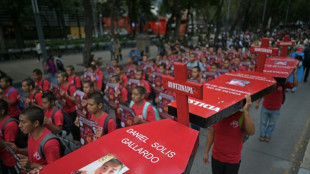 Thousands protest ahead of Mexican president's report on missing students
 Bangkok floods force thousands into shelters
 AI startup urges optimism from Europe despite safety fears

 'Godlike, invincible': Japan hails 11-year-old Games history-maker

 Nepal's hydropower ambitions face climate reality check

 Power cuts, rubble: millions come home to find Sudan's capital unlivable

 Internationals keep Presidents Cup lead with late fightbacks
 Tuchel to 'keep pushing' England to reach Spain's level
 Alcaraz saves match points to keep Europe ahead in Laver Cup
 Spain success driven by hunger to improve, says De La Fuente
 Lyon collapse at Stade Francais to suffer first Top 14 loss
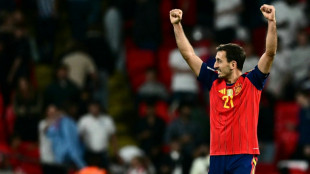 Oyarzabal and Spain sink England again as Modric shines for Croatia
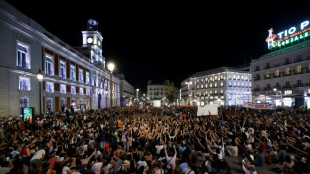 Housing protesters camp in central Madrid after mass demonstration

 Louise Trotter expands her palette at Bottega Veneta
 Pope prays at Lourdes after huge Paris mass
 USA trims International lead after Presidents Cup four-balls
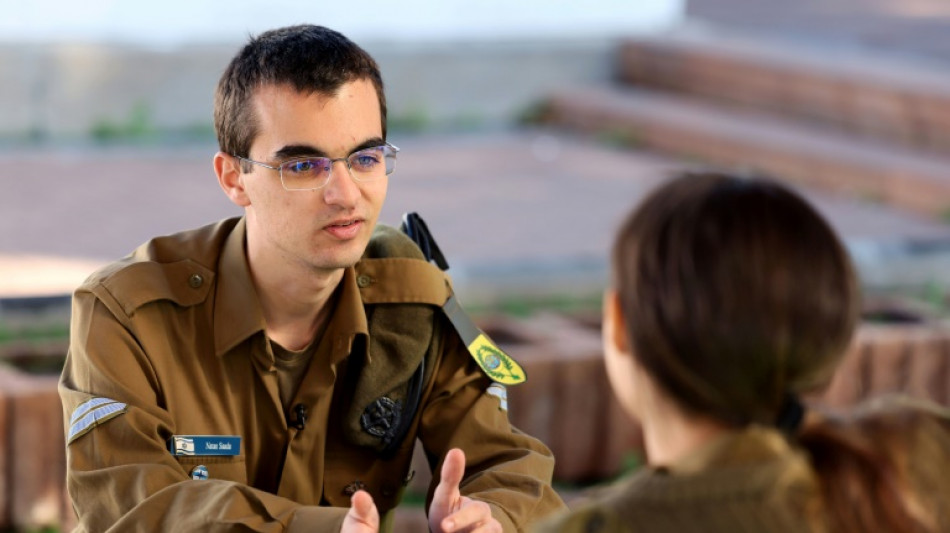
Israeli soldier Nathan Saada is busy at his computer on an army base in Tel Aviv, where he is part of a specialised programme designed for military personnel with autism.
Around 200 people with high-functioning autism have joined the ranks since the scheme -- Titkadmu (Move Forwards) -- was launched in July 2021.
"I wanted to enlist because, in Israel, military service is important. It's something that each young person must do, and I also wanted to have this experience," said Saada, wearing a Titkadmu badge proudly on his khaki uniform.
The 20-year-old has an administrative role and, sitting at his desk, is putting the finishing touches to a chart.
"I have responsibilities; they count on me," said Saada, from the northern city of Haifa.
Military service is obligatory for most over-18s in Israel, with men serving for 32 months and women for two years.
There are automatic exemptions for around a third of citizens: ultra-Orthodox Jews who make up around 13 percent of the population, and Arab-Israelis who account for about 20 percent.
For those who are enlisted, military service is a rite of passage.
The army plays a central role in society in Israel, which has fought wars with all of its neighbours since the state's creation in 1948.
People with autism are exempt from military service, although since 2008 they have been welcomed for short courses.
For years, few signed up, said Brigadier-General Amir Vadmani, from the military's human resources department.
That changed with the establishment of Titkadmu, the brainchild of an officer with autism.
Aside from combat units, said Vadmani, "you'll find them in all the departments. In the air force, the navy, the ground forces, in the intelligence unit, everywhere".
"Soldiers with autism have huge potential" and are a real asset to the military, he added. "These young people want to prove that they can succeed, that they are like everyone else."
- 'Helps me a lot' -
Vadmani said it is particularly important to integrate people with autism in the military because the numbers of those diagnosed are rising.
According to the Israeli Society for Children and Adults with Autism (ALUT), diagnoses are increasing by an average of 13 percent annually.
This is partly due to a broadening of criteria, according to ALUT spokeswoman Lital Porat.
One in every 78 children will be diagnosed with autism in Israel, the group says. This compares with one in 100 children globally, according to a World Health Organization estimate.
People with autism can benefit from joining the military because it provides "a framework which prepares them to lead a life as independent as possible", said Porat.
As part of the Titkadmu programme, the military has adapted its training methods and put in place a support network.
Once a week, Saada is visited on his base by a fellow soldier, Liri Shahar, who has been tasked with following up with what the army terms its "special" groups.
"We tell each other how the week went, if anything particular happened," said Shahar, 19, who serves as an intermediary between Saada and his commander. "We talk about everything."
Diagnosed at age four, Saada said he sometimes struggles with social interactions and communication.
"It helps me a lot to have a person who I can turn to, who can advise me and help me," he said.
Although the Titkadmu programme is in its infancy, Vadmani said it has long-term goals for the recruits.
"The idea is to help them integrate into the labour market, by capitalising on the skills they have acquired during their service," he said.
Saada already has clear ambitions for his life outside the base when he is discharged next year.
"I'd love to become a filmmaker," he said, smiling. "I've already written several screenplays."
P.Queiroz--PC