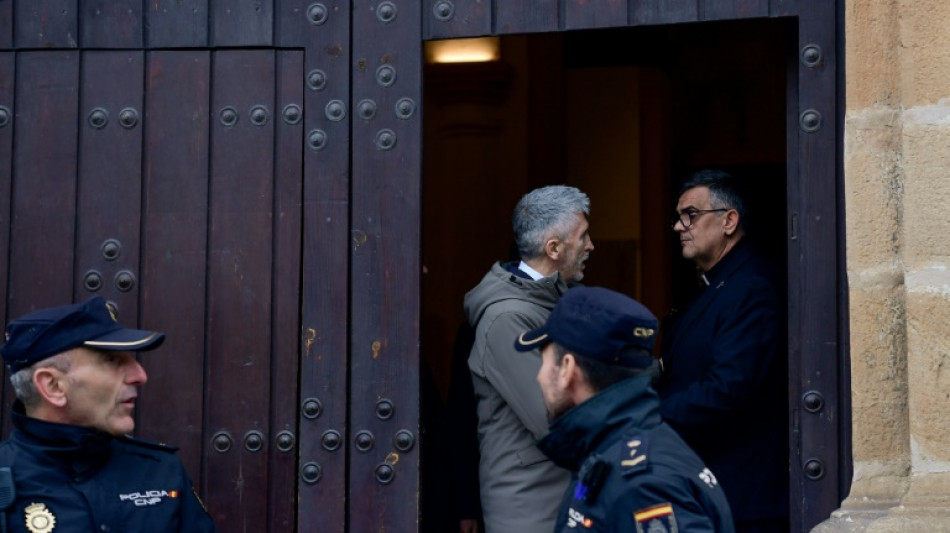
In Spain, jihadist attacks a dormant but real threat / Photo: CRISTINA QUICLER - AFP

 Alex Bodi and Prof. Dr Dieter Lazik sign a contract for ALPHA WHEY and BODI Energy Drink

 Swiss reject plan to toughen neutrality: projection

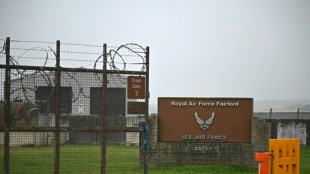 UK police call in bomb disposal team near air force base

 Bangkok floods send thousands into shelters after days of rain

 Assefa just misses women's world record at Berlin Marathon

 Dramatic winners Zimbabwe to end five-year exile by tackling DR Congo

 Pope to meet victims of clerical sex abuse on France trip

 How young is too young as child prodigies win big at Asian Games

 UK Labour party meets buoyed by Burnham but eager for concrete plans

 Thousands protest ahead of Mexican president's report on missing students

 Bangkok floods force thousands into shelters

 AI startup urges optimism from Europe despite safety fears

 'Godlike, invincible': Japan hails 11-year-old Games history-maker

 Nepal's hydropower ambitions face climate reality check

 Power cuts, rubble: millions come home to find Sudan's capital unlivable

 Internationals keep Presidents Cup lead with late fightbacks

 Tuchel to 'keep pushing' England to reach Spain's level

 Alcaraz saves match points to keep Europe ahead in Laver Cup
 Spain success driven by hunger to improve, says De La Fuente

 Lyon collapse at Stade Francais to suffer first Top 14 loss
 Oyarzabal and Spain sink England again as Modric shines for Croatia

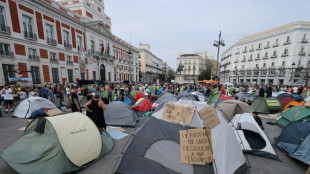
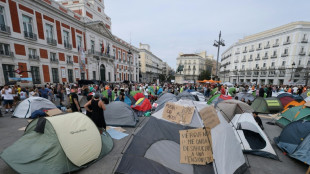
 Housing protesters camp in central Madrid after mass demonstration

 Louise Trotter expands her palette at Bottega Veneta

 Pope prays at Lourdes after huge Paris mass

 USA trims International lead after Presidents Cup four-balls

The deadly church attack in Algeciras has rekindled Spanish concerns about the jihadist threat, which experts say is still present although the country has been relatively spared from attacks in recent years.
On Wednesday evening, a machete-wielding attacker entered two churches in the southern port city, killing a verger and badly wounding a priest.
Officials have identified the suspect as a 25-year-old Moroccan man saying there appeared to be no third party involved.
"These are one-off actions, there is not going to be a campaign of attacks like there was years ago," Carlos Igualada, head of the International Observatory on Terrorism Studies (OIET) told AFP.
"Since the end of 2017, the number of terrorist acts in Europe has dropped considerably and the attacks that are taking place cause fewer deaths, with bladed weapons in which only one terrorist takes part."
Which is a far cry from the atrocities committed "in Paris, Nice, Berlin, or Brussels, where the dead were counted by the dozen," he said.
Although the government has not yet confirmed the attack was of a jihadist nature, the Audiencia Nacional, Spain's top criminal court, has opened a terror investigation.
"All the elements that characterise and define jihadist methodology are present," Chema Gil, professor at the ISEN University Centre in Cartagena told public radio.
Whether or not he was acting as a "lone wolf will have to be determined by investigators", said Gil, who is also co-director of the International Security Observatory.
- Five quiet years -
The bloodshed sent shock waves through Spain, where the memory of such attacks has largely faded as the country has been largely spared over the past five years, unlike its European neighbours.
"It is true that in Spain we have not had the frequency of individual attacks as they've had in France, Germany or the United Kingdom," said Manuel Ricardo Torres, professor of political science at the Olavide University in Seville.
The last attack in Spain was in August 2017 when a group of young radicalised Moroccans and Spaniards of Moroccan origin mowed down pedestrians in Barcelona and a nearby seaside town, killing 16 and wounding 140.
For Spain's interior ministry, which updated its anti-terror strategy last year to take better account of "lone actors" and "self-radicalised cells", the threat remains.
Last year, ministry figures show the security forces carried out 27 anti-terror operations targeting jihadist cells, arresting 46 people across Spain which since 2015 has been on alert level four, out of a maximum of five.
Since the Madrid train bombings of March 2004 which killed 191 people and injured around 2,000, the authorities have arrested nearly 1,000 suspected jihadists.
- Radicalised lone wolves -
Like its neighbours, Spain is now facing the threat of "individuals who become radicalised online and can become extreme enough to commit attacks within several weeks -- a risk which is quite high," said OIET's Igualada.
Although such attacks are "less lethal" and have a smaller impact than large-scale assaults, they are "more difficult to prevent" and involve major efforts by the security forces, said Torres.
The normalisation of ties with Morocco in March 2022 after a nearly year-long standoff over Spain's position on Western Sahara has also played a role.
"Anti-terror cooperation with Morocco is currently very good," said Torres.
"This has allowed Spain to carry out many anti-terror operations on the basis of information provided by Morocco," he added.
During the last major joint operation in October, police made 11 arrests in Spain while Morocco detained two on grounds of participating in a terror organisation, the interior ministry said.
R.J.Fidalgo--PC