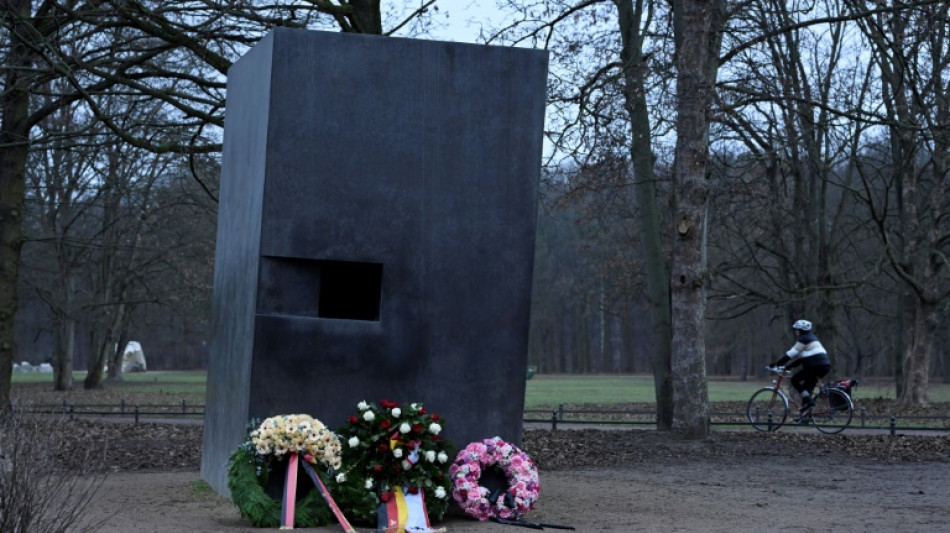
In a first, German parliament spotlights Nazis' LGBTQ victims / Photo: Tobias SCHWARZ - AFP

 Alex Bodi and Prof. Dr Dieter Lazik sign a contract for ALPHA WHEY and BODI Energy Drink

 Swiss reject plan to toughen neutrality: projection
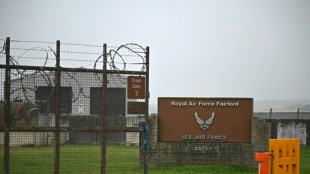 UK police call in bomb disposal team near air force base
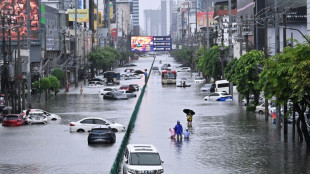 Bangkok floods send thousands into shelters after days of rain

 Assefa just misses women's world record at Berlin Marathon
 Dramatic winners Zimbabwe to end five-year exile by tackling DR Congo
 Pope to meet victims of clerical sex abuse on France trip
 How young is too young as child prodigies win big at Asian Games
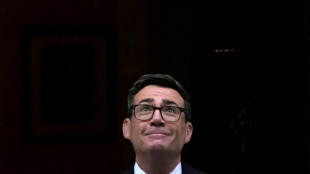 UK Labour party meets buoyed by Burnham but eager for concrete plans
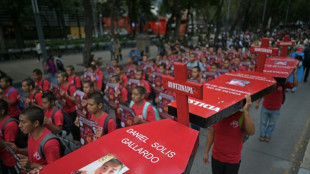 Thousands protest ahead of Mexican president's report on missing students
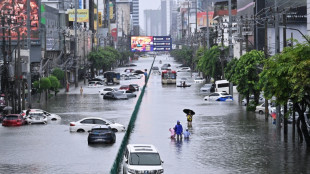 Bangkok floods force thousands into shelters
 AI startup urges optimism from Europe despite safety fears

 'Godlike, invincible': Japan hails 11-year-old Games history-maker

 Nepal's hydropower ambitions face climate reality check

 Power cuts, rubble: millions come home to find Sudan's capital unlivable

 Internationals keep Presidents Cup lead with late fightbacks

 Tuchel to 'keep pushing' England to reach Spain's level
 Alcaraz saves match points to keep Europe ahead in Laver Cup
 Spain success driven by hunger to improve, says De La Fuente

 Lyon collapse at Stade Francais to suffer first Top 14 loss
 Oyarzabal and Spain sink England again as Modric shines for Croatia
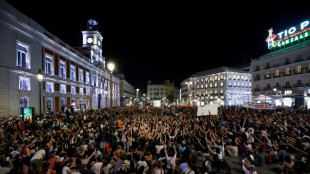
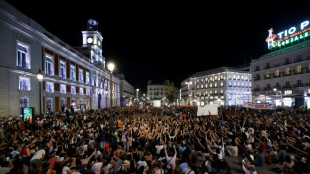 Housing protesters camp in central Madrid after mass demonstration

 Louise Trotter expands her palette at Bottega Veneta
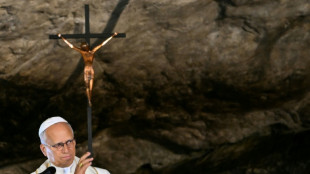 Pope prays at Lourdes after huge Paris mass

 USA trims International lead after Presidents Cup four-balls

The German parliament will for the first time on Friday focus its annual Holocaust memorial commemorations on people persecuted and killed for their sexual or gender identity.
Campaigners worked for two decades to establish an official ceremony for LGBTQ victims of the Nazis, saying their experience had long been forgotten or marginalised.
"This group is important to me because it still suffers from discrimination and hostility," Baerbel Bas, president of the Bundestag lower house, told AFP.
Germany has officially marked International Holocaust Remembrance Day -- the anniversary of Auschwitz's liberation -- since 1996 with a solemn ceremony at the Bundestag and commemorations across the country.
The event traditionally focuses on the Holocaust's six million Jewish victims, although, at the first ceremony, then president Roman Herzog did also pay tribute to gay men and lesbians murdered under Adolf Hitler.
Henny Engels of the German Lesbian and Gay Association rights group called Friday's commemoration an "important symbol of recognition" of "the suffering and the dignity of the imprisoned, tortured and murdered victims".
- Pink triangle -
Section 175 of Germany's penal code outlawed sex between men.
Although it dated from 1871, it was rarely enforced and cities such as Berlin during the Weimar Republic had a thriving LGBTQ scene until the Nazis came to power.
In 1935 the Nazis toughened the law to carry a sentence of 10 years of forced labour.
Some 57,000 men were imprisoned, while between 6,000 and 10,000 were sent to concentration camps and given uniforms emblazoned with a pink triangle designating their sexuality.
Historians say between 3,000 and 10,000 gay men died and many were castrated or subjected to horrific "medical" experiments.
Thousands of lesbians, transgender people and sex workers were branded "degenerates" and also imprisoned at the camps under brutal conditions.
Dani Dayan, chairman of Israel's Yad Vashem Holocaust memorial, said that while Jews were the Nazis' primary target, he welcomed the broadening of Germany's remembrance culture.
"The Holocaust was an onslaught against humanity: LGBTQ individuals, Roma and Sinti, mentally disabled persons, but especially against the Jewish people," he told AFP on a visit to Berlin this week.
"We respect and we honour all the victims."
The head of Germany's Central Council of Jews, Josef Schuster, agreed that while the main group of Holocaust victims were Jews, "they weren't the only ones".
"It shows that the developments seen in the Nazi period can lead to any societal group being targeted," he told AFP.
- 'Very late date' -
Bas will open the ceremony at the glass-domed Reichstag building, followed by a speech from Dutch Jewish survivor Rozette Kats.
Kats, 80, lived out the Holocaust as a toddler in hiding in Amsterdam with adoptive parents while her own mother and father were killed at Auschwitz.
Actors will read texts about two LGBTQ victims who "exemplify" the fate of queer people under Hitler, Bas said.
Klaus Schirdewahn, who was convicted in 1964 over a sexual relationship with another man under a Nazi-era law still on the books, will also tell his story to the chamber.
Bas regretted that there were no LGBTQ survivors of the Nazi period left to address parliament, and noted that gay men, lesbians and transgender people still faced state persecution even decades after the war.
"We will draw attention at the ceremony to the so-called 'gay laws' which were only lifted at a very late date," she said.
"By the time there were reparations, many (victims) were no longer alive."
In 2017, parliament voted to quash the convictions of 50,000 gay men sentenced for homosexuality under Section 175, which remained in force after the war, and offered compensation to victims.
In 2002, a new law overturned their convictions but did not include post-war prosecutions.
Section 175 was finally dropped from the penal code in East Germany in 1968.
In West Germany, it reverted to the pre-Nazi era version in 1969 and was only fully repealed in 1994.
N.Esteves--PC