US restricts import of Afghan cultural items to prevent 'pillage'

 Meta meets its own 'tobacco' moment in court

 Art or medicine? Japan's cosmetic tattoo artists in limbo
 Rybakina ousts Osaka to book Toronto semi-final against Gauff
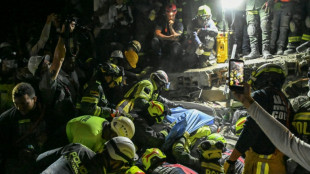 Colombia rescuers find woman alive as quake death toll passes 240
 Charges dropped against Bondi Beach attack hero
 Parched and desperate for rain, Kazakhstan turns to cloud-seeding
 The perfect storm that turbocharged Venezuela's twin quakes
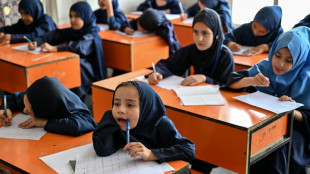 2.4 million girls banned from Afghan schools since Taliban return: UNESCO
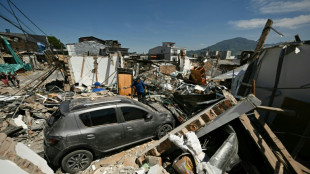 Colombians dig through rubble as quake death toll surpasses 240

 New Zealand's ruling party meets to decide PM Luxon's fate
 Total solar eclipse to spellbind Europe

 Jodar, Nakashima to make Masters semis debuts in Montreal
 Chilean veteran Sanchez signs with MLS club Montreal

 Cristiano Ronaldo marries long-term partner Georgina Rodriguez

 Oil prices higher, stocks mixed ahead of inflation report
 Jacobs into 100m final with eye on third title
 Eight-try New Zealand cruise to tour victory over Sharks
 Trump's secret plane swap triggers questions and confusion
 California calls Paramount's threat to leave state 'blackmail'

 PSG 'want to win everything', says Luis Enrique
 Barred from elections, Russia's anti-war party vows to fight on
 Jaissle states Newcastle ambition but urges patience
 NBA star Cooper Flagg trading card a slam dunk for lucky buyer
 ForumPay Expands Payment Infrastructure with New Card and Bank Transfer Acceptance Solution
 Oil prices higher, stocks flat ahead of inflation report

The United States has restricted the import of cultural and historical items from Afghanistan, hoping to prevent "terrorists" from profiting, the State Department said Tuesday, but experts voiced fears about the unintended consequences.
The decree, which was implemented on an "emergency" basis and took effect on Friday, includes restrictions on bringing ceramics, paintings, glass, ivory, ancient textiles, tiles and wood pieces, among others into the country, according to a government list.
The restrictions "are intended to prevent illicitly trafficked materials from entering the US art market, thus reducing the incentive for pillage of Afghanistan's cultural heritage and combatting profit from the sale of these cultural objects by terrorists and criminal organizations," the State Department said.
But they come after an April 2021 request from the US-backed Afghan government -- which fell to the Taliban in August.
"Can the State Department act based on a 'request' of a government that no longer exists?" ancient coin collector and advocate Peter Tompa asked in a post on his blog the Cultural Property Observer.
"The real question is how these restrictions are going to be enforced and if any material that may be seized will be repatriated to the Taliban once diplomatic relations (with the United States) are restored," he wrote.
- Taliban 'investigating' looting -
Restricted archaeological material dates from the year 50,000 BC through 1747, and restricted cultural material includes items from the ninth century through 1920, the government said.
The new regulations could create logistics issues for collectors or curators who already have items on their way to the United States as auction houses prepare to sell pieces during Asia Week New York next month, art publication The Art Newspaper pointed out.
For Tompa, one upside to the import rules, which are set to remain in force until April 2026 and could be extended, is that they do not seem to include bans on modern textiles.
"If it did, such import restrictions would potentially devastate the livelihoods of Afghan women who make a living weaving textiles for export," he wrote.
Last year, UNESCO called on the Taliban to help preserve Afghanistan's cultural heritage.
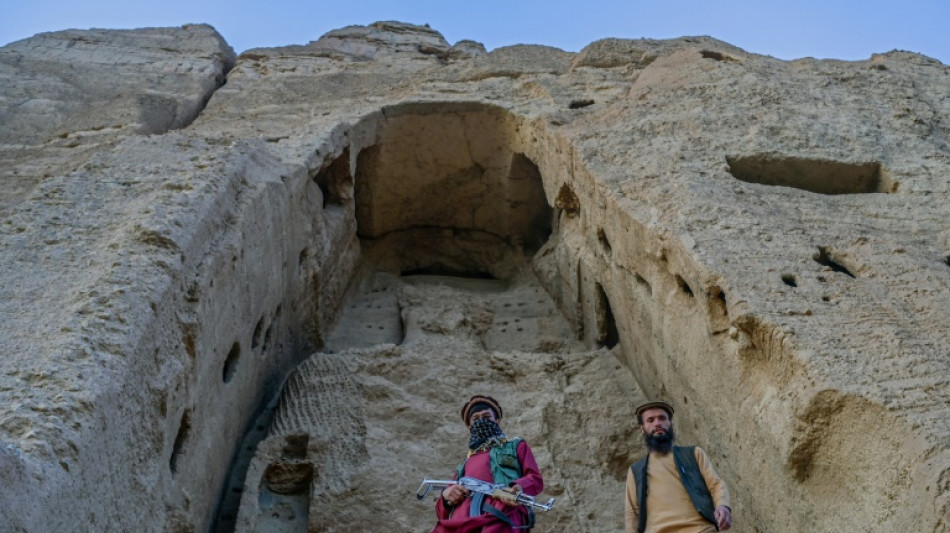
Shortly before their first stint in power came to an end in 2001, the Taliban destroyed two giant centuries-old Buddha statues carved out of a cliff face in Bamiyan, sparking global outrage.
And local officials and former UNESCO employees formerly based in Afghanistan told AFP that around a thousand priceless artifacts once stored in warehouses near the statutes were stolen or destroyed following the 2021 Taliban takeover.
"I confirm that looting did take place, but it was before our arrival," local Taliban member Saifurrahman Mohammadi told AFP in October, blaming the thefts on the vacuum left by the old authorities after they fled.
"We are investigating and we are trying to get them back," he added.
The group has promised a softer version of rule this time around, and Taliban fighters now guard what remains of the Buddhist statues.
F.Moura--PC