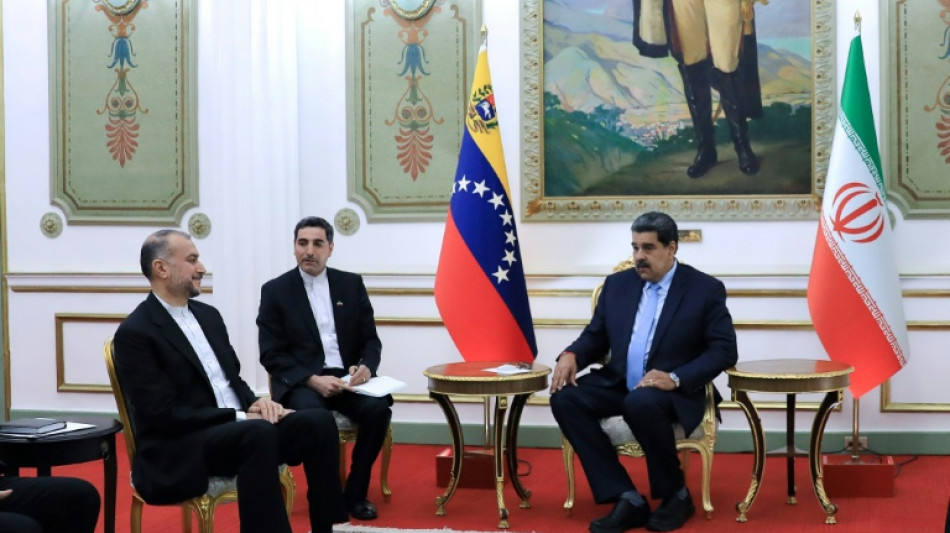
Maduro, Iranian diplomat discuss defense against 'external pressures' / Photo: JHONN ZERPA - Miraflores press office/AFP/File

 Eisai's Dayvigo Shows Year-Long Efficacy Without Tolerance Ahead of Korean Launch

 Ozlo Sleepbuds Drop $40 Ahead of Black Friday for Noise-Masking Sleep Aid

 Global Scams Remain Widespread: Nearly Two in Three Adults Worldwide Report Scam Encounters, 9% Lost Money
 Karbon-X (OTCQB:KARX) Enters California's Multi-Billion-Dollar Compliance Carbon Market Following CITSS Approval
Venezuelan President Nicolas Maduro and the visiting Iranian foreign minister discussed the need for "vigilance in defending their national interests against external pressures," according to a statement released Saturday.
The Caracas visit Friday by Foreign Minister Ossein Amir-Abdollahian underlined the strength of an alliance between two countries seen as outcasts by much of the international community, both of them subject to US sanctions.
Maduro received Abdollahian on Friday evening in the Miraflores presidential palace after the Iranian minister arrived from Managua, Nicaragua.
"I am sure that our relations will continue to strengthen for technological, industrial, scientific and cultural exchanges that benefit both peoples," Maduro wrote on Twitter, calling the meeting "productive."
On a visit to Tehran last June, Maduro signed a 20-year pact which he said opened "major fronts" for cooperation in the petroleum, petrochemical and defense sectors.
On Friday, the two parties "emphasized the strengthening and monitoring of projects and accelerating their implementation, as well as vigilance in defending their national interests against external pressures," a statement from the Iranian Foreign Ministry said.
"The parties also welcomed the increase in relations and exchange of views between the officials of the two countries," it said.
Both Venezuela and Iran are oil producers and members of the OPEC cartel, placing them in the middle of international discussions on the energy crisis sparked by Russia's invasion of Ukraine.
The United States has since eased its embargo on Venezuelan crude oil, while France has called for a diversification of energy sources, including from Caracas.
The growing Venezuelan-Iranian relationship has led to exchanges of medical equipment, vehicles, tractors and more.
And the Maduro government has offered five million hectares (12.4 million acres) for agricultural investment by countries including Iran.
V.Fontes--PC