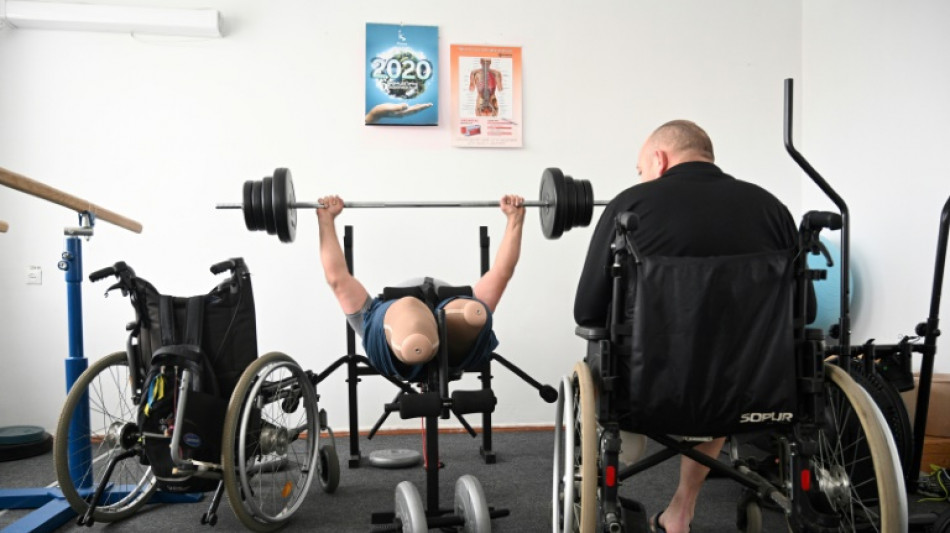
The long road to recovery for wounded Ukrainian soldiers / Photo: Yuriy Dyachyshyn - AFP

 Oil prices spike after Trump rejects Iran truce offer
 Taylor Swift sets new record at MTV VMAs
 Seoul seeks apology after Ukraine reveals transfer of North Korean POWs
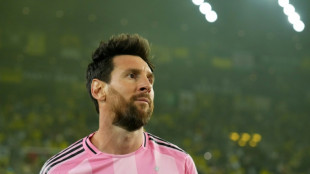 Messi on target again but Miami downed by Columbus
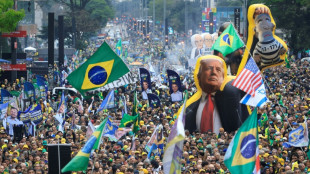
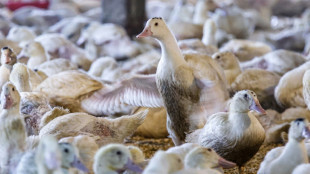 In Washington's political cauldron, a fight over foie gras
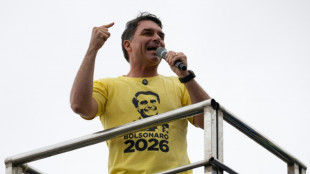 Flavio Bolsonaro: political heir in his father's shadow
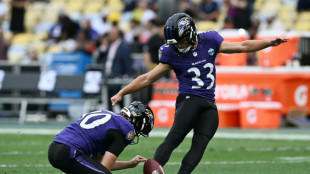 Ravens grab last-second win in Rio as Commanders stop Seahawks
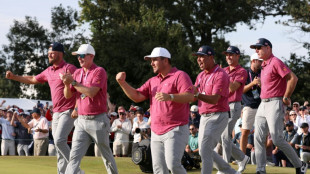 USA rallies to capture 11th consecutive Presidents Cup
 Phillies clinch, Astros wrap up division on final day of MLB season
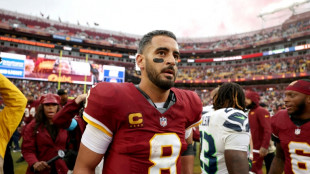 Commanders hand champion Seahawks their first loss
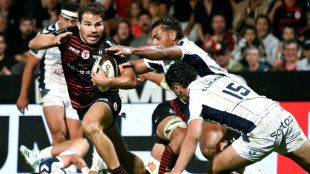
 Dupont scores twice to send Toulouse top of Top 14
 Ireland beat Israel but no handshakes due to war in Gaza
 Tense standoff over flashpoint N.Ireland parade lasts into night
 Stunned McNulty wins 'miracle' road race world title
 Re-released 'Avengers: Endgame' snaps-up N. America box office lead
 American McNulty wins shock road race world title
 Serbia's President Aleksandar Vucic announces resignation
 Tuchel urges Bellingham to play with 'rage'
 Russian strikes on Ukraine kill 8
 Bavuma, Miller hit centuries as South Africa clinch series
 Spain bring in Le Normand for injured Garcia
 UK Labour party meets buoyed by Burnham but seeking concrete plans
 Nor'easter lashes US east with punishing rain and wind
 UK police arrest five on suspicion of preparing 'terrorist act' near air base
 Washington denounces Iran's truce proposal as 'cynical'
Ukrainian paratrooper Sergiy Stafeyev's left leg was shattered on the second day of the Russian invasion. After nearly a year in recovery, he now wants to return to the front.
He is one of dozens of gravely wounded soldiers receiving treatment at the City Hospital in Truskavets, one of Ukraine's most famous resort towns in the foothills of the Carpathian Mountains.
"I need to go back to the guys," says the 32-year-old.
Stafeyev is sitting in a hospital room that feels like a student dorm with its four personally decorated single beds and a homemade drawing hanging on the walls.
"How long can anyone just lie here for?" he grumbles.
Stafeyev nearly died when a mine exploded near the eastern city of Volnovakha last February. After extensive surgery, doctors managed to save his leg.
He says many of his comrades have been killed.
The road to recovery is long and painful.
The paratrooper who "walked like a grandma" when he arrived in Truskavets, has just started walking without crutches.
- 'Brotherhood' -
Still, Stafeyev says he has nothing left to fear.
Many other patients, including amputees, long to return to combat, says doctor Pavlo Kozak.
"It's out of military brotherhood," Kozak says.
The soldiers "feel that they are needed" in their units.
Kozak, a 39-year-old trauma specialist, only worked with civilians until last spring, when his centre started treating war amputees.
His team had to learn to take care of military trauma with the help of volunteers and books.
He says both psychological and physical rehabilitation are needed for soldiers to "feel like a fully-fledged part of society and understand that they will always be heroes".
The most important thing, he quickly realised, was that soldiers should not let their injuries define them.
- 'Life continues' -
So he tells patients that "the injury passed. Now, life continues".
Between consultations and paperwork, Kozak paces up and down the hospital's long corridors, catching up with patients and nurses.
At one point, he sits in an empty wheelchair next to a soldier who lost his left leg, and the two discuss the latest news from the front.
Elsewhere in the foyer, 24-year-old Roman who has an artificial leg is playing video games with Yegor, the six-year-old son of one of the nurses.
"I'm friends with everyone" here, says the child.
Suddenly, Yegor stands on a chair, beaming with excitement as an armada of women arrives with arms full of homemade cakes, their heeled boots squeaking on the hospital floor.
These are locals who did not know the soldiers before but now regularly bring pies -- and pray -- for those who have become "like sons and brothers to us", as volunteer Iryna Baranets puts it.
Lunch is late that day, as air sirens slowed down the delivery truck.
When it arrives, the cook goes from room to room shouting: "food is here!".
- 'Time heals' -
Next to the canteen, patients train on their own or with the help of nurses.
Among them is Ivan Lazar, a 35-year-old who lost his right hand when fighting in the eastern Lugansk region.
Lazar just received good news: his prosthesis has arrived.
He practises everyday movements with his new artificial hand on a wall-mounted board with switches and locks.
"Time heals," he says with a shy smile.
"At first you overcome the fact that you don't have a hand.
"Then you see the prosthesis... it will not restore hand function. You get upset, then accept again and live on," he says.
Lazar praises the hospital staff and insists that he considers himself lucky to have got away with a relatively light amputation.
Still, "the most difficult thing is when I dream that I have both hands... And then I wake up and see that my hand is gone," he tells AFP.
L.Carrico--PC