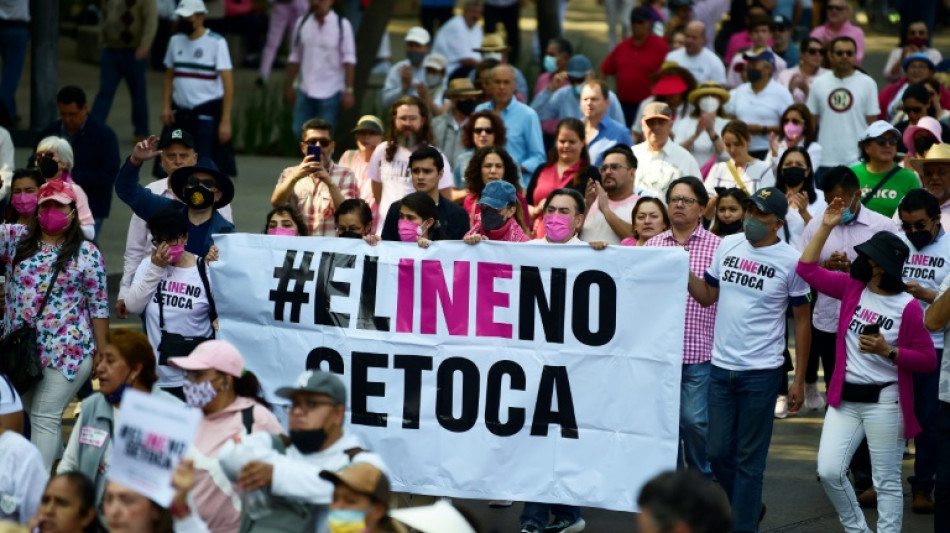
Mexico lawmakers pass president's contentious electoral reform / Photo: CLAUDIO CRUZ - AFP/File

 ALIX LASERS shareholders remove Michael Sobitsch as managing director in view of the circumstances

 Elon Musk Promises Steering-Wheel-Free Tesla Model Y Amid Cybercab Sales Launch

 Tosca's 2026 Sustainability Report Makes the Case for Packaging as Critical Supply Chain Infrastructure

 Eisai's Dayvigo Shows Year-Long Efficacy Without Tolerance Ahead of Korean Launch

 Ozlo Sleepbuds Drop $40 Ahead of Black Friday for Noise-Masking Sleep Aid

Mexican lawmakers on Wednesday passed a controversial electoral reform championed by President Andres Manuel Lopez Obrador that critics see as an attack on democracy ahead of key elections next year.
The proposal to reduce the size and budget of the independent agency that organizes elections was approved in the Senate by 72 votes in favor and 50 against.
The legislation now heads to the president for enactment, having already been voted through the lower house after various alterations.
The bill is a watered-down version of more radical reforms originally sought by Lopez Obrador that sparked mass street protests against a perceived attack on a key institution, the National Electoral Institute (INE), designed to safeguard elections from political tampering.
The polling agency has previously said that even the "Plan B" changes contained "deficiencies that endanger the workings of the electoral process."
Lopez Obrador alleges that the INE endorsed fraud when he ran unsuccessfully for the presidency in 2006 and 2012, before winning in 2018.
He argues that his reform will improve the electoral system.
The opposition vowed to challenge the reform in the Supreme Court and called for fresh street protests.
It voiced concern that the changes would benefit the ruling party, which is gearing up for presidential and legislative elections in mid-2024.
The reform "threatens democracy" and puts Mexico on a "path to authoritarianism," said Josefina Vazquez Mota, a senator from the conservative National Action Party.
Senator Felix Salgado, of the ruling Morena party, accused the opposition of resisting an end to the "privileges" and "waste" of the INE, which he accused of having endorsed "state fraud."
Mexican presidents are barred from serving more than one six-year term, and Lopez Obrador has ruled out trying to change the constitution to stay in office.
Even so, he is keen to see his Morena party hold onto power after he stands aside.
Under Lopez Obrador's initial plan, which failed to win the support of at least two-thirds of lawmakers required to change the constitution, the INE would have been replaced by a new body with members chosen by voters instead of lawmakers.
The number of seats in the lower house of Congress would have been reduced from 500 to 300, and those in the Senate from 128 to 96.
The New York-based advocacy group Human Rights Watch had warned that the initial proposal would eliminate vital safeguards and "seriously undermine electoral authorities' independence, putting free, fair elections at risk."
P.L.Madureira--PC