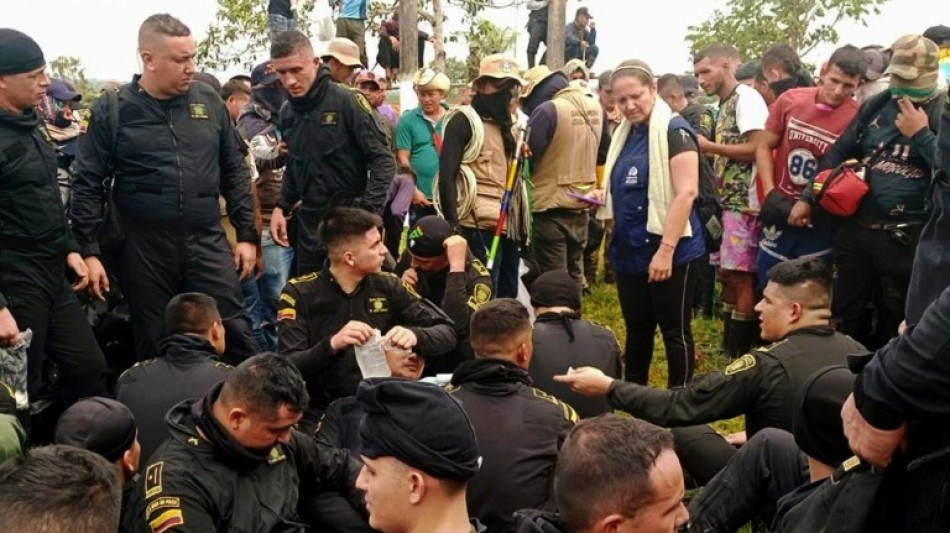
Indigenous protesters in Colombia release police hostages / Photo: Handout - Colombian Ombudsman/AFP

 Burnham Government Announces Neighbourhood Support Teams to Reduce Hospital Admissions

 KFF Health News Readers Weigh In on Healthcare Policy, Ethics, and Workforce Shortages

 16-Year-Old Founder Targets 'Cost Per Kill' With AI Missile Startup

 Elon Musk Promises Steering-Wheel-Free Tesla Model Y Amid Cybercab Sales Launch

 Tosca's 2026 Sustainability Report Makes the Case for Packaging as Critical Supply Chain Infrastructure

 Eisai's Dayvigo Shows Year-Long Efficacy Without Tolerance Ahead of Korean Launch
Indigenous and rural demonstrators holding scores of police and six employees of Emerald Energy to protest the oil company in southern Colombia have released their captives, President Gustavo Petro announced Friday.
During a protest against the company in the town of San Vicente del Caguan on Thursday, locals clashed with security forces.
A villager and a police officer were killed in the violence while protesters took 78 police and six employees of the oil company hostage.
All 84 people have now been freed, Petro said on Twitter.
The protesters were demanding that Emerald Energy, which is based in Britain and is a subsidiary of Chinese group Sinochem, honor infrastructure commitments it made to the local community.
These include the paving of 40 kilometers (25 miles) of road, other infrastructure improvements and an easing of the environmental impact of the company's oil operations.
Images shared earlier by the government ombudsman's office showed dozens of police officers and a few civilians in a large room with plastic seats.
In a statement issued later from the presidential jet, Petro -- the country's first leftist president -- said he would go in person to meet with the protesting rural people but insisted there be no violence in their quest for a better life.
"Violent action practically destroys not just the possibility of having a grassroots progressive government but also the very paths to peace," Petro said.
A team of government officials had traveled to Caqueta department to try to end the crisis.
- 'Peasant movement' -
Protests against the oil company began in November, according to the Caqueta regional government, but tensions flared Thursday when the local Indigenous guard joined demonstrators.
Videos published on Thursday by local media showed the oil company's premises on fire while the clashes took place.
Interior Minister Alfonso Prada said the government had been mediating between the company and the villagers since February 11 in a bid to find a solution as protesters had on occasion set up roadblocks.
Asked whether armed groups could be involved in the protests, Prada cautioned against the "stigmatization of the social peasant movement in Colombia."
But he also warned of "falling into the stupidity of thinking that there are no (groups)... using the social movement for their own illegal interests."
L.Mesquita--PC


