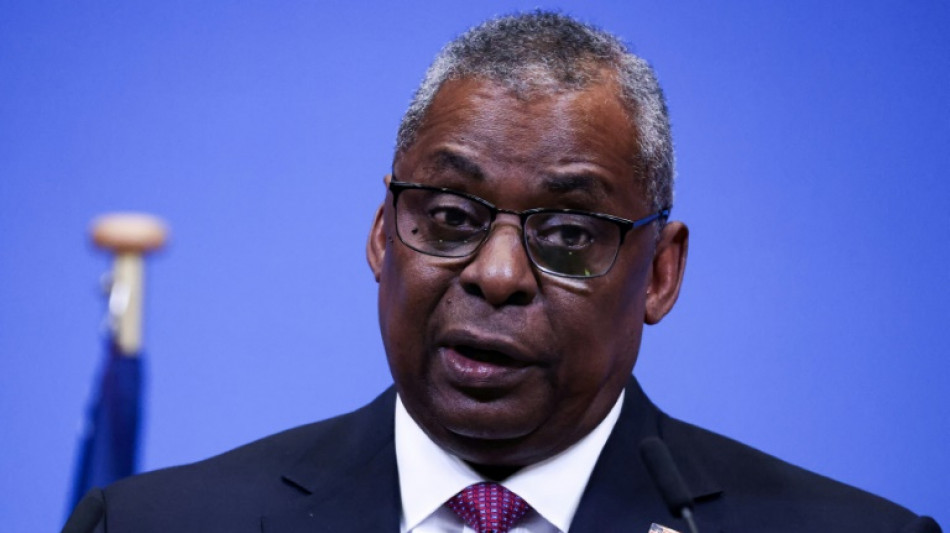
Pentagon chief visits Iraq nearly 20 years after US-led invasion / Photo: Kenzo TRIBOUILLARD - AFP/File

 Burnham Government Announces Neighbourhood Support Teams to Reduce Hospital Admissions

 KFF Health News Readers Weigh In on Healthcare Policy, Ethics, and Workforce Shortages

 16-Year-Old Founder Targets 'Cost Per Kill' With AI Missile Startup

 Elon Musk Promises Steering-Wheel-Free Tesla Model Y Amid Cybercab Sales Launch

 Tosca's 2026 Sustainability Report Makes the Case for Packaging as Critical Supply Chain Infrastructure

 Eisai's Dayvigo Shows Year-Long Efficacy Without Tolerance Ahead of Korean Launch
US Defense Secretary Lloyd Austin arrived in Iraq on Tuesday on an unannounced visit barely two weeks before the 20th anniversary of the US-led invasion that toppled Saddam Hussein.
"I'm here to reaffirm the US-Iraq strategic partnership as we move toward a more secure, stable and sovereign Iraq," Austin tweeted as he landed in Baghdad.
His visit comes ahead of the March 20 anniversary of the ground invasion which ushered in two decades of bloodshed that Iraq is only now beginning to exit.
In the run-up, Iraq has hosted a raft of foreign officials, including UN chief Antonio Guterres and the Iranian, Russian and Saudi foreign ministers.
Since US-led coalition troops ousted Saddam's Sunni Arab-dominated regime, Iraq's Shiite majority has led Iraq under a confessional power-sharing system.
Successive governments have forged close ties with Iraq's Shiite-led neighbour Iran, while Iraq also maintains relations with the United States, Iran's arch foe, in a delicate balancing act.
Both Washington and Tehran provided extensive support during Iraq's fightback against the Sunni extremists of the Islamic State group, who overran swathes of northern and western Iraq in 2014.
The jihadists were ousted from Iraqi territory in 2017 but retain sleeper cells in desert and mountain hideouts in both Iraq and neighbouring Syria.
Iraq announced the end of combat operations by US-led coalition troops at the end of 2021 but some units remain deployed to provide advice and training.
Austin's visit comes after he held talks in neighbouring Jordan with King Abdullah II, a staunch US ally in the region.
"Secretary Austin shared his concerns on a range of shared challenges, including... maintaining focus on security and stability in Iraq, and countering other destabilising activities in the region," a Pentagon statement said.
Despite its vast oil and gas reserves, Iraq suffers from decades of underinvestment in its infrastructure and public services that have sparked repeated waves of protests.
October 2021 elections were followed by a whole year of political vacuum before Prime Minister Mohammed Shia al-Sudani was sworn in at the head of a government led by pro-Iran factions.
The political arm of Iraq's Hashed al-Shaabi (Popular Mobilisation) paramilitary force, made up heavily of Tehran-trained groups, has long demanded the departure of all remaining coalition troops, although its calls have been less shrill since it entered government.
US ambassador Alina L. Romanowski holds regular talks with Iraqi officials and this week again hailed the "strong" relationship between the two countries.
There had been a sharp deterioration in ties under the Donald Trump administration after the then US president authorised the assassination of Iran's foreign operations chief General Qassem Soleimani along with his Iraqi lieutenant, Hashed number two Abu Mahdi al-Muhandis, in a drone strike at Baghdad airport in January 2020.
R.Veloso--PC