
Australia PM says to meet Biden in US, submarine deal expected / Photo: Saeed KHAN - AFP

 Pope urges Europe to help combat 'deceit and lies' in international ties

 Injured Buttler to miss England ODI series in Pakistan
 Madrid housing protesters vow to maintain pressure on government
 In kayaks or waist-deep in floodwater, shoppers return to Bangkok markets

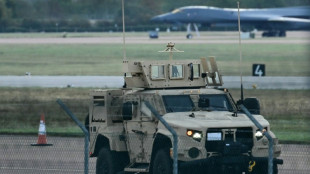 UK police probes Iran link to air base bomb scare: media
 Eala blasts into Asian Games quarters in just 55 minutes
 Taiwan gender-row boxer Lin Yu-ting guarantees Asian Games medal

 Comedian on trial for allegedly insulting Erdogan in standup show
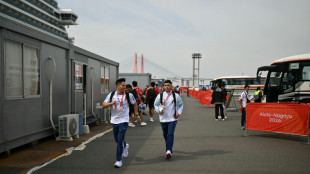
 More Asian Games transport woes as bus takes Pakistan to wrong venue
 Death toll in South Africa bar shooting rises to 18

 Aide to Venezuelan opposition leader returns from exile
 Messi and Alcaraz love it, now padel takes step closer to Olympics

 Tolls mount in Thailand, Myanmar floods

 Why India's opposition wants top poll official out

 PU Prime Strengthens UAE Momentum with Strong Showing at Forex Expo Dubai 2026

 Eight dead in Thailand floods since mid-September
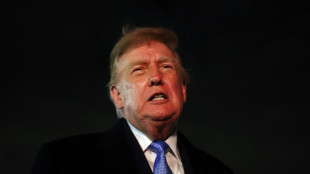 Oil prices spike after Trump rejects Iran truce offer
 Taylor Swift sets new record at MTV VMAs
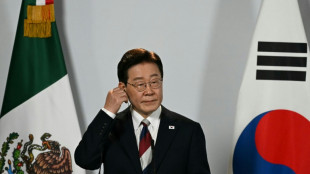 Seoul seeks apology after Ukraine reveals transfer of North Korean POWs
 Messi on target again but Miami downed by Columbus

 In Washington's political cauldron, a fight over foie gras
 Flavio Bolsonaro: political heir in his father's shadow

 Ravens grab last-second win in Rio as Commanders stop Seahawks

 Scheffler makes sportsmanship stand over tee screamer

 Anthropic CEO Amodei to dine with Trump at White House

Australia's prime minister said Wednesday he will soon meet President Joe Biden in the United States, where they are expected to unveil a nuclear submarine deal aimed at countering China's growing assertiveness in the Pacific.
After 18 months of negotiations, it's anticipated that Australia will reveal plans to obtain eight nuclear-powered submarines, in what Prime Minister Anthony Albanese has called "the single biggest leap" in defence capability in the country's history.
The deal is part of the fledgling regional security pact between Australia, the United Kingdom and the United States known as AUKUS.
"I'll be meeting with President Biden in the United States," Albanese told reporters in Perth on Wednesday.
"We'll have further announcements about details soon about the arrangements that will be taking place."
Australia does not have the expertise to build its own nuclear subs -- which have an extended range and powerful strike capabilities -- and must buy them from either the United States or Britain.
Since September 2021, detailed behind-the-scenes talks have been taking place between the AUKUS partners about how to equip Australia's military with sensitive nuclear-propulsion technology.
The deal has worried some of Australia's largest regional allies, with both Indonesia and Malaysia questioning whether it could spark a nuclear arms race in the Indo-Pacific.
While the subs will be powered by a nuclear reactor, Australia has ruled out equipping them with nuclear weapons.
It is the first time US-derived nuclear submarine technologies will be exported since the 1960s, when the United States helped Britain design its own undersea fleet.
The submarine contract is worth tens of billions of US dollars, but experts say its significance goes beyond jobs created and investments pledged.
- Fearsome deterrent -
Nuclear-powered submarines are difficult to detect, can travel large distances for prolonged periods and can be armed with sophisticated cruise missiles.
That, experts say, makes them a fearsome deterrent -- allowing Australia to launch strikes or counterstrikes deep into enemy territory with little warning.
Beijing has voiced deep opposition to the project, which it sees as "dangerous" and designed to corner China.
Major questions still linger, including whether Australia will look to buy US or British submarines, where they will be built and when they will be in the water.
"The AUKUS partnership seeks to provide a conventionally armed, nuclear-powered submarine capability to Australia at the earliest possible date," a Pentagon spokesperson told AFP ahead of Albanese's announcement.
"Bolstering our deterrence means boosting all of our industrial bases, growing our collective capabilities, and sharing technology as never before."
The AUKUS pact also foresees collaboration between the three allies on hypersonic missiles, artificial intelligence and cyber warfare.
The subs deal has been contentious in the US, which is struggling to grow its own fleet of nuclear submarines.
The chair of the influential US Senate armed services committee, Democrat Jack Reed, warned Biden in December that selling subs to Australia could undermine American naval prowess.
In a leaked letter sent to Biden, Reed also wrote that the AUKUS agreement risked "stressing the US submarine industrial base to the breaking point".
Australia had originally planned to buy diesel-powered submarines in a lucrative deal inked with France, but abruptly scrapped that agreement in favour of AUKUS.
P.Queiroz--PC