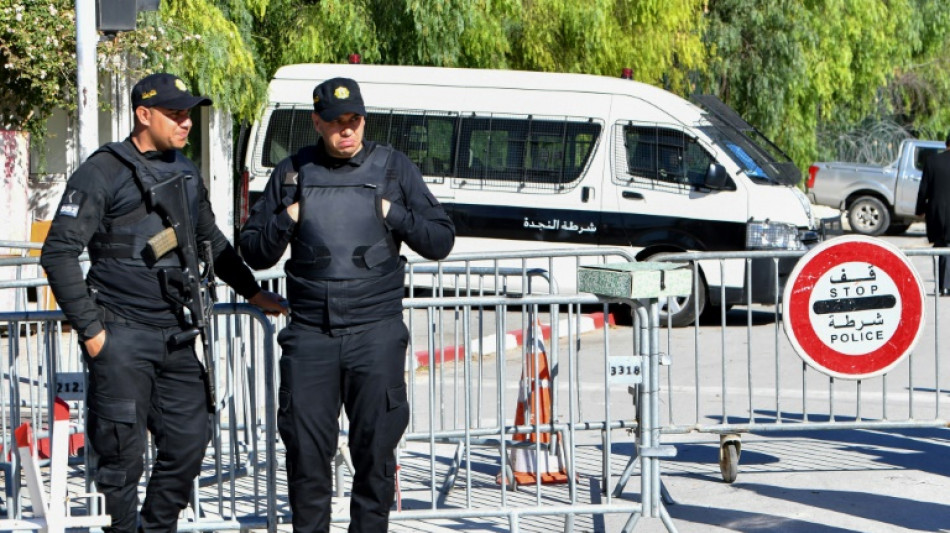
Tunisia swears in new defanged parliament / Photo: FETHI BELAID - AFP

 Geri Halliwell-Horner Embraces Queen Camilla at Commonwealth Writing Competition

 Meta Quest 3 and 3S Gain Access to Over 150 3D Movies

 Sarah Bajada Shares Message on Pregnancy Loss

 ALIX LASERS shareholders remove Michael Sobitsch as managing director in view of the circumstances

 Euroseas Q3 Net Profit Falls to $91.4 Million Amid Fleet Reduction

 Daily Horoscope November 20, 2026: Astrological Predictions for All Signs

 West Midlands Shoppers Urged to Guard Against Black Friday Scams

Tunisia on Monday inaugurated a new parliament largely stripped of its powers, after a vote that saw a paltry turnout amid boycotts following President Kais Saied's July 2021 power grab.
The new assembly was elected in two rounds in December and January, with a voter turnout of just over 11 percent.
It held its first session at the legislature's traditional home in Bardo, a suburb of the capital Tunis.
State television broadcast the proceedings and only official media were permitted to cover the session, with representatives of Tunisia's private press and foreign journalists denied access, according to an AFP correspondent.
"What is happening is dangerous and reflects the authorities' unjustified distrust of the media," Amira Mohamed, deputy head of the SNJT journalists' union, told AFP.
The new parliament was elected after a new constitution was passed in a July 25 referendum last year granting Saied unchecked powers.
The referendum was held exactly a year after he froze the previous legislature and dismissed Tunisia's government, before assuming wide-ranging powers in the only democracy to have emerged from the Arab Spring uprisings more than a decade ago.
By concentrating power in the presidency and greatly reducing parliament's influence and oversight, the new constitution marked an end to the parliament-led system put in place following the fall of dictator Zine El Abidine Ben Ali in 2011.
Under the new constitution, it is almost impossible for parliament to hold the government to account, and the president cannot be impeached under any circumstances.
Ten lawmakers will be needed to propose bills, and those put forward by the president will be given priority.
The new assembly has 161 members but only 154 seats have so far been filled -- with just 25 female representatives among them.
After taking the oath, lawmakers elected as speaker Ibrahim Bouderbala, 71, an ally of Saied's and the former chief of the Tunisian Bar Association.
Tunisia's main opposition coalition, the National Salvation Front, which boycotted the legislative elections, released a statement saying it would not recognise the new assembly.
It said the new parliament came as a result of a "putschist constitution and elections shunned by the overwhelming majority of voters".
Ennahdha, the Islamist-inspired party that previously held the most seats in the dissolved parliament, also released a statement refusing to recognise the legislature, describing it as being "devoid of any legitimacy".
Ferreira--PC


