-
 Trump admin finalizes reversal of US fuel economy standards
-
Iranian lawyer Nasrin Sotoudeh wins Council of Europe's rights prize

-
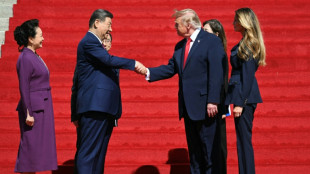 US says no China arms sale plans after envoy cites Trump offer
-
French far-right's Bardella denies alleged 2013 antisemitic comments

-
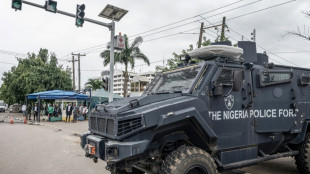 Dozens kidnapped in two weekend attacks in northern Nigeria
-
Oil up, Wall Street dips after Trump rejects Iran truce offer
-
 Next stop the world: Pathirage wins Asian Games javelin gold
-
Gakpo withdraws from Netherlands squad

-
 Aster Launches Perpetual Grid Trading 2.0 with Up to 140,000 $ASTER Liquidity Mining Campaign
-
SpaceX puts Starship megarocket in orbit for first time
-
 Seoul says North Korean mines 'highly suspected' as cause of DMZ blast
-
Iran denies link to suspected bomb plot at UK airbase used by US
-
 Russia pummels Kyiv in latest deadly daytime attack
-
Ex-boss Mancini says City charges 'not my concern'

-
 Wartime Ukraine works to keep its railways on track
-
Berlin Marathon winner Assefa finished race with torn Achilles

-
 Boy among 3 dead in migrant Channel crossing accident: French authorities
-
Comedian convicted for Erdogan 'insult' but freed pending appeal

-
 SGFX Creates a Standout Brand Experience at Forex Expo Dubai 2026
-
French prosecutors seek two-year sentence for ex-minister Dati in graft case
-
 Pope urges Europe to help combat 'deceit and lies' in international ties
-
Eala makes fast start as weather and transport woes hit Asian Games
-
 Injured Buttler to miss England ODI series in Pakistan
-
Hurricane Polo approaches Mexico, threatens severe damage
-
 Madrid housing protesters vow to maintain pressure on government
-
Energy markets rally after Trump rejects Iran truce offer
-
 In kayaks or waist-deep in floodwater, shoppers return to Bangkok markets
-
Japanese convenience store enlists Lady Gaga to bolster recruitment

-
 UK police probes Iran link to air base bomb scare: media
-
Seoul summons Ukraine envoy in row over North Korean POWs
-
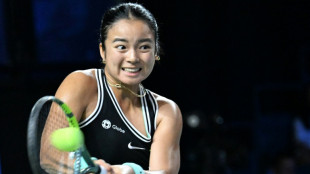 Eala blasts into Asian Games quarters in just 55 minutes
-
Ireland 'raised awareness worldwide' in Israel game: Hallgrimsson
-
 Taiwan gender-row boxer Lin Yu-ting guarantees Asian Games medal
-
Colombian police capture wife, daughter of Ecuador drug lord

-
 Comedian on trial for allegedly insulting Erdogan in standup show
-
More Asian Games woes as bus takes Pakistan team to wrong venue
-
 More Asian Games transport woes as bus takes Pakistan to wrong venue
-
Radio frequencies vital to Earth observation must be protected: UN
-
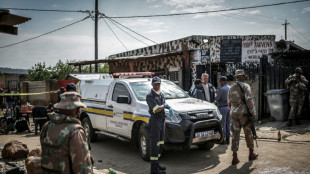 Death toll in South Africa bar shooting rises to 18
-
Comedian on trial for insulting Erdogan in standup show

-
 Aide to Venezuelan opposition leader returns from exile
-
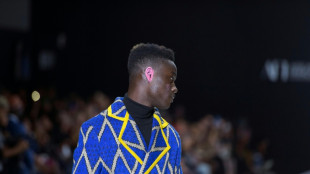
Women's Fashion Week kicks off in Paris
-
 Messi and Alcaraz love it, now padel takes step closer to Olympics
-
Pope arrives in French border city to speak on united Europe

-
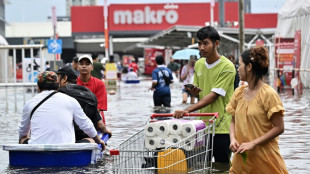 Tolls mount in Thailand, Myanmar floods
-
The wildfires choking Indonesia, sparking regional haze

-
 Why India's opposition wants top poll official out
-
PU Prime Deepens Argentina Presence Through FX Expo Buenos Aires 2026

-
 PU Prime Strengthens UAE Momentum with Strong Showing at Forex Expo Dubai 2026
-
Nothing to seal here: NZ police help stranded pup home

NYSE - LSE
Submarine deal highlights concerns over rising Chinese power
A landmark nuclear submarine pact between the United States, Australia and Britain underscores concerns over growing Chinese military power, but it will be years before the new vessels can help counter Beijing's efforts to expand its reach and influence.
The deal -- part of an agreement known as AUKUS -- will see Australia replace its diesel-powered submarines with nuclear-powered ones that have far greater stealth and range, first through purchases from the United States and later with domestically produced vessels.
But the effort faces challenges including a long timeline and the need for expanded production capacity, while China is currently improving its armed forces and aggressively pursuing territorial claims in the Indo-Pacific, threatening Washington's long-held military edge in the region.
"Each nation has a slightly different rationale for AUKUS, but it largely boils down to China," Charles Edel, a senior advisor at the Center for Strategic and International Studies, said at a recent event.
"China was not mentioned when AUKUS was first announced, although the exponential growth of Beijing's military power and its more aggressive use over the past decade was the clear animating force behind it," he said.
The United States views China as its most consequential challenge, and is seeking to deter military action by Beijing, especially when it comes to Taiwan.
US officials say China wants its military to be ready to invade Taiwan -- the self-ruled island that Beijing considers part of its territory and has vowed to take one day, by force if necessary -- by 2027.
But Australia will not receive the first of its nuclear-powered submarines -- Virginia-class vessels purchased from the United States -- until the 2030s, meaning they would be too late to help head off Chinese military action before then.
- 'Significant improvements' needed -
"It's well known that we have a deterrence challenge now and not one that materializes around 2040," said Edel. "The challenge here is how AUKUS can begin contributing solutions to the set of challenges now."
Moving from Australia's current Collins-class submarines to the Virginia class will also be a major change for Canberra's navy, with some versions of the new submarines being nearly twice as large and requiring more than double the number of sailors.
The AUKUS partnership was first announced in 2021 and was followed by an 18-month consultation period, with the leaders of Australia, Britain and the United States announcing the results on Monday at a naval base in the US state of California.
The aim is for Australia to deliver a domestically produced nuclear-powered submarine known as SSN-AUKUS in the early 2040s, a senior US administration official told journalists ahead of the announcement.
It will be based on Britain's design for its next-generation attack submarine while also incorporating technology from the Virginia class.
The AUKUS submarine deal "is going to require significant improvements" in "industrial bases in all three countries," the official said.
There have been concerns that AUKUS could impact submarine production for the US Navy, and Representative Rob Wittman of the US House Armed Services Committee said construction for Australia cannot come at the expense of that needed for American forces.
"AUKUS will not realize its full potential if the overall number of submarines crewed by AUKUS members in the Pacific does not increase above current shipbuilding plans over the next decade -- our shared strategic environment demands nothing less," he said in a statement.
Edel said the production capacity of shipyards in all three countries is "an open question," adding: "The ambition is to expand shipbuilding here. The question is how quickly this can be accomplished."
F.Carias--PC