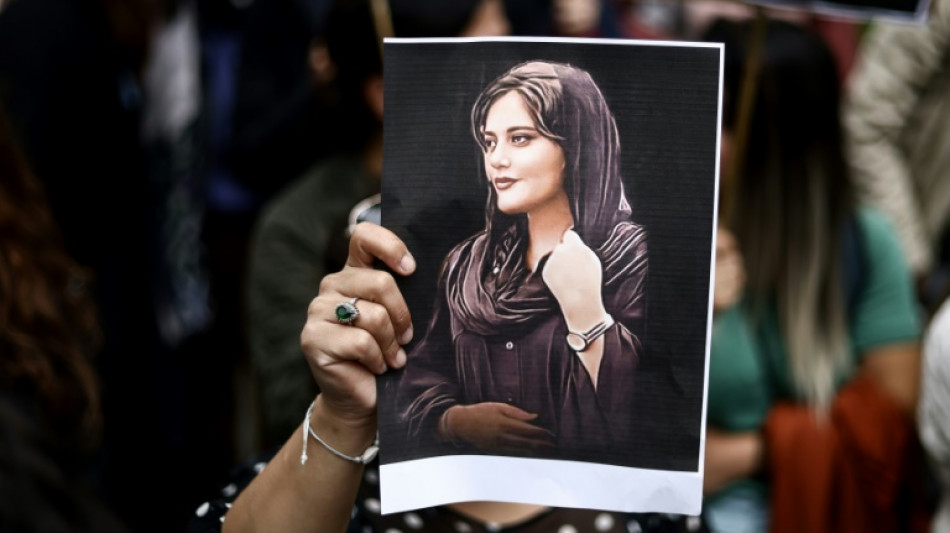
Mahsa Amini not forgotten in Iran six months after death / Photo: Kenzo TRIBOUILLARD - AFP

 Trump admin finalizes reversal of US fuel economy standards

 US says no China arms sale plans after envoy cites Trump offer

 Dozens kidnapped in two weekend attacks in northern Nigeria

 Next stop the world: Pathirage wins Asian Games javelin gold

 Aster Launches Perpetual Grid Trading 2.0 with Up to 140,000 $ASTER Liquidity Mining Campaign

 Seoul says North Korean mines 'highly suspected' as cause of DMZ blast
 Russia pummels Kyiv in latest deadly daytime attack

 Wartime Ukraine works to keep its railways on track

 Boy among 3 dead in migrant Channel crossing accident: French authorities
 SGFX Creates a Standout Brand Experience at Forex Expo Dubai 2026
 Pope urges Europe to help combat 'deceit and lies' in international ties

 Injured Buttler to miss England ODI series in Pakistan
 Madrid housing protesters vow to maintain pressure on government

 In kayaks or waist-deep in floodwater, shoppers return to Bangkok markets

 UK police probes Iran link to air base bomb scare: media

 Eala blasts into Asian Games quarters in just 55 minutes
 Taiwan gender-row boxer Lin Yu-ting guarantees Asian Games medal
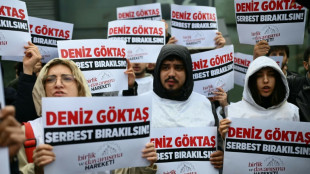 Comedian on trial for allegedly insulting Erdogan in standup show

 More Asian Games transport woes as bus takes Pakistan to wrong venue

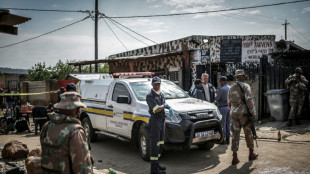 Death toll in South Africa bar shooting rises to 18
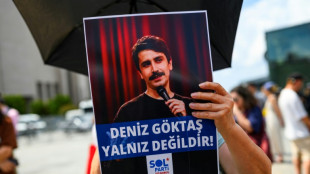
 Aide to Venezuelan opposition leader returns from exile

 Messi and Alcaraz love it, now padel takes step closer to Olympics
 Tolls mount in Thailand, Myanmar floods

 Why India's opposition wants top poll official out

 PU Prime Strengthens UAE Momentum with Strong Showing at Forex Expo Dubai 2026

Six months ago this week, Mahsa Amini was arrested for allegedly flouting Iran's strict dress code for women. Within days she was dead, sparking the country's biggest protests in years.
The 22-year ethnic Kurd became a household name inside Iran, a rallying point for demands for change. Around the world, she became a hero for women's rights campaigners and a symbol for Western opponents of the Islamic republic.
Amini was visiting the capital Tehran with her brother and cousins when she was arrested as they were leaving a metro station in the city centre last September.
Accused of wearing "inappropriate" attire, she was taken to a police station by officers of the morality police.
There she collapsed after a quarrel with a policewoman, according to a short surveillance video released by the authorities.
She spent three days in hospital in a coma before her death on September 16, which the authorities blamed on underlying health issues.
For many, the young woman from the western city of Saqez personified the fight against the obligation to wear the headscarf. Her name became the rallying point for a protest movement that gripped the country for months.
The epitaph engraved on her tomb reads: "You are not dead Mahsa, your name has become a symbol".
Almost overnight, her portrait became ubiquitous in Iran's cities, fly-postered on walls and held aloft by protesters. It even made the cover of some magazines published inside Iran, including the March edition of the monthly Andisheh Pouya.
"Unknown before her death, Mahsa has become a symbol of oppression and her innocent face reinforces this image," said political scientist Ahmad Zeidabadi.
- Call for openness -
The protests over her death in custody, which began in the capital and in her native Kurdistan province, swiftly mushroomed into a nationwide movement for change.
Public anger over her death merged with "a series of problems, including the economic crisis, attitudes toward the morality police, or political issues such as the disqualification of candidates for election" by Iran's conservative-dominated vetting body the Guardian Council, said sociologist Abbas Abdi.
Spearheaded by young people demanding gender equality and greater openness without a leader or political programme, the street protests peaked late last year.
Hundreds of people were killed, including dozens of security force personnel. Thousands more were arrested for participating in what officials described as "riots" and blamed on hostile forces linked to the United States, Israel and their allies.
In February, after the protests abated and supreme leader Ayatollah Ali Khamenei decreed a partial amnesty, the authorities began to release thousands of people arrested in connection with the protests.
Some 22,600 people "linked to the riots" have so far been released, the head of the judiciary, Gholamhossein Mohseni Ejei said this week.
But Abdi said protesters could return to the streets again as the underlying grievances remained unaddressed.
"The demonstrations are over, but I doubt the protest has ended," he said, noting that "the main causes of the crisis remain.
"In the current situation, any incident can trigger new protests."
He cited as an example the public anger sparked by a spate of mystery poisonings that have affected thousands of pupils at more than 200 girls' schools over the past three months.
- Quiet change -
The mass demonstrations inside Iran, among the largest since the 1979 revolution, prompted some in the exiled opposition to talk of an imminent change of regime.
"Some people, especially in the diaspora, have mistakenly bet on the fall of the Islamic republic in the very near future," political scientist Zeidabadi said.
Zeidabadi argued that the emigres had misunderstood the nature of the protest movement which he said was more "civic" than political.
He stressed that, viewed in that fashion, the movement had produced "results", notably a quiet relaxation in enforcement of the dress code for women.
"A certain degree of freedom from the hijab is tolerated even if the law and the rules have not changed," Zeidabadi said.
He predicted similarly discreet and cautious reforms in other areas, notably the economy, which has been blighted by inflation of around 50 percent and a record depreciation of the rial against the dollar.
"It seems that the Islamic republic has realised the need for a change of policy, although there is no consensus within it on a lasting response to meet the challenge."
G.Teles--PC