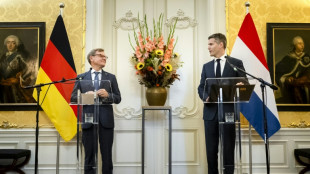
Russia calling? Scammers target high-level Western officials / Photo: Handout - Proofpoint/AFP

 Trump admin finalizes reversal of US fuel economy standards
 US says no China arms sale plans after envoy cites Trump offer
 Dozens kidnapped in two weekend attacks in northern Nigeria
 Next stop the world: Pathirage wins Asian Games javelin gold

 Aster Launches Perpetual Grid Trading 2.0 with Up to 140,000 $ASTER Liquidity Mining Campaign

 Seoul says North Korean mines 'highly suspected' as cause of DMZ blast
 Russia pummels Kyiv in latest deadly daytime attack

 Wartime Ukraine works to keep its railways on track

 Boy among 3 dead in migrant Channel crossing accident: French authorities
 SGFX Creates a Standout Brand Experience at Forex Expo Dubai 2026
 Pope urges Europe to help combat 'deceit and lies' in international ties
 Injured Buttler to miss England ODI series in Pakistan

 Madrid housing protesters vow to maintain pressure on government
 In kayaks or waist-deep in floodwater, shoppers return to Bangkok markets

 UK police probes Iran link to air base bomb scare: media
 Eala blasts into Asian Games quarters in just 55 minutes
 Taiwan gender-row boxer Lin Yu-ting guarantees Asian Games medal
 Comedian on trial for allegedly insulting Erdogan in standup show

 More Asian Games transport woes as bus takes Pakistan to wrong venue
 Death toll in South Africa bar shooting rises to 18
 Aide to Venezuelan opposition leader returns from exile

 Messi and Alcaraz love it, now padel takes step closer to Olympics

 Tolls mount in Thailand, Myanmar floods

 Why India's opposition wants top poll official out

 PU Prime Strengthens UAE Momentum with Strong Showing at Forex Expo Dubai 2026
A pro-Russian prankster impersonates a former US ambassador to Moscow in live video calls, part of a disinformation campaign that researchers say seeks to ensnare high-level Western officials since the invasion of Ukraine.
Russian comedy duo Vladimir Kuznetsov and Alexei Stolyarov, who go by Vovan and Lexus, have long been notorious for pranking politicians and celebrities around the world, from Justin Trudeau to Elton John and Boris Johnson.
But the pair, once dubbed Russia's Jerky Boys who have long denied any connection to the Kremlin, appear to have steadily morphed from mischief-makers to a pro-Kremlin tool of information warfare.
Cybersecurity researchers say that since the start of Russia's invasion, they have ramped up their targeting of high-profile officials and executives in North America and Europe who have spoken out against Moscow.
"WARNING. Someone using the phone number +1 (202) 7549885 is impersonating me," Michael McFaul, the former ambassador to Moscow, tweeted last September.
"If you connect on a video platform with this number, you will see an AI-generated 'deepfake' that looks and talks like me. It is not me. This is a new Russian weapon of war."
McFaul, who served as the envoy from 2012-14, told AFP that the impersonator appeared "live" in calls to many in the Ukrainian government and "spoke in Russian," a language he knows but not fluently.
The questions the hoaxer asked were "obviously designed to undermine Ukraine's diplomatic and war efforts," McFaul added.
Proofpoint, a California-based cybersecurity firm, said its analysts have assessed with "high confidence" that this was the work of Vovan and Lexus, together dubbed TA499.
"For a time, TA499 utilized McFaul as an impersonated identity in attempts to obtain contact with high-ranking officials internationally," Proofpoint's researchers told AFP.
"This phone number was noted in our data in a known TA499 campaign."
- Deceit, makeup, phony emails -
In an aggressive tactic since Russia invaded Ukraine in February last year, the pair has targeted prominent figures critical of Moscow with phony emails.
Masquerading as top Ukrainian officials such as the prime minister, lawmakers or their assistants, the emails -- sometimes from genuine-looking "ukr.net" addresses -- sought to persuade them into further contact via telephone or video calls, according to a report by Proofpoint.
During the calls, the duo went so far as to use "extensive makeup" to appear like the impersonated individual and coaxed their target to say things that were then selectively used for pro-Russian propaganda, the report said.
"The aim seems to be to lead their targets into 'revealing' certain things or agreeing with certain statements," Eva Maitland from the watchdog NewsGuard told AFP.
"Fragments of the interview can then be misused widely in pro-Kremlin media as proof of various Kremlin talking points, as well as to ridicule and humiliate the interviewees."
Snippets of the calls were posted on YouTube and Rutube, a Russian video platform.
"An attempt was made by an imposter claiming to be Ukrainian PM to speak with me," British Defence Secretary Ben Wallace tweeted last March.
"He posed several misleading questions and after becoming suspicious I terminated the call."
Proofpoint said its researchers "assess with high confidence that this was the work of TA499."
- Sympathy for Kremlin? -
Since the start of its invasion one year ago, Russia and its supporters have sought to aggressively distort Moscow's role in Ukraine with a flood of disinformation.
The hoaxers are believed to be linked to Russian security services.
"The overall shift towards enemies of the Kremlin since the invasion indicates some sympathy and probable cooperation" with the Russian government, Roman Osadchuk, from the Atlantic Council's Digital Forensic Research Lab, told AFP.
"The level of sophistication, like using deep fake or lookalikes to impersonate various people, is an additional clue of possible external help."
In a 2021 interview with The Verge, the duo denied using deepfakes and said they relied on makeup and artful camera angles.
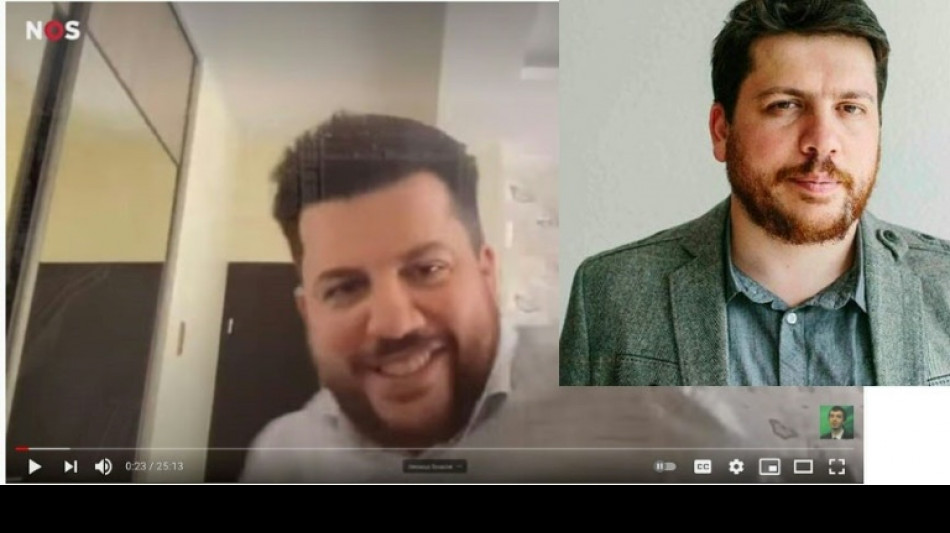
"Meet Leonid Volkov, Russian opposition leader," Kuznetsov told the American tech news website in a video call, introducing his partner-in-crime Stolyarov, who bore a passing resemblance to Volkov.
The duo hoaxed a string of European politicians that year by impersonating Volkov, an ally of jailed Kremlin critic Alexei Navalny.
As the war in Ukraine grinds on, the hoaxers are unlikely to stop, with Proofpoint warning that they could rustle up new tricks.
"TA499 is not a threat to take lightly due to the damage such propaganda could have on the brand and public perception of those targeted as well as the perpetuation of disinformation," Proofpoint said.
V.F.Barreira--PC