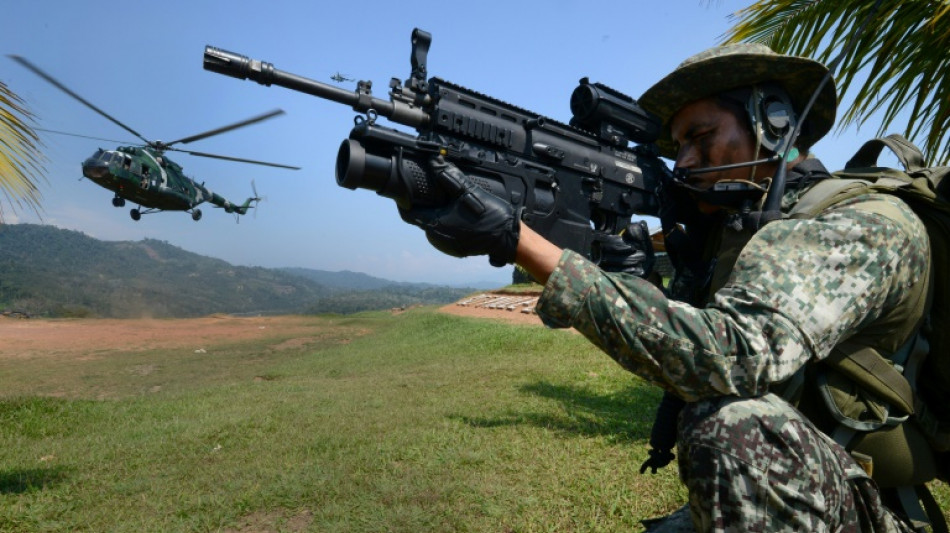
At least six killed in Peru clash with Shining Path / Photo: CRIS BOURONCLE - AFP/File

 San Ġiljan Defeat Paredes 20-12 in Challenger Cup Opener

 2027 Toyota Sienna Gets Sixth-Gen Hybrid System, More Power, and Trim Changes

 Burnham Government Announces Neighbourhood Support Teams to Reduce Hospital Admissions

 KFF Health News Readers Weigh In on Healthcare Policy, Ethics, and Workforce Shortages

 16-Year-Old Founder Targets 'Cost Per Kill' With AI Missile Startup

 Elon Musk Promises Steering-Wheel-Free Tesla Model Y Amid Cybercab Sales Launch

 APEX FTE Expo 2026 Unites Aviation Leaders in Singapore and Honors Passenger Experience Excellence

 West Midlands Shoppers Urged to Guard Against Black Friday Scams
At least six people were killed in a clash between remnants of the defunct Shining Path rebel group and a military patrol in a coca-growing valley in central Peru, a Defense Ministry unit reported Saturday.
The statement from the Joint Command of the Armed Forces did not give the date of the confrontation, in which it said that five members of the Sendero Luminoso, as the guerrilla group is known in Spanish, and an Army soldier died.
It said the clash took place in Vizcatan del Ene, in central Peru, as part of an operation that tried to capture Victor Quispe Palomino, alias Comrade Jose. He is the leader of holdout troops of the leftist rebels defeated militarily in the 1990s.
Quispe Palomino was not found, the statement said. One member of the Maoist group, known as "Paulino," "died when he was preparing to mine the combat area."
The Vizcatan del Ene area is in the central department of Junin, part of a large coca-growing area where remnants of the Shining Path allied to drug traffickers have long taken refuge, authorities said.
Coca leaves are the raw material from which cocaine is made.
Shining Path emerged in 1980 when it launched a "people's war" in what the government said was an act of "terrorism." Two decades of clashes with security forces left 69,000 people dead or disappeared, according to Peru's Truth and Reconciliation Commission.
Most of the guerrilla leaders are dead or imprisoned, but the military estimates that 200 to 350 ex-combatants are still active in an area known as the VRAE -- the Spanish-language acronym for the Apurimac and Ene River Valley, some 175 miles (280 kilometers) southeast of Lima.
J.Oliveira--PC