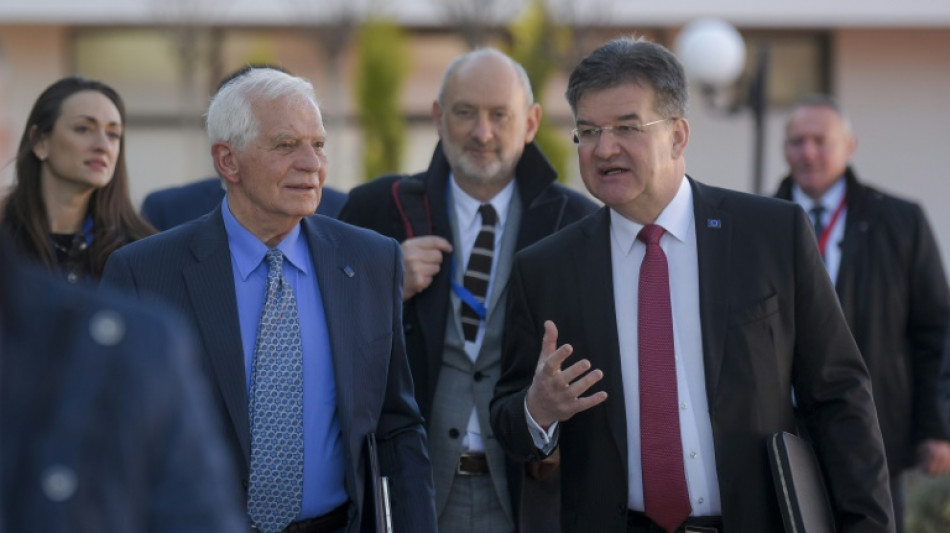
Kosovo and Serbia fail to sign agreement after marathon talks / Photo: Armend NIMANI - AFP

 San Ġiljan Defeat Paredes 20-12 in Challenger Cup Opener

 2027 Toyota Sienna Gets Sixth-Gen Hybrid System, More Power, and Trim Changes

 Burnham Government Announces Neighbourhood Support Teams to Reduce Hospital Admissions

 KFF Health News Readers Weigh In on Healthcare Policy, Ethics, and Workforce Shortages

 16-Year-Old Founder Targets 'Cost Per Kill' With AI Missile Startup

 Elon Musk Promises Steering-Wheel-Free Tesla Model Y Amid Cybercab Sales Launch

 APEX FTE Expo 2026 Unites Aviation Leaders in Singapore and Honors Passenger Experience Excellence

 West Midlands Shoppers Urged to Guard Against Black Friday Scams
Kosovo and Serbia stopped short of signing a potentially landmark deal late Saturday night after holding a marathon round of talks, even as the EU hailed progress toward reaching a long-sought agreement between the arch-foes.
The latest round of high-stakes negotiations followed months of EU-mediated shuttle diplomacy, nearly 25 years after the war between ethnic Albanian insurgents and Serb forces sparked a NATO bombing campaign that ended the conflict and saw Serbian government personnel and security forces pull out from the breakaway territory.
Kosovo's Prime Minister Albin Kurti and Serbian President Aleksandar Vucic engaged in negotiations for nearly 12 hours during a summit in North Macedonia's Ohrid, picking over an 11-point plan unveiled by the EU last month during a Brussels summit.
But in the end, they failed to iron out a final agreement that could be signed by both.
Following the talks, EU foreign policy chief Josep Borrell sent mixed signals about the negotiations, saying a framework to implement the plan had been reached but a path toward normalisation of ties remained elusive.
"The parties were not able to find a mutually acceptable solution as ambitious as we were providing or proposing," said Borrell, even as he hailed reaching a deal that went unsigned in the end.
Serbia has long refused to recognise Kosovo's unilateral declaration of independence made in 2008, with perennial bouts of unrest erupting between Belgrade and its former breakaway province.
Following Saturday's talks, the two leaders both admitted that progress had been made but were quick to unleash barbs at the other over the failure to put pen to paper.
Kosovo's Kurti said he was ready to sign the document, but blamed Serbia's leader for failing to sign off on the plan for a second time.
"The other side, just as in the last meeting in Brussels on February 27, is avoiding signing the agreement, now also with the annex," Kurti told reporters.
"It is now up to the European Union to find a mechanism to make the status of this agreement legally and internationally binding."
Serbia's Vucic was lukewarm about the day's results.
"I think we have made one important step in a constructive atmosphere and we will start to work on something. Of course, it was not some D-day but it was an okay day," said Vucic.
- EU pressure -
The 11-point document backed by the EU has laid out a framework stating that neither side would resort to violence to resolve a dispute, nor seek to prevent the other from joining the European Union or other international bodies -- a key demand from Kosovo.
It would also result in de-facto recognition between the two sides, with Kosovo and Serbia accepting the other's travel documents, diplomas, licence plates and customs stamps.
Kurti's administration hopes that an agreement would allow for Kosovo's entry into international institutions, especially the United Nations, a long-sought goal for the government in Pristina.
The mounting pressure comes as the EU and Washington have reserved much of their diplomatic muscle for addressing the conflict in Ukraine, spurring fears that the Kremlin may use the Kosovo issue as a wedge to further divide Europe.
Kosovo remains an obsession among large swaths of the Serbian population, who regard the territory as their rightful homeland that has come under attack by outsiders for centuries.
In the Serbian capital Belgrade on Friday, thousands rallied against striking an agreement.
"This ultimatum ... it's not an agreement, it's a betrayal," Milica Djurdjevic Stamenkovski, head of the ultranationalist group the Oath Keepers, told the crowd.
Kosovo is home to approximately 120,000 Serbs, many of whom remain loyal to Belgrade -- especially in northern areas near the border with Serbia where there are frequent bouts of turmoil, protests and occasional violence.
A.P.Maia--PC


