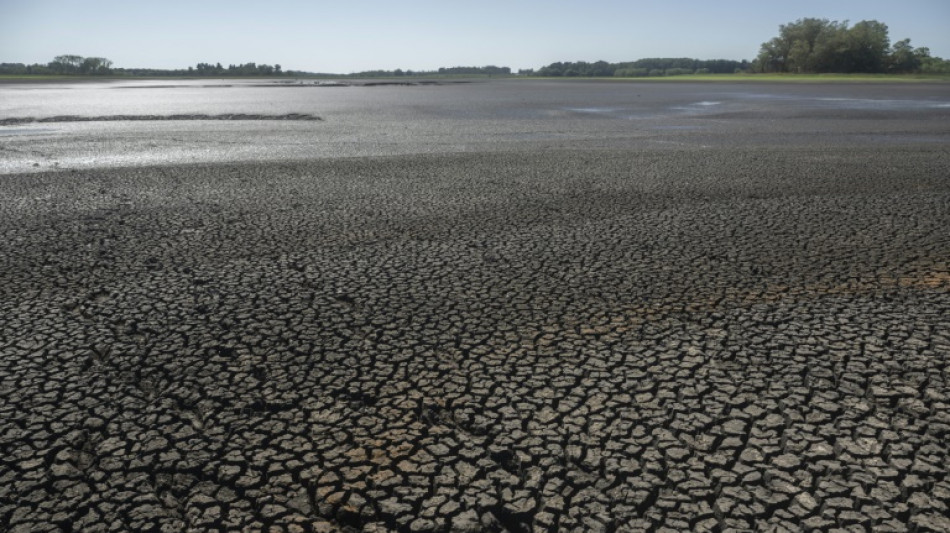
'Vampiric' water use leading to 'imminent' global crisis, UN warns / Photo: Pablo PORCIUNCULA - AFP/File

 Justice Alito steps aside from major US climate case

 Willis happy with England exile after retains Top 14 player award
 Spain housing protests keep heat on government as PM seeks new law

 Wissa spoils Zimbabwe homecoming as DR Congo win AFCON qualifier

 UK police release on bail five men held over airbase incident

 Ex-All Black Plummer 'sure' New Zealand will find Super Rugby solution

 Shein sees 1% revenue growth in first half of 2026
 Netherlands regrets Israel retaliation in settlements row

 Moscow seizes Russian assets of German food retailer Metro
 Bulgarian spirits inflamed by new rakia rules
 Documentary turns camera on architect Peter Zumthor
 UK police say releasing on bail five men held over airbase incident
 Trump admin finalizes reversal of US fuel economy standards
 US says no China arms sale plans after envoy cites Trump offer

 Dozens kidnapped in two weekend attacks in northern Nigeria
 Next stop the world: Pathirage wins Asian Games javelin gold

 Aster Launches Perpetual Grid Trading 2.0 with Up to 140,000 $ASTER Liquidity Mining Campaign
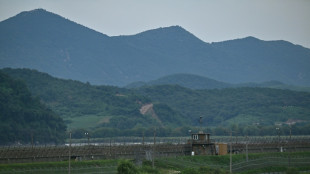 Seoul says North Korean mines 'highly suspected' as cause of DMZ blast

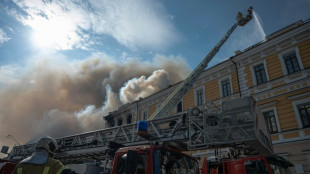 Russia pummels Kyiv in latest deadly daytime attack

 Wartime Ukraine works to keep its railways on track

 Boy among 3 dead in migrant Channel crossing accident: French authorities
 SGFX Creates a Standout Brand Experience at Forex Expo Dubai 2026
 Pope urges Europe to help combat 'deceit and lies' in international ties

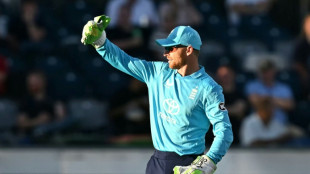 Injured Buttler to miss England ODI series in Pakistan
 Madrid housing protesters vow to maintain pressure on government
Humanity's "lifeblood" -- water -- is increasingly at risk around the world due to "vampiric overconsumption and overdevelopment," the UN warned in a report, published hours ahead of a major summit on the issue was set to begin Wednesday.
The world is "blindly travelling a dangerous path" as "unsustainable water use, pollution and unchecked global warming are draining humanity's lifeblood," United Nations Secretary General Antonio Guterres said in a foreword to the report, released hours ahead of the first major UN meeting on water resources in nearly half a century.
Co-hosted by the governments of Tajikistan and the Netherlands, the UN Water Conference will gather some 6,500 participants, including a hundred ministers and a dozen heads of state and government Wednesday through Friday in New York.
Richard Connor, lead author of report, told AFP that the impact of the "world water crisis" will be a "matter of scenarios."
"If nothing is done, it will be a business-as-usual scenario -- it will keep on being between 40 percent and 50 percent of the population of the world that does not have access to sanitation and roughly 20-25 percent of the world will not have access to safe water supply."
With the global population increasing every day, "in absolute numbers, there'll be more and more people that don't have access to these services," he said.
At the UN conference, governments and actors in the public and private sectors are invited to present proposals for a so-called water action agenda to reverse that trend and help meet the development goal, set in 2015, of ensuring "access to water and sanitation for all by 2030."
The last conference at this high level on the issue, which lacks a global treaty or a dedicated UN agency, was held in 1977 in Mar del Plata, Argentina.
Some observers have already voiced concerns about the scope of these commitments and the availability of funding to implement them.
"There is much to do and time is not on our side," said Gilbert Houngbo, chair of UN-Water, a forum for coordinating work on the topic.
The report, published by UN-Water and UNESCO, warns that "scarcity is becoming endemic" due to overconsumption and pollution, while global warming will increase seasonal water shortages in both areas with abundant water as well as those already strained.
- 'Now or never' -
"About 10% of the world's population lives in a country where water stress has reached a high or critical level," the report says.
According to the most recent UN climate report, published Monday by the IPCC expert panel, "roughly half of the world’s population currently experience severe water scarcity for at least part of the year."
Those shortages have the most significant impact on the poor, Connor told AFP.
"No matter where you are, if you are rich enough, you will manage to get water," he said.
The report notes the particular impact of existing water supplies becoming contaminated due to underperforming or nonexistent sanitation systems.
"At least 2 billion people (globally) use a drinking water source contaminated with feces, putting them at risk of contracting cholera, dysentery, typhoid and polio," it said.
That high number does not even take into account pollution from pharmaceuticals, chemicals, pesticides, microplastics and nanomaterials.
To ensure access to safe drinking water for all by 2030, current levels of investment would have to be tripled, the report says.
Freshwater ecosystems -- which in addition to water, provide life-sustaining economic resources and help combat global warming -- "are among the most threatened in the world," the report warns.
"We have to act now because water insecurity is undermining food security, health security, energy security or urban development and societal issues," Henk Ovink, the Dutch special envoy for water, told AFP.
"It's now or never as we say -- a once in a generation opportunity."
X.Brito--PC