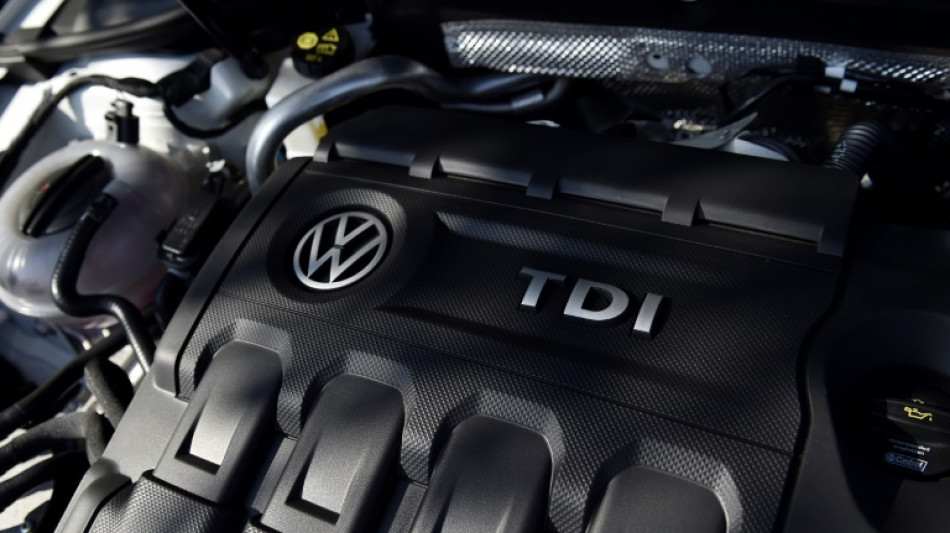
The countries phasing out internal combustion engines / Photo: FRANCK FIFE - AFP/File

 Dodgers eye three-peat, Red Sox face Yankees as MLB playoffs begin

 Certification of Boeing 737 MAX delayed by software bug

 Celine Dion wows Paris Fashion Week with surprise gig

 AMD buys firm founded by AI 'godmother' Fei-Fei Li

 Italy rebound in Turkey as France win late in Belgium

 Pope says concerns about AI 'should be taken seriously'

 Hurricanes to hoist title banner as NHL season begins

 Justice Alito steps aside from major US climate case

 Willis happy with England exile after retains Top 14 player award

 Spain housing protests keep heat on government as PM seeks new law

 Wissa spoils Zimbabwe homecoming as DR Congo win AFCON qualifier

 UK police release on bail five men held over airbase incident

 Ex-All Black Plummer 'sure' New Zealand will find Super Rugby solution

 Shein sees 1% revenue growth in first half of 2026

 Netherlands regrets Israel retaliation in settlements row

 Moscow seizes Russian assets of German food retailer Metro

 Bulgarian spirits inflamed by new rakia rules

 Documentary turns camera on architect Peter Zumthor

 UK police say releasing on bail five men held over airbase incident
 Trump admin finalizes reversal of US fuel economy standards

 US says no China arms sale plans after envoy cites Trump offer

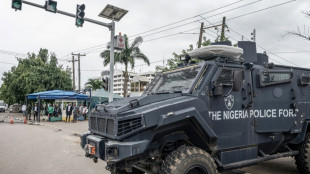 Dozens kidnapped in two weekend attacks in northern Nigeria

 Next stop the world: Pathirage wins Asian Games javelin gold

 Aster Launches Perpetual Grid Trading 2.0 with Up to 140,000 $ASTER Liquidity Mining Campaign
 Seoul says North Korean mines 'highly suspected' as cause of DMZ blast

The European Union approved on Monday a deal that will lead to the phaseout of sales of new fossil fuel cars by 2035, with a final green light by energy ministers due on Tuesday.
The 27-nation bloc joins more than a dozen other nations which have set deadlines for ending sales of new cars with internal combustion engines (ICE) which emit toxic gasses that are a major driver of climate change.
- 2025 in Norway -
Norway is the trailblazer in ending the reign of ICE vehicles, with only zero-emission new vehicles -- either battery electric or hydrogen -- to be sold from 2025.
Norway is both Western Europe's largest producer of fossil fuels and the leading adopter of electric vehicles: just under 80 percent of new cars sold in 2022 were electric.
- 2030 in Britain, Israel and Singapore -
Britain, Israel and Singapore plan to ban the sale of new vehicles with internal combustion engines in 2030.
In Britain, the measure is part of an effort to create a "green industrial revolution" that aims to create thousands of jobs.
- China drives forward -
China has taken a lead in the manufacturing of battery electric vehicles, with hundreds of companies making cars and generous public subsidies available.
Chinese firms also dominate the production of the raw materials used in electric batteries and their manufacture.
The world's top polluter with the world's largest auto market, China has set waypoints towards eliminating new fossil fuel cars. It aims for battery electric, hybrid and fuel cell vehicles to account for 20 percent of sales in 2025. It aims for them to account for a majority by 2035.
Local initiatives have also sprung up: several cities now ban the sale of fossil fuel scooters, subside zero-emission vehicles or have put low-emission zones into place.
- 2030 for US to get halfway -
According to President Joe Biden's climate plan, half of new cars sold in the United States should be zero-emissions in 2030. Large subsidies are being used to protect local manufacturers and attract battery production.
Plug-in hybrids are included in that goal, however. While these vehicles have fossil fuel motors, they can run several dozen kilometres on their batteries.
Despite being the home of Tesla, the United States has a long way to go. Sales of purely electric vehicles represented only 5.8 percent of the market in 2022.
The states of California and New York plan to ban the sale of new fossil fuel cars, except for plug-in hybrids, from 2035. Canada has fixed the same objective.
- 2035 for the EU -
The Monday deal ends three weeks of drama following a last-minute roadblock put up by Germany and maintains an end of the sale of new fossil fuel vehicles from 2035, a key element of the bloc's climate plans.
With vehicles required to be zero emission, even hybrids will fail to make the cut. Only new battery electric or hydrogen fuel cell vehicles will be able to be sold in the bloc, unless they are designed to use carbon-neutral synthetic fuels.
In order to satisfy Germany's liberals, a carve-out was made for synthetic fuels, which are still in development but which are hoped can be made from CO2 using green energy, thus making their use neutral for emissions purposes.
Low-emission zones which limit access by older vehicles to city centres have also multiplied across Europe.
Fully-electric vehicles represented 12.1 percent of new car sales in the EU in 2022.
Within the EU, Ireland, the Netherlands and Sweden have set a more ambitious target of shifting to zero-emission vehicles in 2030.
- Japan -
Also a major car manufacturer, Japan plans to take its time to shift to electric vehicles and is favouring hybrids, of which Toyota is the world champion. Electric vehicles accounted for just 1.7 percent of new car sales in 2022.
The government plans to ban the sale of fossil fuel vehicles except for hybrids in the 2030s.
- Other pioneers -
India, which expects car ownership to boom but is already suffering from severe air pollution, has targeted electric vehicles accounting 30 percent of sales in 2030.
Chile, a major producer of lithium used in batteries, aims for 2035.
H.Portela--PC