Land battle awaits Indigenous communities over Indonesia capital relocation: NGO

 Hong Kong court set to sentence activist Joshua Wong in security case

 Australia raises benchmark rate to highest level in 18 years

 'The Remarried Empress' Cast Discusses Bringing Fantasy Royal Drama to Life

 Asian stocks retreat as AI worries outweigh steep oil-price drop

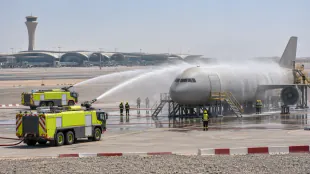 Hamad International Airport stages emergency drills during WATAN 2026

 Global failure to punish attacks leaves journalists at continuing risk

 Researchers Warn 'Bookkeeping Trick' Masks Beef Industry's Methane Emissions

 Climate Change Intensified Atlantic Hurricanes, Study Finds

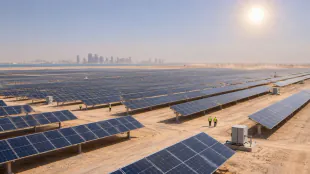 Qatar solar expansion opens scope for technical performance gains

 IXOPAY Announces IXO One, a Modular Payments Platform Built for an Era of Fluid Commerce
Tens of thousands of Indonesia's indigenous people are at risk of being expelled from their lands to make way for the construction of a new capital on jungle-clad Borneo island, a rights group warned on Friday.
At least 20,000 people from 21 indigenous groups live in the area designated for the construction of the new capital with laws enabling the move from Jakarta not providing enough protection for the communities' land rights, according to the Indigenous Peoples Alliance of the Archipelago (AMAN).
The group issued its warning after parliament last week approved the capital's relocation from Jakarta, on Java island, to the East Kalimantan province on the Indonesian part of Borneo, which the country shares with Malaysia and Brunei.
"The project will trigger problems such as confiscation of customary lands and criminalisation of indigenous people when they try to defend their rights," Muhammad Arman, AMAM's Policy, Law and Human Rights Advocacy Director, told AFP on Friday.
"They will also lose their traditional jobs such as farming."
Data compiled by AMAN in 2019 shows that at least 13 customary lands, which are administered according to indigenous customs, were located in the new capital area in North Penajam Paser.
Indigenous communities on Borneo are already locked in ongoing conflict with corporations, which have been given plantation contracts on around 30,000 hectares that overlap with customary lands.
"It is like a double run over for indigenous communities. First, they have to fight the business sector and in the future, they will have to face their own government for the new capital project," Arman said.
A recent investigation carried out by rights groups including AMAN uncovered at least 162 permits for mining, plantations, and forestry and coal-based power plants have been granted in the new capital area.
The proposed city will cover around 56,180 hectares (216 square miles). In total, 256,142 hectares have been set aside for the project, with the additional land earmarked for potential future expansion.
Early plans for the new capital depict a utopian design aimed at creating an environmentally friendly "smart" city, but few details have been confirmed.
Plans to begin construction in 2020 were hampered by the onset of the Covid-19 pandemic. The development of the area will take place in several stages until 2045.
Environmentalist critics of the new capital have warned it could damage ecosystems in the region, where mining and palm oil plantations already threaten rainforests that are home to Borneo's endangered species, including orangutans.
L.Carrico--PC