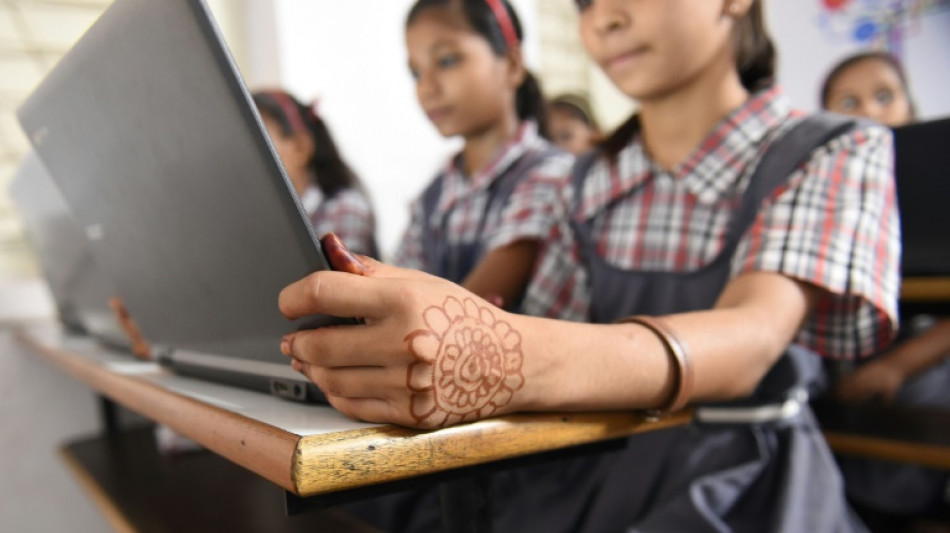
UN warns against 'excessive' tech use in classrooms / Photo: SAM PANTHAKY - AFP

 British Couple Spends £3,500 on Gender-Selective IVF in Egypt to Ensure Daughter

 Games Inbox: Reader Debates GTA 6 PC Release, Graphics, and Monster Hunter Choices

 Malta's Chris Bonett Named Among Maritime Industry's 'Men of Influence'

 Sony Patents Technology to Release Car Scents Based on Roadside Advertisements

 Understanding Dementia Care: Why Adults With Dementia Should Not Be Treated Like Children
Heavy reliance on technology in education may be unproductive, or even detrimental, if it interferes with the acquisition of basic skills such as reading, the UN warned on Wednesday.
The body's education, culture and science agency UNESCO said in a report that while students should learn about technology in the world, teachers should beware of overusing "fancy technological" means in the classroom.
"There is little robust evidence on digital technology's added value in education," the report said.
Technology in the classroom "can have detrimental impact if inappropriate or excessive", it said. "It should focus on learning outcomes, not on digital inputs."
Manos Antoninis, who directed the UNESCO report, said 20 years after laptops began to be rolled out in schools, it was clear that such policies only worked if they were combined with a solid pedagogical framework.
But only a "few countries have had the patience and energy to move into that direction", he said.
"It's not enough to just distribute devices," he said.
UNESCO had observed a rising trend of banning smartphones in classrooms, with "one in four countries" passing laws and regulations to that effect.
"The presence of a phone in a classroom can be very distracting," Antoninis said.
He said smartphone bans in schools, including by liberal countries like The Netherlands, were "an interesting and surprising finding" for the UNESCO researchers.
"People are thinking a little bit more through what the consequences and the distractions in schools are," he said.
The report warned strongly against substituting technology for the acquisition of traditional key skills which could actually help children avoid some of the pitfalls of the digital world.
Students with strong reading skills, for example, were much less likely to be deceived by phishing mail, Antoninis said.
"If you are taught to read well, read for meaning, that makes you also better prepared to navigate the digital world and that's a reality that we often forget," Antoninis said.
L.Carrico--PC