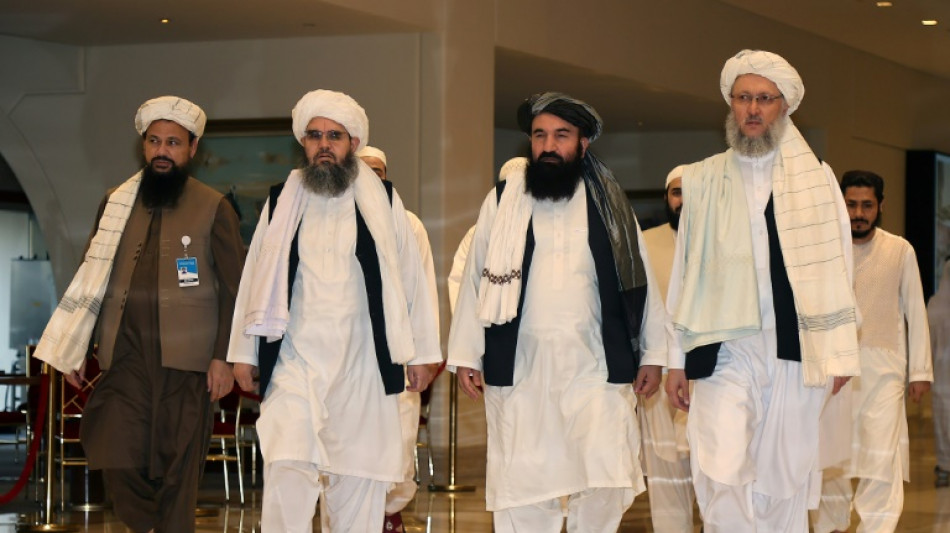
Neckties are a sign of the cross, says Taliban official / Photo: KARIM JAAFAR - AFP/File

 British Couple Spends £3,500 on Gender-Selective IVF in Egypt to Ensure Daughter

 Games Inbox: Reader Debates GTA 6 PC Release, Graphics, and Monster Hunter Choices

 Malta's Chris Bonett Named Among Maritime Industry's 'Men of Influence'

 Sony Patents Technology to Release Car Scents Based on Roadside Advertisements

 Understanding Dementia Care: Why Adults With Dementia Should Not Be Treated Like Children
Neckties worn by men were a sign of the Christian cross, a senior Afghan Taliban official said Wednesday, adding they should be eliminated.
"Sometimes, when I go to hospitals and other areas, an Afghan Muslim engineer or doctor uses a necktie," said Mohammad Hashim Shaheed Wror, head of the Invitation and Guidance Directorate, a department that seeks to guide people along proper Islamic lines.
He said in a speech broadcast by Tolo TV that the symbolism of the tie "is obvious in Islam".
"What is a tie? It is the cross. It is ordered in Sharia that you should break it and eliminate it," he said.
Taliban authorities have not imposed any dress rules on men since taking over in August 2021, but women must cover up with a hijab when out in public.
Afghan Taliban officials almost all dress the same -- shalwar kameez, a waistcoat, and turban.
Casual Western clothes became less common after the Taliban takeover but some professionals -- as well as newsreaders on TV channels -- still don a collar and tie.
The tie is widely believed to have emerged in the 17th century and was made a fashion staple by the French.
Previous Afghan administrations have also tried to impose dress regulations on the population, or on officials at least.
During the decade-long Soviet occupation starting in 1979, government workers were discouraged from wearing traditional attire and told to wear suits.
Former president Ashraf Ghani -- who fled the country as the Taliban took over in 2021 -- favoured Western suits when abroad and traditional attire at home.
During their two-decade insurgency the Taliban's fighters wore shalwar kameez, but since taking power have introduced modern military uniforms for the armed services.
E.Ramalho--PC