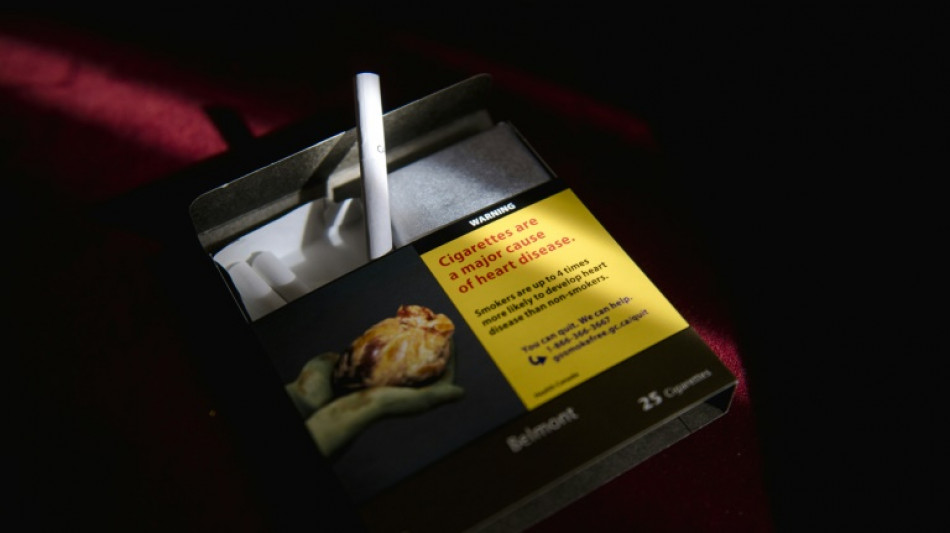
Each cigarette in Canada to come with warning label / Photo: ANDREJ IVANOV - AFP

 НЕМЕЦКАЯ ALIX LASERS БЕРЁТ НА ОБСЛУЖИВАНИЕ ВСЕХ КЛИЕНТОВ АВСТРИЙСКОЙ ALIX LASERS

 British Couple Spends £3,500 on Gender-Selective IVF in Egypt to Ensure Daughter

 Games Inbox: Reader Debates GTA 6 PC Release, Graphics, and Monster Hunter Choices

 Karbon-X (OTCQB: KARX) Joins IATA CORSIA EEU Supply Alliance as 2027 Aviation Compliance Demand Accelerates

 US Lawmaker and Colombian Ministry Urge X to Suspend Gustavo Petro’s Account

Each cigarette sold in Canada will have to come with an individual health warning that "cigarettes cause impotence" and cancer, and that there is "poison in every puff" under new rules that came into effect Tuesday.
The new regulations, which were first announced in May, are a world first.
King-size cigarettes with the new individual labels are expected to be available in stores within a year, followed by regular size cigarettes in early 2025.
The warning labels will be "virtually unavoidable and, together with updated graphic images displayed on the package, will provide a real and startling reminder of the health consequences of smoking," Canada's former addictions minister, Carolyn Bennett, has previously said.
The Canadian government noted that some young people, who are particularly susceptible to the risk of tobacco dependence, start smoking after being given a single cigarette rather than a pack labeled with health warnings.
In 2000, Canada became the first country to order graphic warnings on packs of cigarettes -- including grisly pictorials of diseased hearts and lungs -- to raise awareness of the health hazards associated with tobacco use.
Smoking has been trending down over the past two decades.
But, according to government data, tobacco use continues to kill 48,000 Canadians each year, and almost half of the country's health care costs are linked to substance use.
Ottawa aims to further reduce the number of smokers in the country to five percent of the population, or about 2 million people, by 2035 -- from about 13 percent currently.
V.F.Barreira--PC