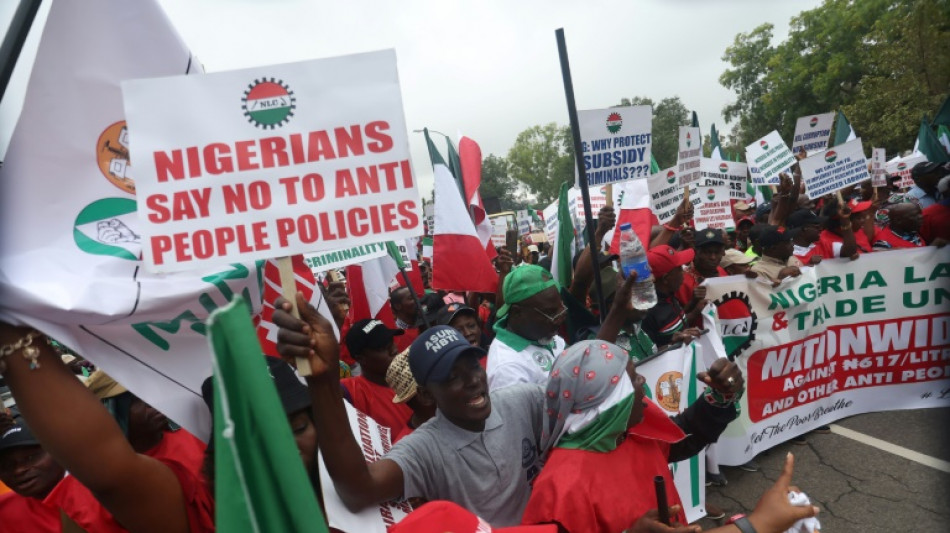
Nigerian workers strike over cost of living crisis / Photo: Kola SULAIMON - AFP

 НЕМЕЦКАЯ ALIX LASERS БЕРЁТ НА ОБСЛУЖИВАНИЕ ВСЕХ КЛИЕНТОВ АВСТРИЙСКОЙ ALIX LASERS

 British Couple Spends £3,500 on Gender-Selective IVF in Egypt to Ensure Daughter

 Games Inbox: Reader Debates GTA 6 PC Release, Graphics, and Monster Hunter Choices

 Karbon-X (OTCQB: KARX) Joins IATA CORSIA EEU Supply Alliance as 2027 Aviation Compliance Demand Accelerates

 US Lawmaker and Colombian Ministry Urge X to Suspend Gustavo Petro’s Account

Nigerian workers across numerous sectors went on strike Wednesday over the rising cost of living following the removal of a petrol subsidy.
The nationwide walkout was called Tuesday by the two main workers unions --the Nigerian Labour Congress (NLC) and the Trade Union Congress (TUC) -- after talks with the government to extend the subsidy broke down.
President Bola Tinubu on May 29, during his inauguration as the new leader of Africa's most populous nation, ended a fuel subsidy scheme, pushing up prices of food, transportation and other services.
In Abuja on Wednesday, about 400 protesters led by NLC president Joe Ajaero and his TUC counterpart Festus Osifo, marched through the capital carrying placards and chanting slogans.
They denounced low wages, lack of social amenities and adequate welfare as well as mass poverty.
The protesters stormed the parliament and smashed one of the gates before presenting their petitions. They were received by the Senate leaders who promised to look into their demands.
The protesters were accompanied by armed police and soldiers.
Ajaero told reporters demonstrations will continue until the government gives back the petrol subsidy.
Many businesses, including government offices, banks and markets were closed. Only a few vehicles were on the roads as the workers marched towards the city centre.
-Decrepit refineries -
But in Lagos and other cities across the country of some 210 million people, the strike action was mixed. Some markets and shops remained opened although some commercial banks were closed.
Commercial buses were operating in Lagos while a few government offices opened for business in the sprawling city of over 20 million people.
In the southern states of Abia, Ebonyi and Cross River striking workers took to major roads and headed to government offices to present their demands.
The oil-rich country, imports the bulk of its petroleum products due to problems at four domestic oil refineries.
Under the subsidy, the government covered the difference between the cost of import and prices at the pump.
Last week both unions gave the government until Wednesday to restore the subsidy or faced nationwide action.
The unions are also asking government to fix the decrepit refineries in order to end fuel imports, which has been a huge drain on foreign reserves and resources.
The strikes were called despite Tinubu announcing Monday a raft of packages to cushion against the higher cost of petrol.
Some of the measures included provision of 3,000 buses for the 36 states and Abuja to ease transport problems.
Tinubu also announced low interest loans to small businesses as well as loans for needy students.
O.Salvador--PC