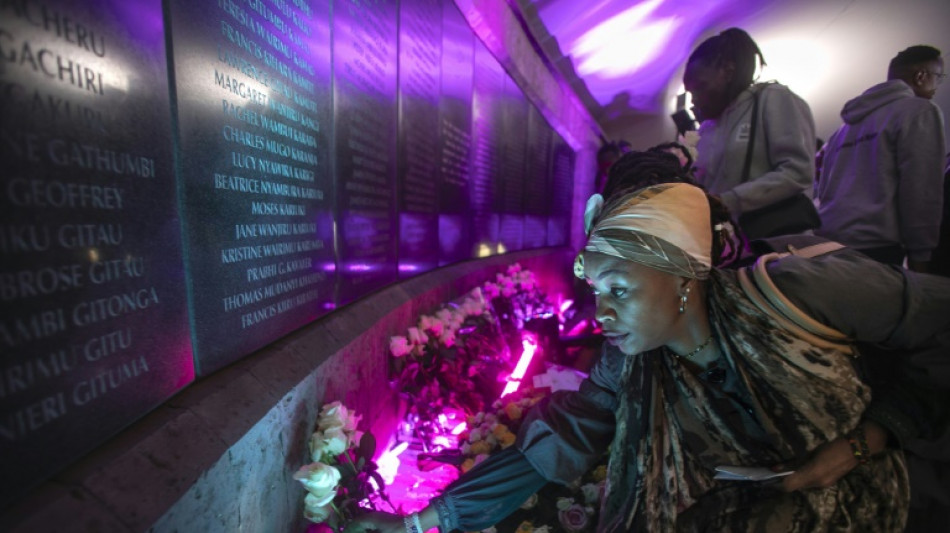
Kenya victims of 1998 US embassy bombing demand compensation / Photo: Tony KARUMBA - AFP

 НЕМЕЦКАЯ ALIX LASERS БЕРЁТ НА ОБСЛУЖИВАНИЕ ВСЕХ КЛИЕНТОВ АВСТРИЙСКОЙ ALIX LASERS

 British Couple Spends £3,500 on Gender-Selective IVF in Egypt to Ensure Daughter

 Games Inbox: Reader Debates GTA 6 PC Release, Graphics, and Monster Hunter Choices

 Karbon-X (OTCQB: KARX) Joins IATA CORSIA EEU Supply Alliance as 2027 Aviation Compliance Demand Accelerates

 US Lawmaker and Colombian Ministry Urge X to Suspend Gustavo Petro’s Account
Kenyan victims of the 1998 US embassy bombing in Nairobi on Monday renewed calls for compensation from Washington as the East African nation marked 25 years since its deadliest terror attack.
A powerful blast hit the US embassy in downtown Nairobi on August 7, 1998, killing 213 people and injuring over 5,000 -- most of them pedestrians or office workers in the adjacent buildings.
Minutes later, another explosion rocked the US mission in Dar es Salaam, in neighbouring Tanzania.
The twin bombings, claimed by Al-Qaeda, killed a total of 224 people and went on to shape how a generation thinks about personal security.
The attack "still feels fresh" a quarter century later, said Anisa Mwilu, who lost her husband in the blast.
"What we can ask is for compensation," she said to applause from several hundred people gathered for a remembrance ceremony for those killed, held at a memorial park in the Kenyan capital.
Caroline Muthoka, a member of a victims' group, urged the US Congress to approve legislation to cover medical expenses and education costs for survivors and their families.
Muthoka described the failure of the US government to compensate victims as a "injustice".
Redempta Kadenge Amisi, who was in a building flattened by the explosion, said she needed financial assistance to cover the costs of her twice-daily medication.
- Revenge attacks -
"The three people I was with were killed instantly. I didn't realise it but my back was on fire," she said of injuries that hospitalised her for over a month.
"Since the attack, I haven't received anything... but I still hope to get some."
Both Kenyan and US officials attended the ceremony, where the names of all the victims were read out aloud, and candles lit in memory.
The 1998 attack thrust Al-Qaeda onto the global stage and was the first in a series of bloody assaults in the East African nation.
Since the deployment of Kenyan military in Somalia in October 2011 to fight the Al-Qaeda-affiliate Al-Shabaab, there has been an upsurge in revenge attacks over the border.
In September 2013, Al-Shabaab gunmen stormed Nairobi's Westgate mall, killing at least 67 people.
Another Al-Shabaab attack in April 2015 at a university in the eastern Kenyan city of Garissa left 148 people dead.
In January 2019, the group laid siege to a hotel complex in Nairobi, killing 21 people.
F.Moura--PC