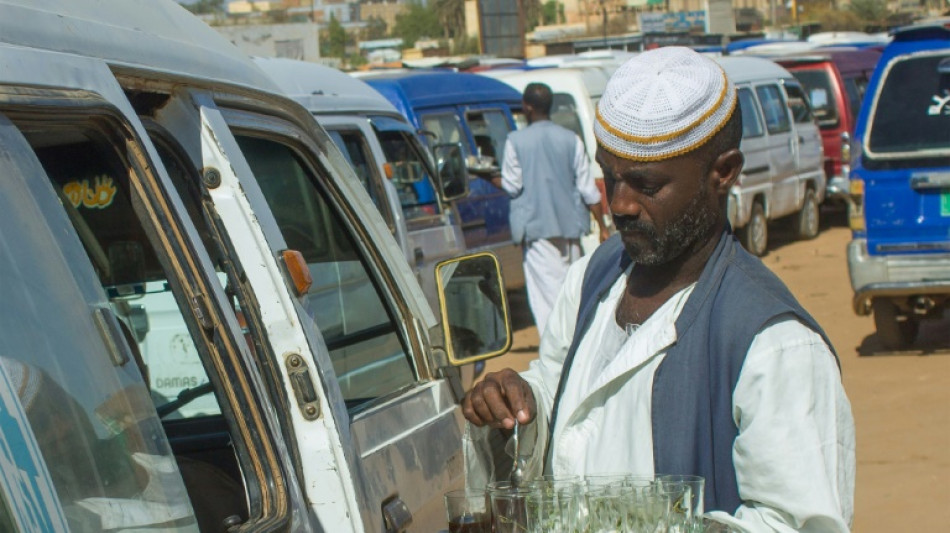
Sudanese start small businesses to survive war / Photo: - - AFP

 Japan Olympic chief says 'lot more' athletes at Games than expected

 Asian carmakers besting US rivals at home, China poised to strike

 Widgets & Web Offers All-Inclusive Investor Relations Websites for Public Companies, IPOs and SPACs

 Adams named new US captain to 2030 World Cup

 China a better influence in Latin America than US: poll

 Judge pauses construction of border project in Texas national park

 Belgium's De Bruyne fires double to sink Turkey, France held by Italy

 US jobs data boosts stocks as oil prices dip

 US Supreme Court to hear high-stakes climate case

 Trump expected to name intel chief Clayton as AI czar: reports

 Argentina unveils passports-for-investment scheme

 Brazil election debate chaos sparks censorship row
 England's Carse charged by cricket body over nightclub incident

 Amazon vows $1 bn for data center towns, decries 'myths'
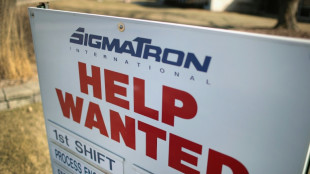 Oil prices drop on G7 fuel release, US jobs data boosts stocks

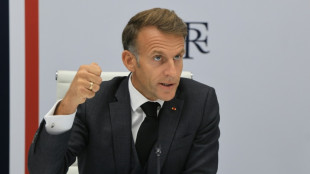 G7 agrees deal to ease global energy supply concerns

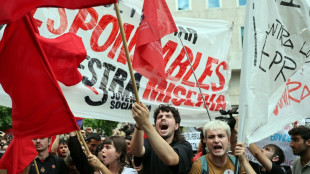 Spain's government dealt blow as lawmakers reject housing bills
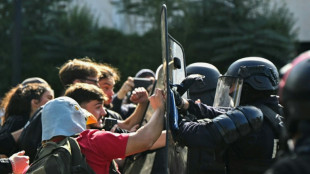
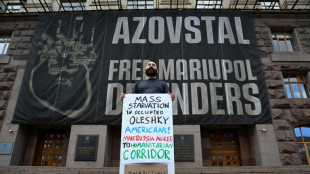 Food, medicine shortages deepen in Russian-occupied Oleshky

 Man City whistleblower Rui Pinto facing 'dire consequences' - lawyers
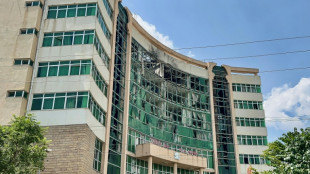
 Russia 'tearing Kyiv apart', mayor says, as strikes paralyse traffic
 Taiwan boxer Lin wins Games gold as Japan edge North Korea on penalties

 Japan tame North Korea to win Games gold after shootout drama

 US posts weak job growth data in September
 Ethiopia's conflict: the regional dimension

 Life expectancy almost back to pre-Covid levels, says WHO

Sudan's war has left university lecturer Ali Seif without pay for months. To make ends meet, he has turned to making soap in his room at a makeshift displacement camp.
Out of work as fighting rages between the forces of rival generals, many Sudanese have been forced to find creative ways to support themselves and their families.
Until April 15, when the conflict erupted between the army headed by General Abdel Fattah al-Burhan and Mohamed Hamdan Daglo's paramilitary Rapid Support Forces, Seif had worked at a Khartoum university.
Now the engineering lecturer and his family live in Wad Madani, a city where most of the nearly three million people displaced from the capital fled for safety with the few belongings they could bring.
Wad Madani has been spared the violence so far, but air strikes and fighting are taking place around 150 kilometres (95 miles) to the north.
Like many others, Seif said his house was "robbed" by paramilitaries, and he told AFP he has not received a salary since March with banks closed.
In order to survive, he has started selling soap.
"Misfortune makes you creative," said Seif.
"I noticed there was no soap left on the market even though everyone wanted some, so I decided to make soap bars," he recalled, surrounded by plastic pots he uses to mix soap paste before pouring it into ice cube trays to mould the bars.
- 'No choice' -
Like Seif, Michelle Elia Moussa used to stand in front of a classroom full of students.
But since the war turned her life and country upside down, she has spent her days standing in front of a stall at Al-Hasaheisa market, halfway between Khartoum and Wad Madani.
"I've given up hope and shelved my ambitions of being a brilliant teacher," she said, glasses on her nose and apron around her waist, as she looks over her cakes.
"Without a job, I can't support myself," she said, in a poverty-stricken country where the spectres of famine, epidemics and widespread war crimes now loom large.
"It's the first time I've worked in a market," she told AFP.
"I'm not comfortable, I'm ashamed, but it's a war. I have no choice," she added, expertly spreading a light dough on cast-iron plates to make thin wafers with holes.
Eshraqa Mousa, another woman who fled Khartoum, has opened a small stall to sell tea. Without it, she said, she could "only provide one meal a day" for her children.
- Leaving 'everything behind' -
Her family's hasty departure from the capital at the start of a war that has killed at least 3,900 people and displaced four million is still fresh in Mousa's memory.
"We left everything behind... so I came here and bought this little stall to sell tea," she said, draped in her long, multicoloured veil.
In a conservative society where tea sellers, though numerous, are often stigmatised and harassed, the move was an act of bravery she had never imagined she would achieve.
But with the war, such taboos were shattered, and survival and resourcefulness took over.
"We were forced to find alternatives," said Mohammed Ali.
A former civil servant in the capital, he "teamed up with some colleagues to open a small mobile food stall", he said.
Made of white sheet metal and powered by a generator, it's "in the style of those you find in Khartoum, which don't exist in Wad Madani."
Every day, he now sells mashed beans, falafel and other snacks loved by his compatriots, and he makes enough to feed his family.
That is, until the next storm: the streets of Wad Madani are buzzing with speculation that the war could soon come to this city.
J.Pereira--PC