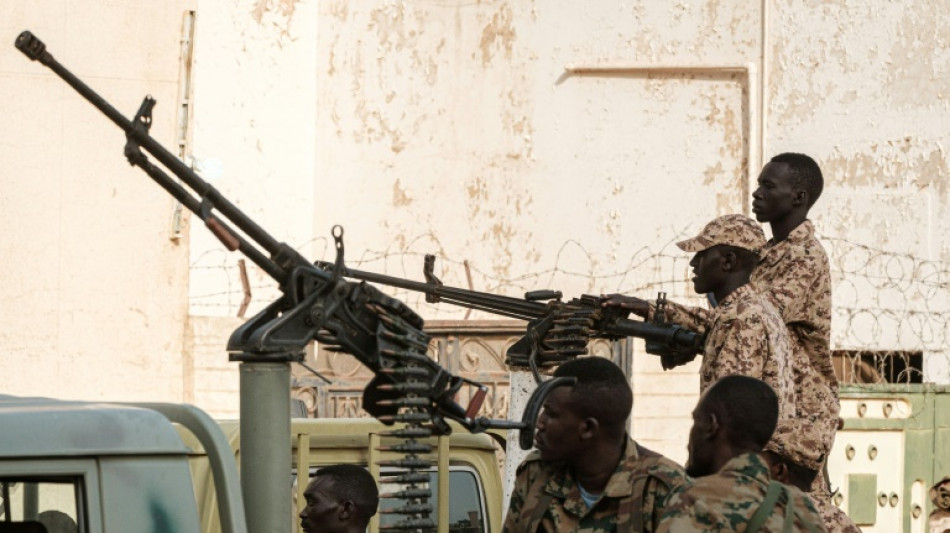
In Sudan's east, murky arms trade thrives as war rages / Photo: Yasuyoshi CHIBA - AFP/File

 'He's here with me': Japan cycle queen dedicates gold to late brother

 Japan Olympic chief says 'lot more' athletes at Games than expected

 Asian carmakers besting US rivals at home, China poised to strike

 Widgets & Web Offers All-Inclusive Investor Relations Websites for Public Companies, IPOs and SPACs

 Adams named new US captain to 2030 World Cup

 China a better influence in Latin America than US: poll

 Judge pauses construction of border project in Texas national park

 Belgium's De Bruyne fires double to sink Turkey, France held by Italy

 US jobs data boosts stocks as oil prices dip

 US Supreme Court to hear high-stakes climate case

 Trump expected to name intel chief Clayton as AI czar: reports

 Argentina unveils passports-for-investment scheme

 Brazil election debate chaos sparks censorship row
 England's Carse charged by cricket body over nightclub incident
 Amazon vows $1 bn for data center towns, decries 'myths'
 Oil prices drop on G7 fuel release, US jobs data boosts stocks

 G7 agrees deal to ease global energy supply concerns
 Spain's government dealt blow as lawmakers reject housing bills
 Food, medicine shortages deepen in Russian-occupied Oleshky
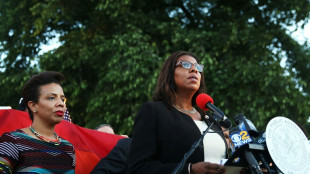
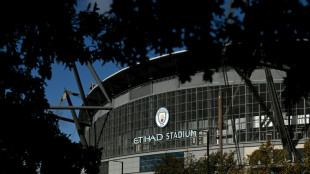 Man City whistleblower Rui Pinto facing 'dire consequences' - lawyers
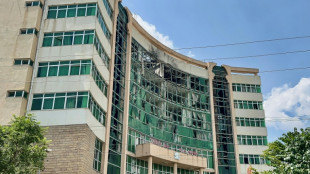
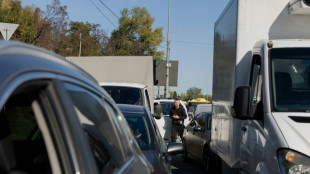 Russia 'tearing Kyiv apart', mayor says, as strikes paralyse traffic
 Taiwan boxer Lin wins Games gold as Japan edge North Korea on penalties

 Japan tame North Korea to win Games gold after shootout drama
 US posts weak job growth data in September
 Ethiopia's conflict: the regional dimension
More than four months into Sudan's devastating war, arms dealers are struggling to keep up with demand for a trade that is booming, at a deadly cost.
"A Kalashnikov? A rifle? A pistol?" said a 63-year-old dealer known as Wad al-Daou, offering his wares with a resounding laugh.
"The demand for weapons has soared so high that we can't possibly meet it," he said at a market near Sudan's borders with Ethiopia and Eritrea.
Fighting broke out on April 15 between army chief Abdel Fattah al-Burhan and his former deputy Mohamed Hamdan Daglo, who commands the paramilitary Rapid Support Forces (RSF).
The war has killed thousands, displaced millions and flooded the arsenals of a country already awash with weapons.
Arms dealers say prices have skyrocketed, while authorities loyal to the army have repeatedly reported the seizure of "sophisticated" weapons.
On August 10, state media said a shootout erupted in the eastern city of Kassala between soldiers and traffickers over vans loaded with weapons bound for the RSF.
A security official said it was one of "three major seizures of weapons" in Kassala and near the Red Sea port of Suakin.
"That's in addition to smaller operations," he told AFP on condition of anonymity because he was not authorised to speak to the media.
- The newest models -
But smugglers say authorities have been unable to curb the arms flow.
"We used to receive a shipment every three months, but now we're getting one every two weeks," Daou said.
Even before the war, authorities had sought to curb the massive influx of arms.
At the end of 2022, a government commission charged with rounding up illegal arms estimated there were five million weapons in the hands of Sudan's 48 million citizens.
This excluded "those held by rebel groups" in the western and southern states of Darfur, South Kordofan and Blue Nile that are served by long-established smuggling routes.
But since the war began, there have been many "fresh faces" trying to make a quick buck, said Saleh, another arms dealer who refused to give his real name.
It's a "thriving market", the 35-year-old said after hopping down from his new four-wheel drive clutching two smartphones.
Demand is high, since what began as a war between rival generals has spiralled to include tribes, rebels and civilians desperate to protect themselves.
- 'Crossroads' -
In a recent video, one of Sudan's eastern tribes showed hundreds of its members -- weapons in hand -- vowing to support the army.
Such shows of force are costly, with the price of a Kalashnikov jumping to "$1,500 per rifle, up from $850 before the war", Saleh said.
More sophisticated arms are even more expensive.
An American M16 rifle goes for $8,500, and a prized Israeli firearm for up to $10,000.
Asked where his weapons come from, Saleh cut the conversation short, only saying "machine guns and assault rifles... come from the Red Sea".
He refused to elaborate on the supply route that the security official also blames for the arms influx.
"Smugglers take advantage of the war in Yemen and the situation in Somalia" to carry out their business via the southern Red Sea, the official said.
"These groups are connected to international arms trade networks and have massive capabilities."
Along the coast south of Tokar, near Eritrea, traffickers take advantage of "a weak security presence", using "isolated ports and the rugged terrain" that others can't navigate, said the official.
"The border area has always been a crossroads for arms deals, thanks to Ethiopian and Eritrean armed groups at war with their governments," he added.
- 'We don't ask' -
The arms then converge at one spot -- the sparsely populated Al-Batana region between the Atbara tributary and Blue Nile state.
In late August, police raided the area, injuring civilians in the process, according to activists.
This is where Daou sells his shipments, to customers he describes as "farmers and herders who want weapons to protect themselves".
"We are a regular force," one RSF source said, referring to the paramilitary group's former status as an auxiliary branch of the army since 2013.
"Our weapons sources are well known and we do not deal with traffickers. We catch them," he told AFP on condition of anonymity because he is not authorised to speak to the media.
For Saleh, it is inconsequential.
"We sell our weapons to people in Al-Batana," he said. "We don't ask them what they're going to do with them afterwards."
M.Carneiro--PC
