'Hostage diplomacy': a growing headache for the West / Photo: STEPHANE DE SAKUTIN - AFP

 World No.1 Sinner pulls out of Shanghai Masters to delay return

 Red Bull's Verstappen grabs pole position for Bahrain GP
 India beat Pakistan in blockbuster as golfer Kim wins 'crazy' gold

 India beat arch-rivals Pakistan to win Asian Games cricket gold
 Ethiopia's Tigray rebels abandon regional capital as govt advances: journalist

 Tom Kim powers to Games gold and exemption from military service

 Split loyalties for Indian football fans at Brazil friendly

 India-Pakistan blockbuster brings cricket fever to Japan baseball field
 Wong waiting on Rafa after winning Asian Games tennis gold
 With Russia next door and rising costs, Latvia goes to the polls

 Penalty hero rues empty seats as Games hosts Japan win football gold
 North Korea fires ballistic missile after Seoul's apology demand

 US regulator finds Boeing 737 MAX software bug 'not a safety concern'

 Ohtani 'managing' injuries as Dodgers launch MLB post-season

 Botched US execution leaves murderer unconscious on ventilator: lawyers
 Cornell rape case exposes sexual violence at US colleges
 France held by Italy in Zidane's homecoming after Olise stunner

 Ethiopian pro-government militia claims Tigray airport as regional tensions spike
 Ohtani shaking off injuries as Dodgers launch MLB post-season
 Sea levels to rise in California as coastal wave surges up west coast
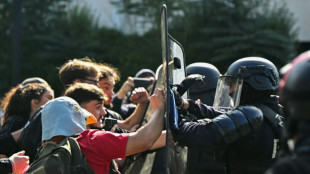 New rallies urged in France as protests disrupt over 730 schools

 Djokovic survives China Open scare, Sabalenka starts strong
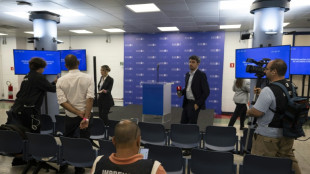
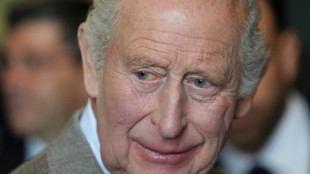 King Charles to evoke colonial 'darkest days' on Caribbean tour

 Tesla shares jump after global car sales top estimates

 DR Congo Ebola outbreak killed more than 4,000: official figures
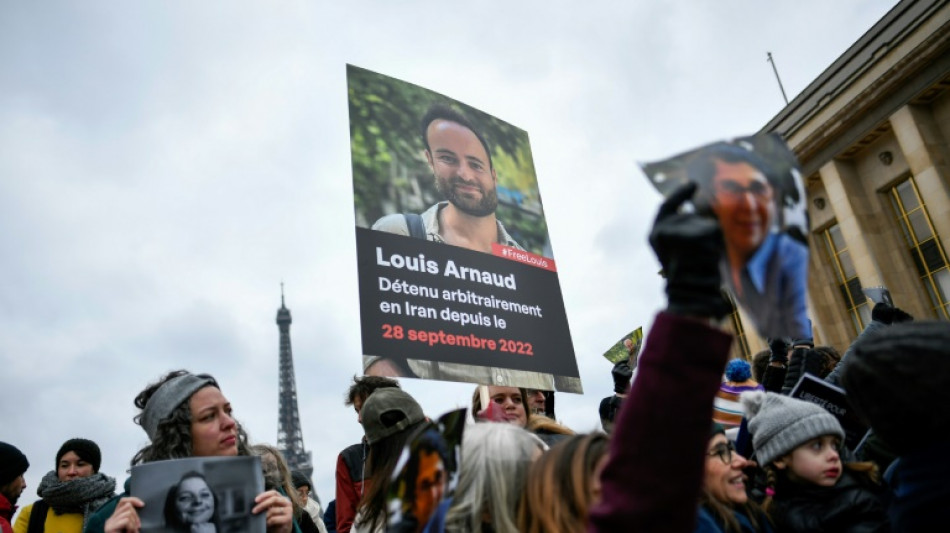
Sylvie Arnaud's first feeling when she learnt her son Louis had been detained in Iran in September last year was sheer incredulity, followed by a raging sense of injustice and impotence.
"We don't know how long this will last, we don't know what the Iranians are waiting for and we will probably never know," she told AFP.
Louis Arnaud, described by his family as a passionate traveller who simply wanted to see the world, is one of four French nationals held in prison in Iran.
He is also among at least a dozen Western nationals jailed in what campaigners and some governments describe as a deliberate strategy of hostage-taking by the Islamic republic to extract concessions.
But Iran is far from the only country accused of pursuing such a strategy, with the likes of China, Russia and Venezuela seen as holding innocent foreigners on trumped-up charges of espionage or other security-related allegations -- people who simply had the misfortune to be in the wrong place at the wrong time.
Precedents have shown the prisoners are generally only released in exchange for something -- either for other detainees or assets -- forcing Western governments into the uncomfortable position of knowingly negotiating over hostage-takings.
Such negotiations are hugely time-consuming, painstaking, often conducted through intermediaries and, even if a deal is reached, can collapse at the last minute.
"At the beginning, I didn't want to think that it was political. And time has now passed... without anything happening," said Sylvie Arnaud.
- 'Rewarding a crime' -
Western governments have often made major concessions to secure the release of their nationals held abroad.
The United States authorised the transfer of six billion dollars in Iranian funds frozen in South Korea and the release of five Iranians to facilitate the release of five Americans jailed by Iran.
After being released from prison, the Americans are now held under house arrest and should go home when the transaction is completed.
This exchange has already been criticised for not including two US residents: German national Jamshid Sharmahd who is facing the death penalty and Virginia-based Iranian Shahab Dalili who was arrested in 2016 while visiting Tehran.
At the end of May, Belgian humanitarian Olivier Vandecasteele was released after 15 months of detention in Iran, in exchange for an Iranian diplomat, Assadollah Assadi, who had been sentenced in Belgium in 2021 to 20 years in prison on terror charges for seeking to bomb an opposition rally outside Paris.
In October 2022, seven American prisoners held in Venezuela were released in exchange for two individuals close to President Nicolas Maduro.
Russia in December released basketball superstar Brittney Griner, who had been held since February 2022 on charges of possessing vape cartridges with a small quantity of cannabis oil. But only in exchange for notorious Russian arms dealer Viktor Bout -- known as the "Merchant of Death" –- who had been jailed in the United States.
Former US marine Paul Whelan, imprisoned in Russia for over four years, remains in a penal colony while Russia in March arrested another US citizen, Wall Street Journal reporter Evan Gershkovich.
Etienne Dignat, professor at Sciences Po university in Paris, said governments faced a "dilemma".
"By unfreezing assets and exchanging prisoners, they are in a certain way rewarding a crime and encouraging states to continue their hostage diplomacy," Dignat, author of a book on hostage-taking, told AFP.
- 'Only way to get home' -
Daren Nair, a security consultant and campaigner who runs a podcast on hostage diplomacy, said the number of victims had risen in recent years.
"The majority of Americans held captive abroad 10 years ago were held by non-state actors in countries like Syria, Yemen and Somalia... Today, the majority of Americans held captive abroad are being held by state actors like Iran, Venezuela, Russia and China," he told AFP.
He said that once nationals were taken, governments had no alternative except to negotiate with their captors -- but said more should be done to thwart the strategy in the first place.
He argued the two ways to stop hostage diplomacy were to "punish the individuals responsible within these hostage-taking states and continuously raise awareness so your citizens stop travelling to these countries."
"In general the only way to get a hostage home is to negotiate," added Joel Simon, founding director of the Journalism Protection Initiative. "Other strategies –- such as rescues –- are rarely successful."
"Unless we engage with hostage takers -- whether they be states or non-state actors -– the hostage will probably be killed or will languish in detention or prison for an extended period."
Blandine Briere never doubted the innocence of her brother Benjamin who was finally freed in May after being held for three years in Iran on charges of espionage.
She recalled how the family felt plunged into an "impasse".
"We discovered a world that was unknown in normal life," she said, recalling how the family offered support but was "constantly walking on eggshells because we did not know if it can have a positive or negative impact."
L.Mesquita--PC