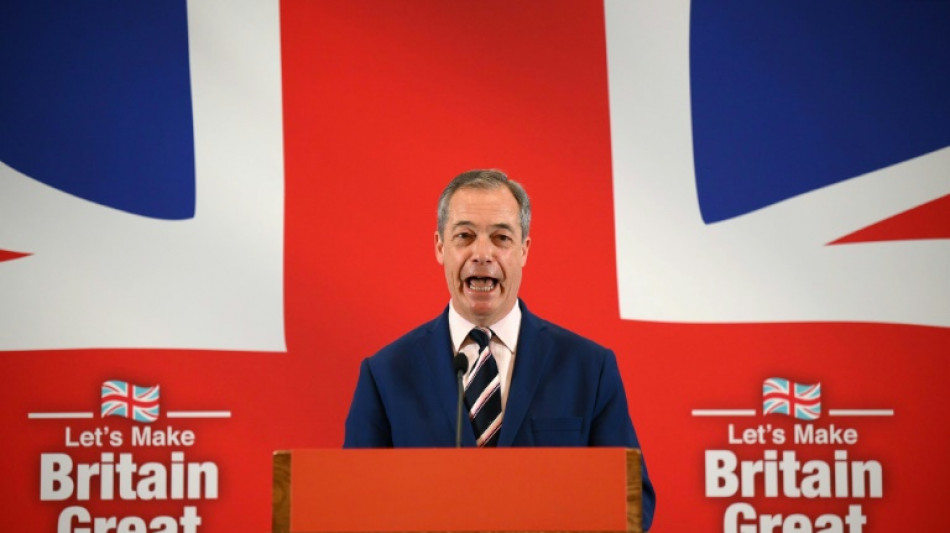
UK says no evidence of political bank account closures / Photo: Daniel LEAL - AFP/File

 Malaysia Sues Google for $146m Over Harmful Content

 Black Wind Turbine Blades Reduce Bird Deaths by 74% in Spain Study

 Brazil’s Landless Movement Partners with China to Build Affordable Tractors for Family Farms

 Raheem Sterling Receives Suspended Sentence After Lamborghini Crash

 Luxembourg Pay Rise Delayed as Regional and World Headlines Develop

 Audience to Choose the Set List at Luxembourg's First FAMIL Jukebox Night

 Twickenham Grounds Team Prepares Pitch for Six Matches in Three Days

 Black Friday Discounts Cut Prices on Two Top-Rated Wiper Blades

 Arizona Gun Regulation Battle Intensifies Under New Democratic Legislative Majority

Britain on Tuesday said it found no evidence of "political" bank account closures, according to a review launched after the controversial withdrawal of facilities for Nigel Farage, angering the arch Brexiteer.
The Financial Conduct Authority (FCA) said in initial findings that the evidence it has gathered "suggests that no firm closed an account between July 2022 and June 2023 primarily because of a customer's political views".
However, the financial markets watchdog also conceded that it had collected limited information and needed to investigate further.
The announcement sparked fury from Farage who labelled it "a total whitewash" and "a joke", and described the FCA as "overtly political".
The probe was launched after Coutts, the private banking arm of British lender NatWest, decided to end its relationship with Farage, the former leader of the Brexit Party and the anti-immigration party UKIP.
Farage complained in July that he was removed as a client for his political views, while an internal Coutts document discussed "reputational risk".
NatWest's then-CEO Alison Rose resigned after it emerged she had spoken with a BBC journalist about the Farage case in what she called a "serious error of judgement", ending her 30-year career at the institution.
Peter Flavel, chief executive of Coutts since March 2016, also quit the upmarket bank over the controversy.
The FCA added Tuesday that it needed to do "further work" with banks to verify their data and better understand why they decide to close accounts due to reputational risk.
"While no bank, building society or payment firm reported to us that they had closed accounts primarily due to someone's political views, further work is needed for us to be sure," FCA chief executive Nikhil Rathi said.
He added: "The time is also right for a debate on how we balance access to bank accounts with the threat of financial crime, as well as firms' reasonable risk and commercial appetites.
"An important question for policy makers is whether all individuals, businesses and organisations should have the right to an account, as is the case in some other countries."
T.Resende--PC

