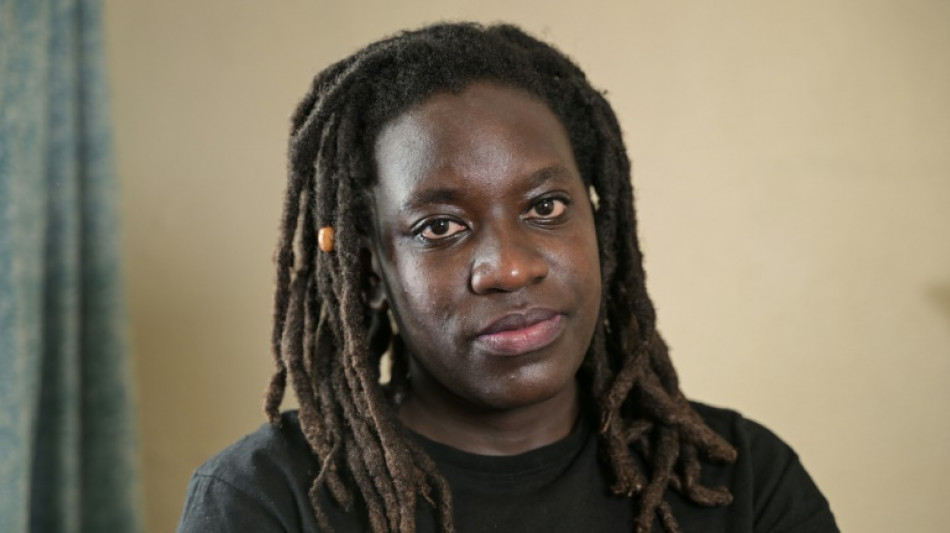
10 years on, Kenya mall siege survivor says retelling ordeal helped to heal / Photo: SIMON MAINA - AFP

 Malaysia Sues Google for $146m Over Harmful Content

 Black Wind Turbine Blades Reduce Bird Deaths by 74% in Spain Study

 Brazil’s Landless Movement Partners with China to Build Affordable Tractors for Family Farms

 Raheem Sterling Receives Suspended Sentence After Lamborghini Crash

 Luxembourg Pay Rise Delayed as Regional and World Headlines Develop

 Audience to Choose the Set List at Luxembourg's First FAMIL Jukebox Night

 Twickenham Grounds Team Prepares Pitch for Six Matches in Three Days

 Black Friday Discounts Cut Prices on Two Top-Rated Wiper Blades

 Arizona Gun Regulation Battle Intensifies Under New Democratic Legislative Majority

"Please let them not kill us, let them not kill us."
Ten years on, Loi Awat still remembers the desperate prayers of people around her as she became caught up in one of the deadliest attacks on Kenyan soil -- the four-day siege at the upmarket Westgate shopping mall.
For four harrowing hours, Awat crammed under a small table in a bank lobby at the Nairobi mall, where she had gone to withdraw money for an afternoon rugby tournament she was going to watch with her two cousins.
She says everything happened in a split second.
"I heard some commotion behind me. I turned back and what I saw were people running. I couldn't see my cousins," Awat told AFP in an interview.
She says talking about the traumatic events that unfolded on September 21, 2013 has helped her heal.
Awat, who was just 23 at the time and had recently graduated, remembers hearing gunshots rattling through the air, leaving her frozen in terror at the bank's entrance.
"Somebody pulled me down to the floor and into the corner... My first thought was that this is a bank robbery."
After an hour of confusion, frantically texting family and friends to find out if there was any news of what was happening at the mall, she heard the Muslim chant "Allahu Akbar" ("God is Greatest)" coming from five different points in the mall.
"I just knew that these guys are here to kill us... that realisation was so heavy," recalled a sobbing Awat, now 33.
"There was a shooter right outside the bank glass doors. I did not turn to look but I could hear (shots).
"There were explosions... I thought the building would collapse and I (feared) my parents might never find my body."
- Fled in panic -
It was midday on Saturday when gunmen stormed the teeming mall, spraying shoppers with machinegun fire and tossing grenades.
People fled the four-storey building in panic, crawling along walls to escape stray bullets, through air vents or hiding under piles of carpets, while several played dead.
On the rooftop, a cooking competition for young children turned into a scene of chaos when gunmen lobbed grenades into the crowd.
The siege lasted for around 80 hours, with at least 67 people killed and more than 200 injured before security forces took control.
Al-Qaeda-linked jihadist group Al-Shabaab claimed responsibility, saying it was in retaliation for Nairobi's military intervention in Somalia.
Kenya first sent troops into its neighbour in 2011 and remains a major contributor to the African Union force which backs Mogadishu in its war against the Islamist militants.
But Kenya has suffered a string of deadly retaliatory assaults.
Two years after Westgate, Al-Shabaab fighters attacked Garissa University in eastern Kenya, killing 148 people, almost all of them students.
It was the second most deadly attack in Kenya's history, surpassed only by Al-Qaeda's bombing of the US embassy in Nairobi in 1998 that killed 213 people.
In 2019, Al-Shabaab gunmen killed 21 people at the upscale Dusit hotel complex in Nairobi.
- 'Live for the moment' -
Awat and her cousins were among more than 1,000 people rescued from the Westgate carnage.
She and other people hiding in the bank were forced out by thick clouds of tear gas. Trying to suppress coughs, they crawled along a floor covered in broken glass, bumping into a body of a man who had been shot.
"When I got to the door of Nakumatt supermarket, I saw somebody with a gun just like in the movies call me 'come, come'. I just got up and went to him," she recalls.
Awat, who now works as a television scriptwriter, believes that not being afraid to talk about her ordeal has healed her in more ways than she can explain.
"Immediately after, I started telling the story, and I have not stopped telling the story," she says, adding that she had never felt the need for professional therapy.
Despite the nightmares that tormented her sleep, she says her approach was to "face the issue directly" and she even visited the mall within the first week of its 2015 reopening.
"It did affect my perception of the world," Awat says. "Up to then everything had been nice and easy... but when something like that happens, now I started to really think about things like wars, things like death."
"I got deep into studying the war in Somalia, what happened, how it started. I became more political."
And faced with death at a young age, Awat says: "I started to make choices, live for the moment choices."
V.Dantas--PC

