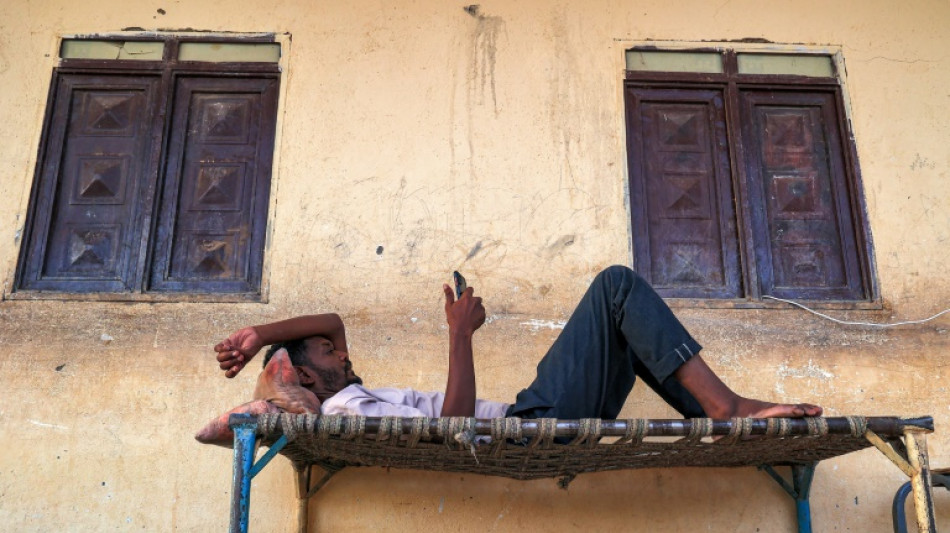
Months-long limbo for thousands of Sudanese at Egypt border / Photo: ASHRAF SHAZLY - AFP

 Lula, Bolsonaro in final push for votes ahead of knife-edge election
 Boisterous fashion week barnstorms 'sleepy' Nigerian capital

 UAE investigators say flydubai co-pilot was planning 'terrorist act'
 Rahul smacks century in India v Windies ODI

 Daryz seeks to join exclusive club of dual Arc winners
 Russia warns diplomats to leave Kyiv over new strikes threat
 Olympic champ Zheng rebukes rowdy home crowd at China Open
 World No.1 Sinner pulls out of Shanghai Masters to delay return

 Red Bull's Verstappen grabs pole position for Bahrain GP

 India beat Pakistan in blockbuster as golfer Kim wins 'crazy' gold

 India beat arch-rivals Pakistan to win Asian Games cricket gold

 Ethiopia's Tigray rebels abandon regional capital as govt advances: journalist

 Tom Kim powers to Games gold and exemption from military service

 Split loyalties for Indian football fans at Brazil friendly

 India-Pakistan blockbuster brings cricket fever to Japan baseball field

 Wong waiting on Rafa after winning Asian Games tennis gold
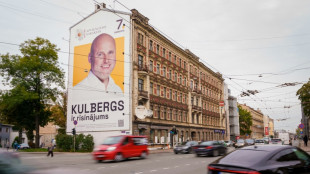 With Russia next door and rising costs, Latvia goes to the polls

 Penalty hero rues empty seats as Games hosts Japan win football gold

 North Korea fires ballistic missile after Seoul's apology demand

 US regulator finds Boeing 737 MAX software bug 'not a safety concern'

 Ohtani 'managing' injuries as Dodgers launch MLB post-season

 Botched US execution leaves murderer unconscious on ventilator: lawyers

 Cornell rape case exposes sexual violence at US colleges

 France held by Italy in Zidane's homecoming after Olise stunner

 Ethiopian pro-government militia claims Tigray airport as regional tensions spike

In the sandy courtyard of a school turned shelter in northern Sudan, two children idly pass a football back and forth. Around them, dozens of adults wait, trapped between a war and a border.
There is little else to do in the border town of Wadi Halfa, where a local support group says upwards of 20,000 displaced people live in limbo, unable to cross the northern frontier into Egypt and escape the five-month war between the Sudanese army and paramilitary Rapid Support Forces.
Of the more than five million who have been forced to flee their homes during the war, according to the United Nations, at least 323,000 have crossed into Egypt.
But not everyone has made it.
Aref al-Zubeir, an architect, has been in Wadi Halfa since the first month of fighting.
"I lost my passport, and I've been waiting to have a new one issued since the middle of May," he told AFP at a classroom that has been turned into a temporary home for the displaced.
There, the 36-year-old sleeps on the floor, propped up only by cushions on top of a thin mat.
"I sent my family ahead to Cairo. This was back when travelling was easy," he said.
When the war broke out in April, only men under the age of 50 needed to apply for visas to enter Egypt -- allowing many to flee in the conflict's first weeks.
But in June, Cairo tightened its visa rules to include children, women and older men, which has slowed the flow of refugees across the border and kept many stuck in Wadi Halfa.
- Essential goods delayed -
"The most recent figures show that 8,150 people are staying in 53 shelters in Halfa," according to Oday Mohammed, 23, the coordinator of the Halfa "Emergency Room", one of many volunteer groups providing aid across Sudan.
"There are many more, over 15,000, being hosted by families in local homes or renting accommodation," he said.
Those stuck in what was largely a transit town are "in need of food, medicine, shelter and health care, as well as the central problem that they need their visas issued and passports renewed," Mohammed told AFP.
According to Human Rights Watch, "without ensuring the speedy processing of visas," Egypt's toughened visa rule "violates international standards by creating unreasonable and life-threatening delays in processing asylum seekers."
Egyptian officials said at the time that they tightened the visa procedures to stop "illegal activities by individuals and groups on the Sudanese side of the border, who forged entry visas" for profit.
While people find it difficult to get out, goods are slow coming in.
In August, the UN refugee agency reported that hundreds of commercial trucks carrying food and hygiene products were stuck at the border waiting to cross into Sudan, causing "the delay of essential goods reaching Wadi Halfa" and other parts of Sudan.
- A difficult choice -
Families who grabbed whatever cash they could and fled their homes during the war quickly ran out of cash. They have since relied on mutual aid and any assistance that comes their way.
The relentless gunfire, air strikes and artillery blasts that have devastated Khartoum, 1,000 kilometres (620 miles) south, have not reached the quiet of Halfa.
But the war is never too far off.
Siham Saleh, a 45-year-old journalist, spends her days anxiously refreshing social media feeds on her phone for the latest news about the conflict.
"Leaving was an incredibly difficult choice, but for us as journalists, it got too dangerous," she told AFP, carefully weighing each word.
Journalists and activists have been routinely targeted by both sides.
Many have been forced to flee, and those who remain work largely in secret to document atrocities committed during the fighting between rival generals, army chief Abdel Fattah al-Burhan and his former deputy, paramilitary commander Mohamed Hamdan Daglo.
"People are risking their lives. They could be targeted or detained at any point. That's why you decide to leave, and you hope maybe then you'll be safe," Saleh said.
She is among the more than 4.2 million people displaced within Sudan who, even if they have reached relative safety, face other challenges.
The war has decimated already-fragile infrastructure, shuttered 80 percent of the country's hospitals and pushed more than six million people to "the brink of famine", global humanitarian organisations said last month.
Since April 15, nearly 7,500 people have died in the fighting, according to a conservative estimate from the Armed Conflict Location & Event Data Project.
T.Batista--PC