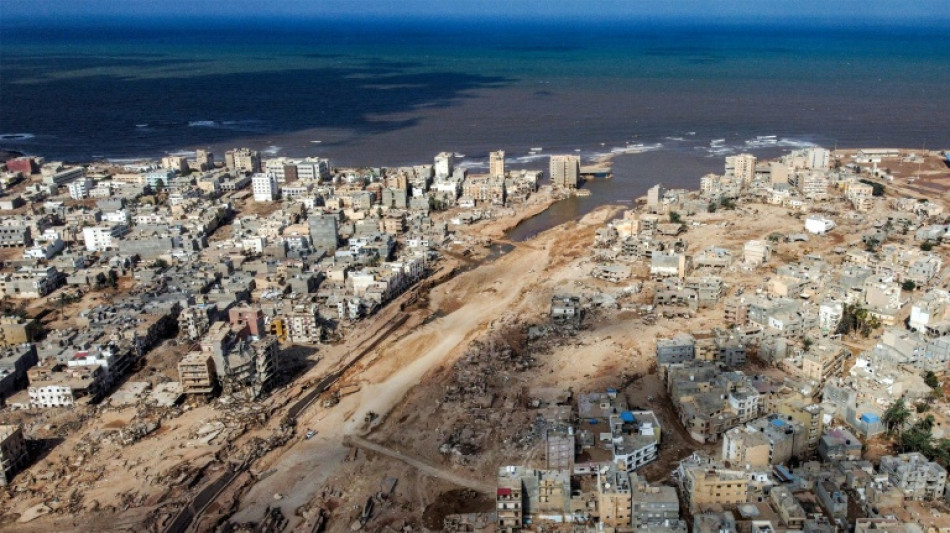
Libya's flood-hit Derna to host reconstruction conference: authorities / Photo: Mahmud TURKIA - AFP/File

 Malaysia Sues Google for $146m Over Harmful Content

 Black Wind Turbine Blades Reduce Bird Deaths by 74% in Spain Study

 Brazil’s Landless Movement Partners with China to Build Affordable Tractors for Family Farms

 Twickenham Grounds Team Prepares Pitch for Six Matches in Three Days

 Luxembourg Pay Rise Delayed as Regional and World Headlines Develop

 Audience to Choose the Set List at Luxembourg's First FAMIL Jukebox Night

 Raheem Sterling Receives Suspended Sentence After Lamborghini Crash

 Black Friday Discounts Cut Prices on Two Top-Rated Wiper Blades

 Arizona Gun Regulation Battle Intensifies Under New Democratic Legislative Majority
Libya's eastern-based administration said on Friday that it would host an international conference next month in the flood-hit port city of Derna to aid reconstruction efforts.
A tsunami-sized flash flood broke through two ageing dams upstream from Derna after a hurricane-strength storm lashed the area on September 10, razing entire neighbourhoods and sweeping thousands of people into the sea.
"The government invites the international community to participate in the conference planned for October 10 in Derna to present modern, rapid projects for the reconstruction of the city," the administration said in a statement.
It said the conference was being held in "response to the demands of residents of the stricken city of Derna and other towns that suffered damage" during the flooding.
Wracked by divisions since a 2011 NATO-backed uprising toppled and killed veteran dictator Moamer Kadhafi, Libya has for years been ruled by two administrations vying for power.
A UN-backed, internationally recognised administration in Tripoli is run by Prime Minister Abdulhamid Dbeibah, while a rival administration in the east is backed by military strongman Khalifa Haftar.
Haftar's forces seized Derna in 2018, then a stronghold of radical Islamists, and with the reputation as a protest stronghold since Kadhafi's days.
The official death toll from the flood stands at more than 3,300 -- but the eventual count is expected to be far higher, with international aid groups giving estimates of up to 10,000 people missing.
- Over 40,000 displaced -
The International Organization for Migration on Thursday said more than 43,000 people have been displaced by the flood.
It said a "lack of water supply is reportedly driving many displaced out of Derna" to other areas.
Mobile and internet services were also restored in Derna on Thursday following a two-day disruption that came after demonstrations by angry residents on Monday.
The protests saw hundreds of demonstrators gather outside the city's grand mosque, chanting slogans against the eastern-based parliament and its leader and calling for accountability over the high death toll.
Amnesty International on Thursday reported "arrests of critics and protesters" in Derna, decrying "efforts to choreograph and control media access" to the disaster-hit city.
It also called on the eastern authorities to "immediately lift all undue restrictions... and facilitate the delivery of humanitarian aid to all affected communities".
The dams that burst had developed cracks as far back as the 1990s, Libya's top prosecutor has said, as residents accused authorities of negligence.
Scientists from the World Weather Attribution group said in a report issued on Tuesday that a deluge of the magnitude seen during Storm Daniel in northeastern Libya was an event that occurred once every 300-600 years.
They found the rains were both more likely and heavier because of human-caused global warming, with up to 50 percent more rain during the period.
A.P.Maia--PC

