UN chief cites 'madness' of nuclear arms race, as N.Korea warns of war / Photo: GREG BAKER - AFP/File

 Malaysia Sues Google for $146m Over Harmful Content

 Black Wind Turbine Blades Reduce Bird Deaths by 74% in Spain Study

 Brazil’s Landless Movement Partners with China to Build Affordable Tractors for Family Farms

 Twickenham Grounds Team Prepares Pitch for Six Matches in Three Days

 Luxembourg Pay Rise Delayed as Regional and World Headlines Develop

 Audience to Choose the Set List at Luxembourg's First FAMIL Jukebox Night

 Raheem Sterling Receives Suspended Sentence After Lamborghini Crash

 Black Friday Discounts Cut Prices on Two Top-Rated Wiper Blades

 Arizona Gun Regulation Battle Intensifies Under New Democratic Legislative Majority
UN Secretary-General Antonio Guterres warned Tuesday against a new atomic arms race bringing the threat of "annihilation" to the world, as North Korea charged that its peninsula was on the brink of nuclear war.
With nuclear-armed nations expanding and modernizing their arsenals, the UN chief called for a revitalized push to reduce and eventually eliminate those weapons.
"A worrisome new arms race is brewing. The number of nuclear weapons could rise for the first time in decades," Guterres told the General Assembly on the final day of its yearly session.
"Any use of a nuclear weapon -- anytime, anywhere and in any context -- would unleash a humanitarian catastrophe of epic proportions," he said.
"Nuclear sabers are again being rattled. This is madness. We must reverse course," he said.
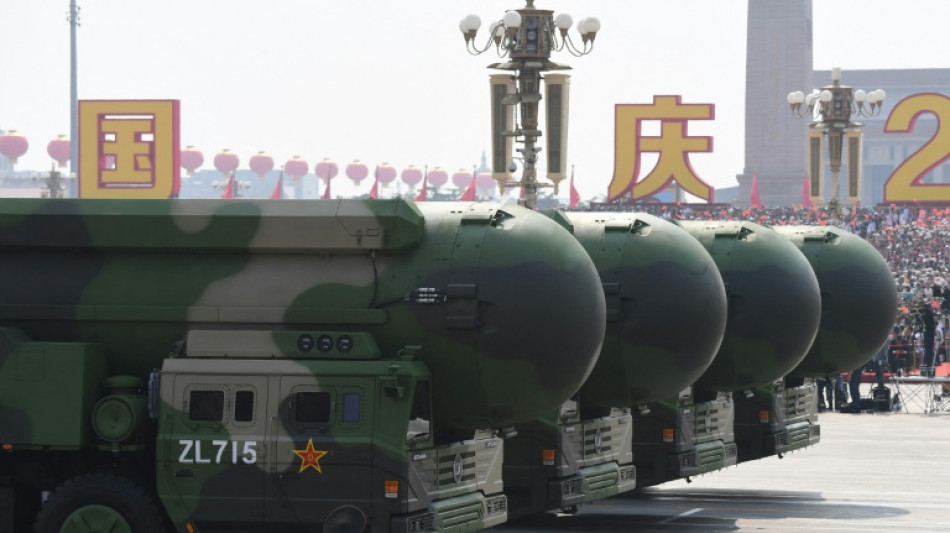
Russia and the United States have by far the largest arsenals but China's has been growing quickly. North Korea has also defied the world with its nuclear program and repeated missile tests.
In its own speech, one of the last of the week-long marathon of September's UN General Assembly, North Korea accused arch-rival the United States of driving the peninsula "closer to the brink of nuclear war."
Kim Song, North Korea's ambassador to the United Nations, denounced South Korea's actions under President Yoon Suk Yeol, a conservative who has worked to build tighter cooperation with the United States as well as historic rival Japan.
"Due to its sycophantic and humiliating policy of depending on outside forces," Kim said, "the Korean peninsula is in a hair-trigger situation with imminent danger of nuclear war."
He pointed to the recent formation of the Nuclear Consultative Group, through which the United States hopes to integrate its nuclear capacity better with South Korea's conventional forces, with the two allies increasing information sharing and contingency planning.
Kim alleged that the group was "committed to the planning, operation and execution of preemptive nuclear strike against the DPRK," the official name of the North, the Democratic People's Republic of Korea.
- Rising nuclear investment -
The Stockholm International Peace Research Institute reported in June that the world's nuclear powers, and China in particular, increased investment in their arsenals for a third consecutive year in 2022.
While the total number of nuclear warheads held by Britain, China, France, India, Israel, North Korea, Pakistan, Russia and the United States had fallen by about 1.6 percent to 12,512 warheads over the previous year, SIPRI said the declining trend was on the cusp of a reversal.
Excluding warheads slated for dismantling, the number of usable nuclear weapons had actually increased, according to SIPRI.
The bulk of the increase was in China, which increased its stockpile from 350 to 410 warheads.
Guterres warned that nuclear powers are making their arsenals faster, more accurate and more difficult to detect.
To get back on track toward a reduction of such weapons, he called for countries to commit to never using their nuclear weapons "under any circumstances."
The UN leader urged reinvigoration and strengthening of the Treaties on Non-Proliferation of Nuclear Weapons and the Prohibition of Nuclear Weapons.
And he urged implementation of the Comprehensive Nuclear Test Ban Treaty, adopted by the UN General Assembly in 1996 but still not in force because several key countries have not joined in.
"The world has spent too long under the shadow of nuclear weapons. Let’s step back from the edge of disaster," he said.
abd-nr-pmh-sct/sms/
G.Machado--PC

