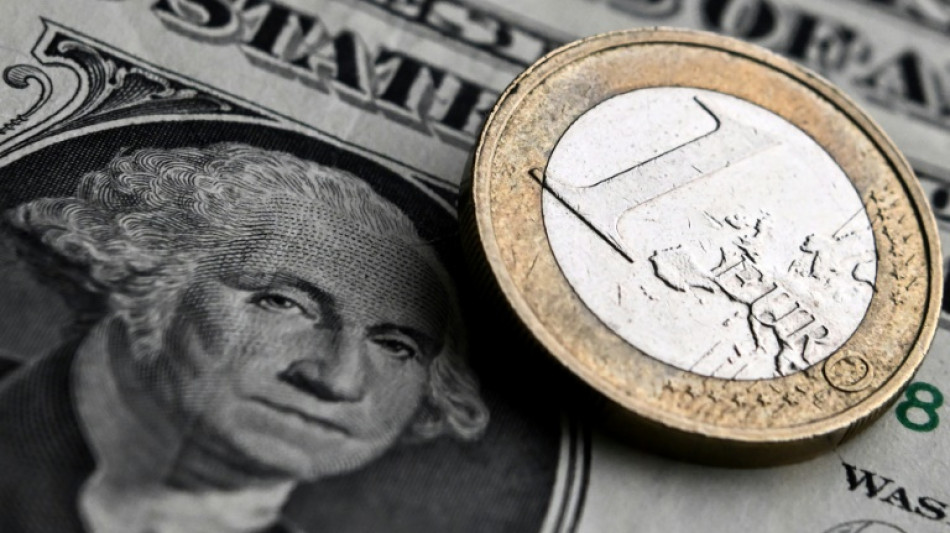
Stocks edge higher but caution abounds over US rate fears / Photo: Kirill KUDRYAVTSEV - AFP

 Malaysia Sues Google for $146m Over Harmful Content

 Black Wind Turbine Blades Reduce Bird Deaths by 74% in Spain Study

 Brazil’s Landless Movement Partners with China to Build Affordable Tractors for Family Farms

 Twickenham Grounds Team Prepares Pitch for Six Matches in Three Days

 Luxembourg Pay Rise Delayed as Regional and World Headlines Develop

 Audience to Choose the Set List at Luxembourg's First FAMIL Jukebox Night

 Raheem Sterling Receives Suspended Sentence After Lamborghini Crash

 Black Friday Discounts Cut Prices on Two Top-Rated Wiper Blades

 Arizona Gun Regulation Battle Intensifies Under New Democratic Legislative Majority
US and European stock markets staged small rebounds on Wednesday after heavy selling on expectations that inflation will keep US interest rates high, which also drove investors to seek safety in the dollar.
After slipping earlier in the session, European indices turned higher as Wall Street stocks posted opening gains. Key markets in Asia also closed higher.
Oil prices extended their march higher, fuelling the inflation concerns that could prompt central bankers to keep monetary policies tight for longer than many investors have anticipated.
With US inflation still well above the Federal Reserve's target and the country's labour market showing few signs of softening, decision-makers have warned that more rate increases will be needed.
That in turn has weighed heavily on US equity markets, with the main indices seeing marked declines this month -- the tech-heavy Nasdaq index has slumped around seven percent so far in September.
City Index analyst Fawad Razaqzada said equities were at risk of further losses.
"If anything, stock market investors have been slow to react to the macro risks compared to foreign exchange and bond markets. This means that there is more room to the downside," he said.
The dollar added to gains seen as higher US bond yields make the greenback more attractive as a haven, putting further pressure on the euro and pound.
It also struck an 11-month peak against the yen, sparking speculation of new Bank of Japan intervention into the foreign exchange market to keep its currency from falling further.
- 'Fear gauge' spike -
Rising US bond yields reflect the growing expectations of more Federal Reserve rate hikes, which generally weigh on the stock market while boosting demand for the dollar.
Although the US economy remains in reasonable health, there is growing concern that the Fed could tip it into recession next year if it keeps squeezing, with rates already at a 22-year high.
The bank indicated last week that another increase could be on the cards before year's end, while its boss Jerome Powell and other board members have said they could keep borrowing costs elevated for an extended period, with fewer cuts than hoped in 2024.
Analysts said the spike in Treasury yields -- a gauge of future rates -- was causing widespread unease in trading rooms, particularly with corporate earnings season looming, when CEOs often indicate if full-year profit forecasts will be met or not.
In a sign of the worry among investors, the VIX "fear gauge" of volatility is at its highest level since late May, following data that showed a bigger-than-expected drop in US consumer confidence owing to higher gasoline and food prices.
- Washington stand-off -
Traders are also keeping tabs on Washington, where a standoff between lawmakers over a budget bill threatens to cause a government shutdown, which Moody's has warned could have a negative impact on the country's credit rating.
Senators from both parties drafted a last-ditch short-term proposal Tuesday -- with a September 30 deadline for a deal -- that would keep the government running until November 17.
But there was no immediate indication that the warring factions of House Republicans, who have forced the showdown over government funding, would take it up if passed in the Senate.
- Key figures around 1345 GMT -
New York - Dow: UP 0.2 percent at 33,687.08 points
London - FTSE 100: FLAT at 7,626.32
Frankfurt - DAX: UP 0.1 percent at 15,272.03
Paris - CAC 40: UP 0.3 percent at 7,093.98
EURO STOXX 50: UP 0.4 percent at 4,145.38
Tokyo - Nikkei 225: UP 0.2 percent at 32,371.90 (close)
Hong Kong - Hang Seng Index: UP 0.8 percent at 17,611.87 (close)
Shanghai - Composite: UP 0.2 percent at 3,107.32 (close)
Euro/dollar: DOWN at $1.0528 from $1.0572 on Tuesday
Pound/dollar: DOWN at $1.2141 from $1.2158
Dollar/yen: UP at 149.23 yen from 149.07 yen
Euro/pound: DOWN at 86.71 pence from 86.95 pence
Brent North Sea crude: UP 1.5 percent at $93.81 per barrel
West Texas Intermediate: UP 2.2 percent at $92.37 per barrel
L.Mesquita--PC

