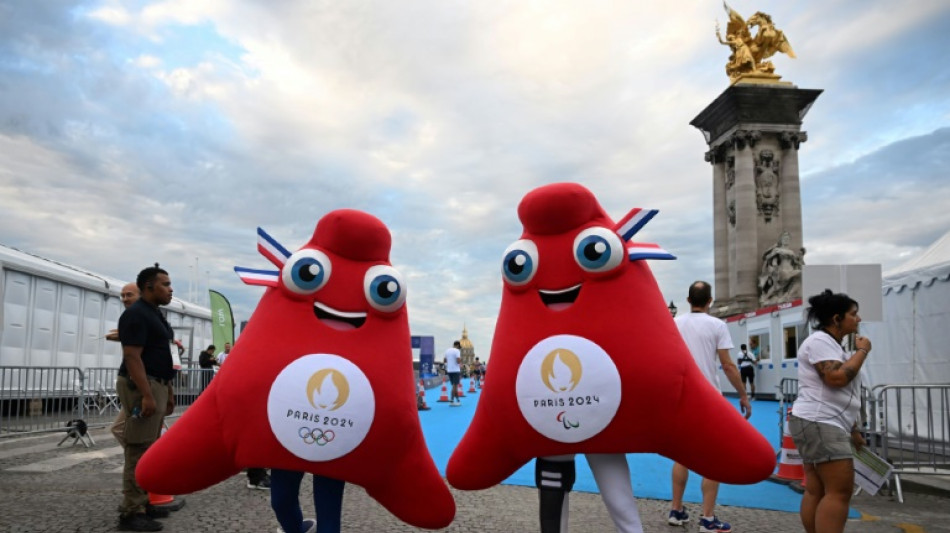
Russian Paralympians to compete at Paris 2024 under neutral flag / Photo: Emmanuel DUNAND - AFP

 Filmasia 2026: 16 Films Across Prague, Brno, and České Budějovice

 Kojey Radical Launches Burger Collaboration at Dallas Burger Joint in Shoreditch

 Kelly Stafford Reflects on Matthew's Lions Thanksgiving Era Ahead of Rams' Netflix Debut

 World Experiences First Six Consecutive Days Above 2C Preindustrial Threshold

 Luxembourg Housing Petition Passes Threshold for Parliamentary Consideration

 Raheem Sterling Receives Suspended Sentence After Lamborghini Crash

 Audience to Choose the Set List at Luxembourg's First FAMIL Jukebox Night

 Luxembourg Pay Rise Delayed as Regional and World Headlines Develop

Russian athletes will be allowed to compete at the Paris Paralympics in 2024 under a neutral flag after officials voted against an outright ban.
A majority of the International Paralympic Committee (IPC) on Friday allowed Russian athletes to compete "in an individual and neutral capacity" without national flags, colours or emblems.
Russia has been suspended from Paralympic competition since the country's invasion of Ukraine in February 2022.
The decision to allow Russians to take part in the Paralympics next year was made hours after the IPC, in its General Assembly in Manama, Bahrain, voted against a full ban on Russian participation.
Andrew Parsons, president of the IPC, said the organisation was "very firm believers that sport and politics should not mix".
The IPC did though decide to partially suspend the Russian National Paralympic Committee for two years due to "breaches of its constitutional membership obligations."
After Russia's invasion of Ukraine, the IPC banned athletes from Russia and its ally Belarus from competing, while also suspending both countries' Paralympic committees.
As a result, Paralympic athletes from both nations were barred from taking part in the Winter Paralympics in Beijing in March 2022.
In Friday's second vote, 90 members voted in favour of the motion, with 65 against and six abstentions.
The earlier vote on an outright ban on Russian athletes narrowly failed, with 74 opposed, 65 in favour and 13 abstentions.
An IPC vote is expected to follow later on Friday to decide whether Belarusian athletes will be allowed to compete in the Paris Paralympics and under what circumstances.
The decision comes two weeks before an International Olympic Committee session in Mumbai where the organisation is expected to discuss the participation of Russia and Belarus at the Paris Olympics next year.
The IOC has previously stated a decision on allowing Russian and Belarusian athletes at the 2024 Olympics will be made "at the appropriate time".
Athletes from Russia and Belarus have faced sanctions from a multitude of sports since Russia launched its assault on Ukraine in February of 2022.
The Russian Olympic Committee said earlier in September it would not boycott the Paris Games and that Russians were free to compete in the Olympics as neutrals
"Boycotting the Games leads to nowhere," Russian Olympic Committee President Stanislav Pozdnyakov said.
"We live together in a free state. Every person can, if they so wish, take the path" of competing under a neutral banner, Pozdnyakov said.
Pozdnyakov criticised the existing recommendations as "prohibitive in nature", saying the rules "will not allow a large number of our athletes to take part in the Olympic Games."
The United Nations in July documented 9,000 civilian deaths since the start of the war in Ukraine, including 500 children, although it estimates the real toll could be significantly higher.
J.Pereira--PC


