Teaching peace, preparing for war: Armenian schools' dilemma / Photo: Aris MESSINIS - AFP

 ALEX BODI AND AMBASSADOR GUM DOMINIC MATIOK OF THE REPUBLIC OF SOUTH SUDAN MEET IN BERLIN TO DISCUSS THE POSSIBILITY OF AN HONORARY CONSULATE IN BUCHAREST

 Lula, Bolsonaro wrap up campaigns ahead of Brazil's knife-edge vote
 Toulouse edge Castres in Top 14 derby

 Murakami homer propels White Sox to MLB playoff win over Guardians

 Israel targets top Hamas leader in deadly Gaza strike on anniversary

 Houthis say struck oil facility near Riyadh, as Saudis hit Sanaa
 AI needs safety layers like nuclear plants: ex-OpenAI engineer

 MVP Judge will miss Yankees' MLB playoff series against Rays
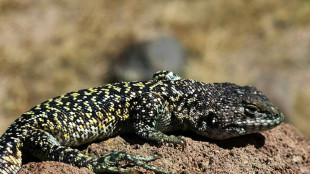 New lizard species discovered in Peru

 Fernandes hails Portugal's 'greatest symbol' Ronaldo, calls for unity
 Grandidier-Nkanang double takes Pau to Top 14 summit despite Vannes fightback
 Trainer Scott gets perfect Arc boost with top notch double
 Ex-PM says Putin cannot admit 'mistake' over Ukraine

 Houthis say Saudi Arabia launches dozens of strikes on Yemen capital
 Qatar and Abu Dhabi F1 Grand Prix to go ahead - F1 boss
 South Korea lift gloom with smash-and-grab Games football gold
 Ireland news conference before Israel game cut short amid tensions
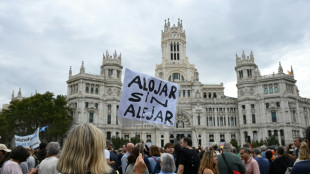 Protests over housing flare in Spain after relief measures rejected
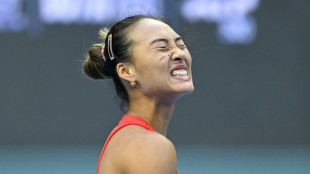
 Zverev thrashes Shang to set up Djokovic quarter-final at China Open

 Turkey football ref chief jailed pending trial for graft
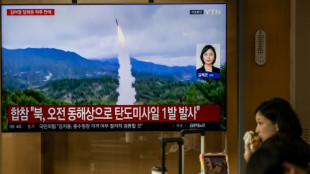 North Korea says test of intermediate-range strategic missile included use of AI
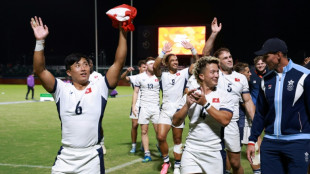 Rampant Sayers leads Hong Kong to third men's rugby gold in a row
 Ethiopia's Tigray rebels abandon regional capital as govt advances
 Bulgaria's Tsar Samuel returns 'home' after 1,000 years
 'Glad it's over': Kim powers to Games gold and military exemption
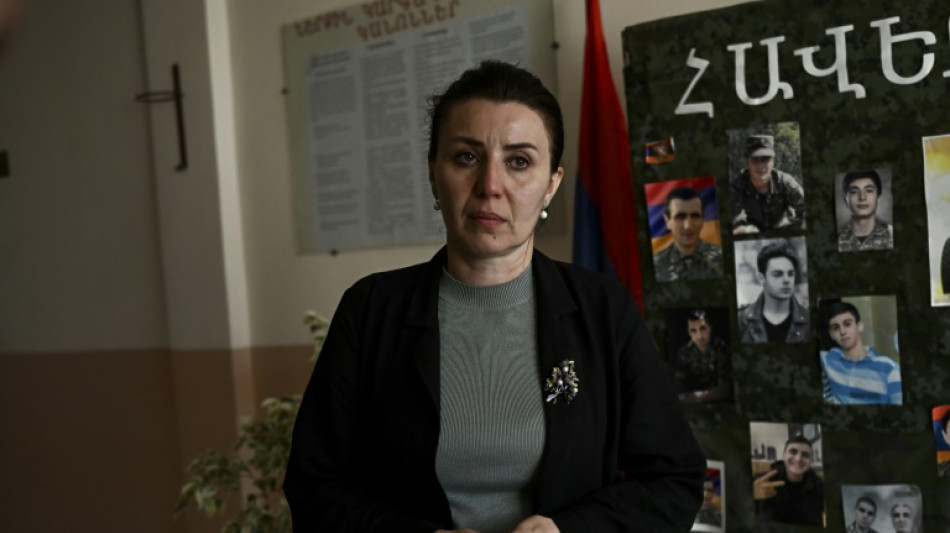
Each day at her school, headteacher Anush Hakobyan passes by the photo of her son killed three years ago in a war with Azerbaijan for control of the Nagorno-Karabakh region.
The 48-year-old said she faces a difficult balancing act -- educating children while preparing them for the possibility of another war with Armenia's arch-foe neighbour in the Caucasus.
The task has become even more complicated since September, when Azerbaijan recaptured the long-disputed breakaway region of Karabakh, which had been under Armenian separatists' control for three decades.
Hakobyan's son died in autumn 2020, aged 27, during the 44 days of fighting for control of the mountainous enclave within Azerbaijan, populated predominantly by ethnic Armenians who see it as their ancestral land.
In the school's entrance hall, his photo is displayed alongside about a dozen other faces of men killed during the hostilities that have claimed thousands of lives on both sides.
The three decades of the simmering conflict have deepened the rift between the two countries, especially among young people, fuelling streams of hatred on social networks.
It is in this toxic atmosphere that Hakobyan launched at her school of some 600 pupils a course called "Educating students to become civilised individuals".
- 'Balance to find' -
"We've been through so many trials and wars, we know how to talk to children," she said.
Educating the students "does not prevent us from telling them that we will win the war, that what is happening in Karabakh is not logical", she added.
"We also educate them so that they know how to defend themselves. It's a balance to find. If Europe prefers (energy-rich Azerbaijan's) gas over helping us, we have no choice."
Armenia didn't intervene militarily when Azerbaijan launched an offensive last month to retake Karabakh from separatist forces, who surrendered after less than 24 hours of fighting and agreed to return the region under the control of the central government in Baku.
Over the next few days, the majority of Karabakh's Armenians -- more than 100,000 people -- fled their homes to Armenia, sparking a major refugee crisis.
At Hakobyan's school in the village of Parakar, west of the Armenian capital Yerevan -- as in all public schools in the country -- military courses are taught from the age of 13, often by veterans of the two wars which Armenians and Azerbaijanis had fought over the last three decades.
The courses include instruction on military ranks and different types of weaponry. Young boys learn how to handle weapons as they prepare for the two years of military service they will have to complete when they come of age.
- 'Blood and soil' -
"I am preparing them to defend themselves, teaching them military art and history," said Sonbat Gasparyan, who teaches this course in Parakar.
He also has to address questions such as: "What have we done? Why are they attacking us?" without adding fuel to the fire of the deeply entrenched ethnic hatred.
"Of course there is hatred but we teach them that we cannot hate our neighbours," Gasparyan said with little optimism.
"We tell them that it's better to live in peace but they already have firm ideas."
In the teachers' staffroom, animosity also surfaces among adults towards the "Turks", a pejorative term widely used in Armenia to refer to Turkic-speaking Azerbaijanis.
"We don't see them as a real nation. They've only existed for a hundred years and don't have their own culture," said headteacher Hakobyan.
Her colleague, Eranahi Grigoryan, a biology teacher, advocates reconciliation.
"They are our neighbours. I have nothing against them because they also lose their children. It's just the government in Baku that wants to expand its territory," she said.
Azerbaijan has declared the Karabakh conflict resolved for good after the region returned under Baku's control.
But few in Armenia accept the loss and many do not rule out a fresh conflict.
Hakobyan quoted a proverb that tells a tale about Armenians' resolve to reclaim this piece of land: "When you mix blood and soil, you give birth to the motherland."
A.Magalhes--PC