At least 19 dead after clash, fire at club in Indonesia's West Papua

 Hong Kong court set to sentence activist Joshua Wong in security case

 Australia raises benchmark rate to highest level in 18 years

 'The Remarried Empress' Cast Discusses Bringing Fantasy Royal Drama to Life

 Asian stocks retreat as AI worries outweigh steep oil-price drop

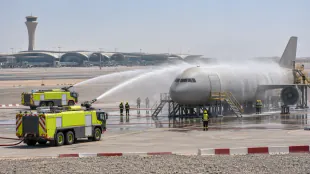 Hamad International Airport stages emergency drills during WATAN 2026

 Global failure to punish attacks leaves journalists at continuing risk

 Researchers Warn 'Bookkeeping Trick' Masks Beef Industry's Methane Emissions

 Climate Change Intensified Atlantic Hurricanes, Study Finds

 Qatar solar expansion opens scope for technical performance gains

 IXOPAY Announces IXO One, a Modular Payments Platform Built for an Era of Fluid Commerce
At least 19 people have been killed in a clash at a nightclub in Indonesia's West Papua province, police said Tuesday, with most dying after the venue caught fire.
One victim was stabbed and 18 more died in the blaze at the Double O nightclub in the city of Sorong, officials said.
"The clash broke out last night (Monday) at 11 pm. It was a prolonged conflict from a clash on Saturday," Sorong police chief Ary Nyoto Setiawan said in a statement.
The fight erupted between two ethnic groups and involved machetes, arrows and Molotov cocktails, according to Ahmad Ramadhan, a spokesperson for the Indonesian national police.
"The West Papua Regional Police immediately coordinated with religious and traditional leaders to avoid further clashes," he said, adding that officials were investigating who was behind the fight and what ignited the fire.
Most of the victims worked at the club, police said.
"Based on our initial data, three victims were nightclub visitors while the others were band members, including a vocalist, and other employees," said West Papua police spokesperson Adam Erwindi.
The nightclub, a large red and white building, was left gutted by the blaze and a burnt-out vehicle was seen lying on its side by the blackened entrance.
"The club was burnt from the first floor," police chief Setiawan said. "We tried to evacuate as many people as possible, but after the firefighters extinguished the fire this morning, we found some bodies there."
A misunderstanding sparked the fight between the two groups, Setiawan said.
"We tried to mediate between the groups, as we called their leaders before last night's clash."
Police have deployed forces in the town to prevent any further clashes, according to an AFP journalist.
- Usually quiet corner -
Sorong, a gateway to the coral-rich Raja Ampat islands, is the largest city in West Papua province and home to a major port.
It is relatively quiet compared to other regions of West Papua, which has seen clashes due to a long-running insurgency between separatists and Indonesian security forces.
Rebels have recently escalated their fight, targeting road contractors as well as schools and clinics they say have links to the military. Authorities have responded by reinforcing deployments of troops and police.
The province shares a border with independent Papua New Guinea on the island of New Guinea, just north of Australia.
A former Dutch colony, mineral-rich West Papua declared independence in 1961 but neighbouring Indonesia took control two years later, promising a referendum.
The subsequent vote in favour of staying part of Indonesia, approved by the United Nations at the time, was widely considered a sham.
The region's Melanesian population, predominantly Christian, share few cultural connections with the rest of Indonesia -- the world's biggest Muslim-majority country.
T.Batista--PC