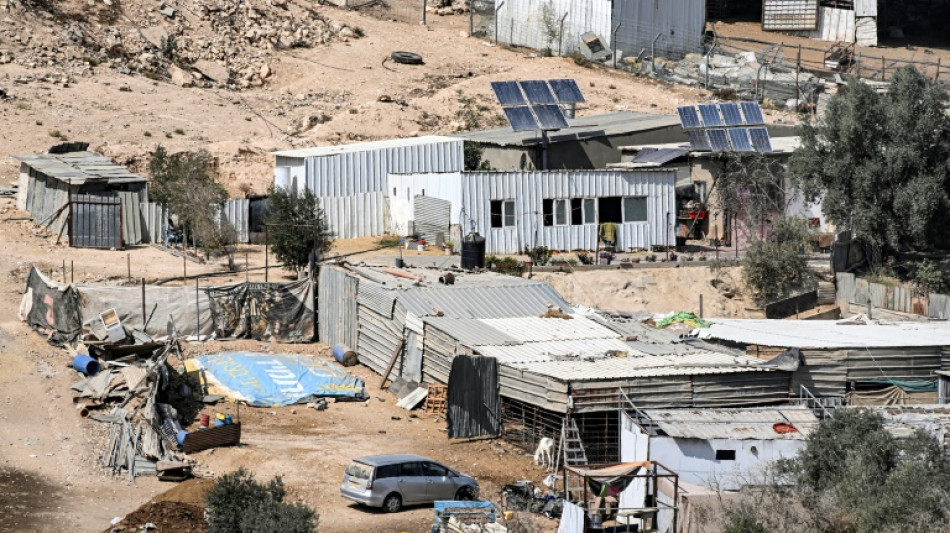
Negev Bedouin fear getting caught in crossfire of Israel's war with Hamas / Photo: Yuri CORTEZ - AFP

 Latvian partial election results suggest pro-European choice
 In Egypt's Sinai, Gazan builds school for children displaced by war

 Trump tariffs a mixed bag for US auto industry

 Yemen government forces say struck Houthi targets

 Music links past, present for Pedro Pascal's cellist in 'Behemoth!'

 ALEX BODI ȘI AMBASADORUL REPUBLICII SUDANUL DE SUD, GUM DOMINIC MATIOK, DISCUTĂ LA BERLIN DESPRE POSIBILITATEA ÎNFIINȚĂRII UNUI CONSULAT ONORIFIC LA BUCUREȘTI

 Dodgers step up World Series three-peat bid with 5-3 win over Braves

 Spain break down Czechs as England outclass Croatia in Nations League

 Yamal on target as Spain hold off Czech Republic

 Latvian exit polls suggest pro-European choice

 Lula, Bolsonaro wrap up campaigns ahead of knife-edge election

 Tuchel hails 'complete' England after Croatia demolition

 Fury to invite Trump to lead ring walk before Joshua showdown

 Fashion industry in 'precarious moment', says Vivienne Westwood supremo

 Seventh heaven for England in Nations League rout of Croatia

 Storms, flooding cause chaos on Greek holiday island of Crete

 #IAmJaneDoe: online support campaign in US university rape case

 Brazil shine on Selecao's first visit to India
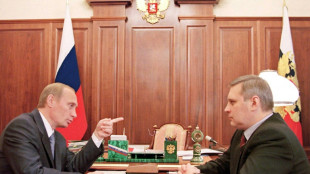
 Zverev sets up Djokovic quarter-final at China Open, Rybakina out
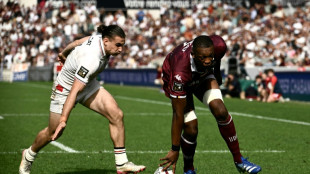 Happier at home, Bordeaux hammer Lyon in Top 14
 Lula, Bolsonaro in final push for votes ahead of knife-edge election

 Boisterous fashion week barnstorms 'sleepy' Nigerian capital

 UAE investigators say flydubai co-pilot was planning 'terrorist act'

 Rahul smacks century in India v Windies ODI

 Daryz seeks to join exclusive club of dual Arc winners

In Israel's southern Negev desert, Bedouin youth gather near a car hit by a rocket from the Gaza Strip, fearing the war is coming closer to them.
Alaa Abu Jamaa said that he was bringing breakfast to his children at his home in Ararat an-Naqab on the morning of October 7 when Hamas launched an unprecedented assault against Israel.
As soon as he arrived in his car at the door of his home, he was hit by the force of a rocket exploding near him, sending him flying a few metres (several feet) away.
"I was unable to move," he told AFP. "Some youth came and pulled me out of the car. My leg was wounded with shrapnel and I was brought to the hospital for treatment. I stayed for three days without knowing what was happening, not hearing anything and not sleeping.
"Even now, I still wake up afraid and confused," he said.
He recounted how a five-year-old boy, named Yazan, "was standing at the door of his house near another car. When the rocket exploded, the car was blown out of place and burned with a number of other cars.
"Yazan was killed. He was blown into parts," Abu Jamaa said, recounting that for two hours, no firefighters came.
He said the rocket left a crater "more than three metres deep".
Yazan's father Zakaria, a driver, recalled with tears that he "was in Eilat on Saturday morning when I learned of my son's death. I came back in the midst of the exchange of bombing between Hamas and Israel and saw my son in the hospital".
His voice broke and he could not continue.
Arara an-Naqab is an Arab-majority town in southern Israel, 25 kilometres (15 miles) from Beersheba.
Its inhabitants complain, like other Negev Bedouin Arabs, of marginalisation, as many of them live in villages that are not recognised by Israel, and are subject to confiscation of their property and repeated attempts to demolish their homes.
Arabs descended from Palestinians who stayed on their lands after the founding of the state of Israel in 1948 account for around 21 percent of the population of Israel.
On October 7, Hamas fighters infiltrated southern Israel by sea, land and air, in an onslaught that killed more than 1,400 people.
Israel has retaliated with unrelenting air strikes on the Gaza Strip, killing at least 2,670 people so far.
- No shelter -
In the unrecognised village of Albat-Kahla, built from tin plates among the sand dunes of the Negev, aloe vera and castor bushes have sprouted up between the houses inhabited by about 1,200 people.
Activist Ali Abu Sabih said "there are no shelters... four people were killed in the village: my cousin who was baking bread with her 10-year-old granddaughter beside her, and two siblings from another family" by rocket fire.
Residents of the town said they succeeded in pressuring the Israeli military to provide the area with a few prefabricated fire-resistant plastic shelters reinforced with iron.
Gilad, an Israeli officer who did not wish to give his full name, told AFP each "shelter holds about 70 people and no more than 100".
The population of Ararat an-Naqab is more than 13,000 people.
The officer added "there are 13 shelters like this that we will distribute around the region that each take a full day to install".
Another officer said "the sand protects from rockets, but if the rocket strikes directly, the prefabricated shelters do not provide full protection".
- Unrecognised villages -
A former member of the Knesset, Walid al-Hawashla, the head of relief work in the Negev area, said there were 18 killed in the region, "six because of rockets that hit their houses, and 12 who were working in agriculture in the area around Gaza on the first day of the Hamas attack".
Hawashla established an emergency operation room affiliated with the Islamic Movement, an Arab party working in Israel, in the Negev following the beginning of the escalation.
"I sent a letter to the president and the prime minister asking them to provide us with shelters," he said.
The Islamic relief committee distributed around 100 prefabricated steel-reinforced concrete cylinders to the population, which usually serve as water drainage pipes, to be used as temporary shelters that can hold 12 people each.
But the shelters do not even come close to meeting the needs of the vast desert area.
The president of the territorial council for the unrecognised village, Atia al-Aasam, said "the number of Arabs in the Negev is more than 300,000 citizens, with 150,000 of them spread through 45 unrecognised villages which are not connected to government electricity, water, clinics, or infrastructure".
He added, "whenever we asked them to set up shelters, our calls fell on deaf ears, and they told us that these villages are not recognised."
H.Portela--PC