-
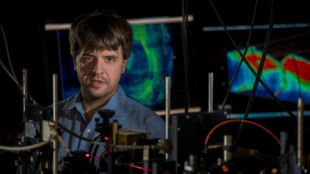 American Nobel laureate in medicine hopes to illuminate the brain
-
Tens of thousands expected in Paris for high school protests

-
 Trump approves firing squad for convicted US military base shooter
-
AI borrowing binge rattles US markets

-
 Grappling with 'homework scams,' US universities shun AI detectors
-
Young Canadians sue government over alleged climate failures

-
 Separatists win Quebec election in test for Canada PM
-
White Sox down Guardians to take 2-0 series lead

-
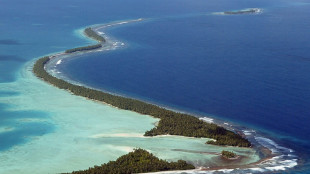 Leaders visit Pacific atoll at frontline of climate change
-
NHL record-breaker Ovechkin says current season will be his last

-
 Yemen's Houthis claim striking Riyadh airport, other Saudi sites
-
France roar back in Nations League as Italy beat Turkey

-
 Best-selling British author Jeffrey Archer dies aged 86
-
Messi readies for final farewell in Argentina send-off

-
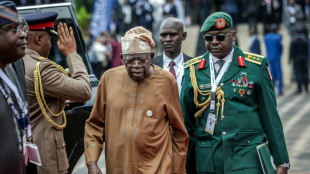 Military plane crash kills 32 in Nigeria
-
Esposito seals Italy win over Turkey in Nations League

-
 Olise powers France to win over Belgium in Nations League
-
Russia downplays plague reports as Trump offers US help
-
 High-flying Blazy turns to birdlife at Chanel
-
Trump says US moved bombers from UK base after 'threats'
-
 Riyadh's allies pledge troops as Yemen, Saudi Arabia attack Houthis
-
Brazilian stocks surge to record after Bolsonaro election lead

-
 Clashes erupt outside Kosovo parliament over war crimes court
-
Leaders to visit Pacific atoll at frontline of climate change
-
 Milan's Saelemaekers suffers ankle setback, faces lengthy spell out
-
ICC gives more details about arrest warrants for Taliban ministers

-
 Rubio arrives in Iceland to push for greater US presence in Arctic
-
Nigeria's Tinubu confirms 32 dead after military plane crash
-
 Putin allows Italy's UniCredit to sell part of Russian business
-
'Reckless' AI firms can't control models, says whistleblower

-
 Djokovic into China Open final as Medvedev out for hitting fan with ball
-
Switching on brain cells: the Nobel-winning science of optogenetics

-
 ICC unseals arrest warrants for Taliban education ministers
-
Quebec votes as separatist surge poses test for Canada PM

-
 Modric hopes fans back Croatia against Spain after England shame
-
Euro slides as concerns about French debt mount

-
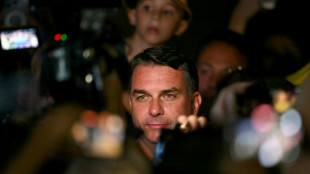 Bolsonaro rides right-wing surge into Brazil's election runoff
-
Former Trump press secretary Leavitt joins Fox News

-
 Turkey blocks X account of British reporter
-
Djokovic advances to China Open final as Medvedev out for hitting fan with ball

-
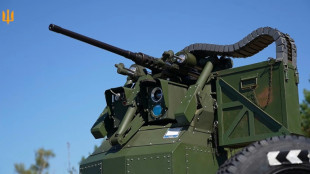 Ukraine says using AI robot guns to shoot down new Russian drones
-
Disgraced former US House speaker dies at 84
-
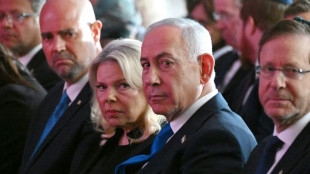 At Oct 7 memorial, Netanyahu says will be no Hamas rule in Gaza
-
Euro slides as worries about French debt grow

-
 Ukraine blames Russia for deadly sinking of Turkish ship in Black Sea
-
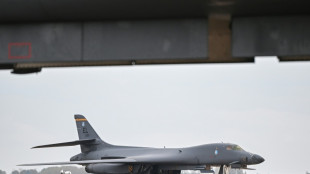
US withdraws all bomber aircraft from UK airbase
-
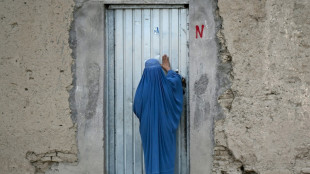 UN rights council slams Taliban's 'oppression' of women
-
Drone hits Ethiopia IDP camp as fears grow of regional war

-
 Norway eyes partial ban of smart glasses
-
US-German trio wins medicine Nobel for illuminating the brain
N. Korea makes third spy satellite launch attempt, Seoul says
North Korea has launched what it claims is a spy satellite, Seoul said Tuesday, Pyongyang's third attempt this year to get a military eye in the sky.
North Korea's previous efforts to put a spy satellite into orbit in May and August both failed, and Seoul, Tokyo and Washington had repeatedly warned Pyongyang not to proceed with another launch, which would violate successive rounds of UN resolutions.
But the North vowed to go ahead anyway, informing Japan of a launch window between Wednesday and December 1.
Seoul's spy agency this month warned the third launch could go better as Pyongyang appears to have received technical advice from Russia, in return for sending at least 10 shipments of weapons for Moscow's war in Ukraine.
Seoul's military "detected at 10:43 pm (1343 GMT) one alleged military surveillance satellite," South Korea's Joint Chiefs of Staff said.
The JCS did not give any details on whether the launch appeared to have succeeded or failed.
Japan also confirmed the launch, with Prime Minister Fumio Kishida's office posting on X: "North Korea has launched a suspected ballistic missile".
Space launch rockets and ballistic missiles have significant technological overlap, experts say, but different payloads, and Pyongyang is barred by UN resolutions from any tests involving ballistic technology.
"Even if they call it a satellite, the launch of an item that uses ballistic missile technology is clearly a violation of the relevant United Nations resolutions," Kishida said, adding he condemned the launch "in the strongest possible terms".
Tokyo warned residents in the southern region of Okinawa to take shelter, but soon lifted the alert, saying the projectile had "passed into the Pacific".
Hiroyuki Miyazawa, state minister of defence, said Japan was "analysing whether it is a failure or a success. We are unable to say anything with certainty."
- 'Confidence in success' -
Seoul has been saying for weeks that Pyongyang was in the final stages of preparation for another spy satellite launch, warning it would take "necessary measures" if it went ahead.
The office of South Korean President Yoon Suk Yeol -- who is in London for a state visit -- hinted earlier Tuesday that it would consider suspending the September 19 military agreement, a key deal aimed at de-escalating tensions on the peninsula, in response.
"The launch that came hours before its time window notification seems to underscore two things: Pyongyang's confidence in success and intention to maximise surprise factor to the outside world," Choi Gi-il, professor of military studies at Sangji University, told AFP.
Pyongyang appears "pretty confident that it'll be a success, though we have to wait and see whether that'll be the case," he added.
The North's May launch failed due to the "abnormal" startup of its second-stage engine, and the August launch due to an error in the "emergency blasting system" during the third-stage flight, according to Pyongyang state media at the time.
- Russian help -
Russian President Vladimir Putin suggested in September after meeting with North Korean leader Kim Jong Un that his nation could help Pyongyang build satellites.
Seoul and Washington have both subsequently claimed Pyongyang has been shipping weapons to Russia, with US Secretary of State Antony Blinken warning this month that military ties between North Korea and Russia were "growing and dangerous".
Successfully putting a spy satellite into orbit would improve North Korea's intelligence-gathering capabilities, particularly over South Korea, and provide crucial data in any military conflict, experts say.
In a commentary carried by the North's official Korean Central News Agency Tuesday, Ri Song Jin, a researcher of the National Aerospace Technology Administration, slammed South Korea's own spy satellite plans, saying they were "extremely dangerous military provocations".
Seoul plans to launch its first spy satellite via a SpaceX rocket later this month, South Korean officials have said.
This shows that the North needs "practical and effective capabilities of space-based reconnaissance and surveillance" as a key way of "exercising the war deterrent more clearly and promoting the strategic security balance in the region", KCNA said.
North Korea has conducted a record number of weapons tests this year.
Seoul, Washington and Tokyo have ramped up their defence cooperation in response, and on Tuesday a US nuclear-powered aircraft carrier, the USS Carl Vinson, arrived at South Korea's Busan Naval Base.
E.Raimundo--PC