
Rare survey details how Gazans wary of Hamas before Israel attack / Photo: Bryan R. Smith - AFP

 Leaders visit Pacific atoll at frontline of climate change

 Yemen's Houthis claim striking Riyadh airport, other Saudi sites

 Best-selling British author Jeffrey Archer dies aged 86

 Military plane crash kills 32 in Nigeria

 Olise powers France to win over Belgium in Nations League

 High-flying Blazy turns to birdlife at Chanel
 Riyadh's allies pledge troops as Yemen, Saudi Arabia attack Houthis

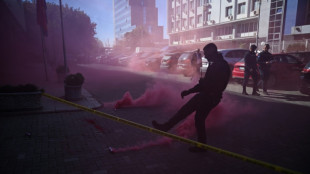 Clashes erupt outside Kosovo parliament over war crimes court

 Milan's Saelemaekers suffers ankle setback, faces lengthy spell out
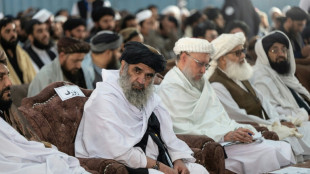
 Rubio arrives in Iceland to push for greater US presence in Arctic
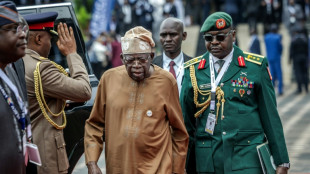
 Putin allows Italy's UniCredit to sell part of Russian business

 Djokovic into China Open final as Medvedev out for hitting fan with ball

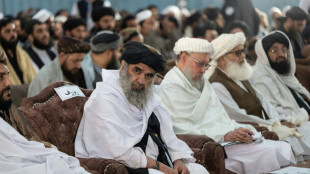 ICC unseals arrest warrants for Taliban education ministers
 Modric hopes fans back Croatia against Spain after England shame

 Bolsonaro rides right-wing surge into Brazil's election runoff

 Turkey blocks X account of British reporter

 Ukraine says using AI robot guns to shoot down new Russian drones

 At Oct 7 memorial, Netanyahu says will be no Hamas rule in Gaza

 Ukraine blames Russia for deadly sinking of Turkish ship in Black Sea
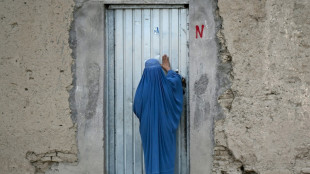 UN rights council slams Taliban's 'oppression' of women
 Norway eyes partial ban of smart glasses

 Two dead after ship catches fire, sinks in Black Sea

 Spain's PM calls snap election after housing bill defeat

 STARCARES Equips Seven Foster Homes for Children and Young People in Tanzania

 Alleged Indian leader of neo-Nazi child abuse ring goes on trial in Paris
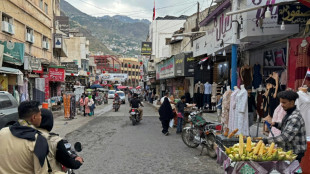
Many Gazans were hostile to Hamas ahead of the group's brutal October 7 attack on Israel, with some describing its rule as a second occupation, according to rare polling data analyzed by a US-Palestinian researcher.
The findings are striking against a backdrop of protests and counter-protests triggered by the attack, with the relationship between Hamas and ordinary Gazans often the subject of heated debate.
"We find in our surveys that 67 percent of Palestinians in Gaza had little or no trust in Hamas in that period right before the attacks," said Amaney Jamal, dean of Princeton's School of Public and International Affairs.
"This is especially important because of the (erroneous) argument that all of Gaza supports Hamas, and therefore all of Gaza should be held accountable for the actions, atrocious actions of Hamas."
Jamal is one of the driving forces behind the Arab Barometer which conducts surveys and polling in the region, including in Gaza where fieldwork concluded on the eve of the attacks on Israel.
She said that Hamas, which won elections in the Palestinian territories in 2006 and is designated a "terrorist" organization by Washington and the EU, was seen as "corrupt" and "authoritarian" by many respondents.
"Seventy-five percent said in the previous 30 days, they could not afford to feed their households. So again, this is an impoverished society, a society that is basically saying the Hamas-led government has some levels of corruption," said Jamal.
- 'Peaceful reconciliation' -
"When we ask people, who do you blame?... we thought that the number-one culprit was going to be Israel because of the blockade. But most people cited Hamas corruption, more so than they cited the Israel blockade."
Jamal, 52 and born in California and brought up in her family's native Ramallah, said there was also a perception that "the Palestinian Authority or the Hamas-led government across time have become more dictatorial -- and more authoritarian."
"For the average Palestinian in the West Bank or in Gaza (they say) 'we have this (Israeli) occupation and then we have these Palestinian governments that are also authoritarian'. So a common phrase is we used to be occupied by one power, now we're occupied by two."
The latest Arab Barometer was undertaken in Gaza, where 399 people were surveyed, and the West Bank, where 790 were polled, from the end of September to October 6. Its findings were published in the journal Foreign Affairs.
"About 60 percent said that they believed they could not express their opinions freely and openly at the eve of the attacks (and) about 72 percent said that they could not protest peacefully against the Hamas-led government," Jamal said. "There was fear of retaliation or retribution from the government."
The Palestinian Authority of president Mahmud Abbas, which runs Palestinian areas in the West Bank, fared poorly in Jamal's survey, with only 9 percent of responses favorable.
Despite the majority negative view of Hamas uncovered by Jamal's research, the report cautions that following the Hamas attack on Israel, perceptions may have changed.
"Israel cut off water, food, fuel, and electricity supplies to Gaza following the October 7 attacks, plunging the territory into a deep humanitarian crisis... the suffering the Palestinians have experienced has likely hardened their attitude," it said.
Ahead of the attacks on Israel, more than half of respondents favored a two-state solution -- a Palestinian state alongside Israel.
The remainder opted either for a Palestinian-Israeli confederation or a one-state solution. But one-in-five supported armed resistance before the events of October 7, and the massive Israeli military response that followed.
"(Gazans were) open to a peaceful reconciliation with Israel based on 1967 borders," Jamal said.
S.Caetano--PC