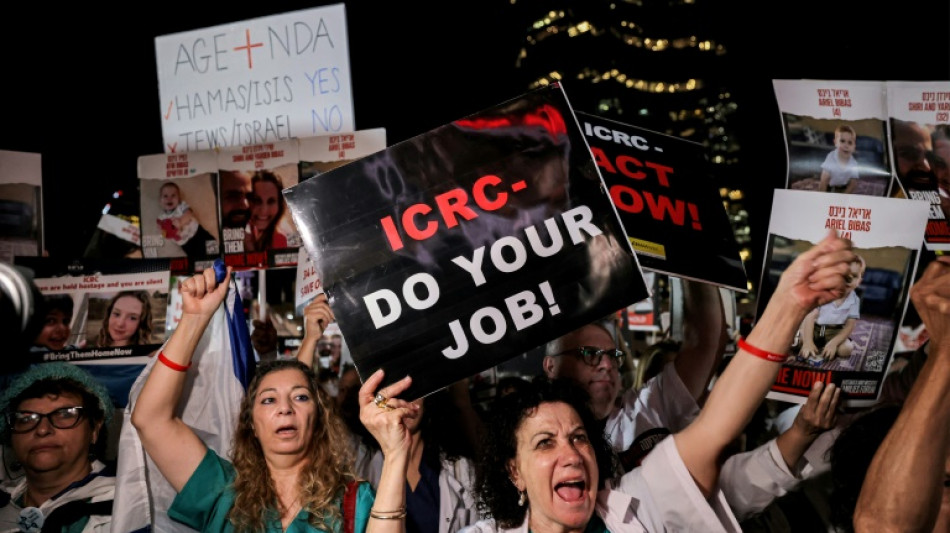
'We don't have superpowers', says embattled Red Cross / Photo: AHMAD GHARABLI - AFP/File

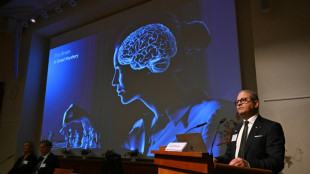
 American Nobel laureate in medicine hopes to illuminate the brain
 Trump approves firing squad for convicted US military base shooter

 Grappling with 'homework scams,' US universities shun AI detectors
 Separatists win Quebec election in test for Canada PM
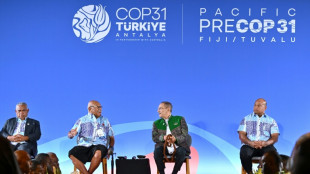
 Leaders visit Pacific atoll at frontline of climate change
 Yemen's Houthis claim striking Riyadh airport, other Saudi sites

 Best-selling British author Jeffrey Archer dies aged 86
 Military plane crash kills 32 in Nigeria

 Olise powers France to win over Belgium in Nations League
 High-flying Blazy turns to birdlife at Chanel
 Riyadh's allies pledge troops as Yemen, Saudi Arabia attack Houthis
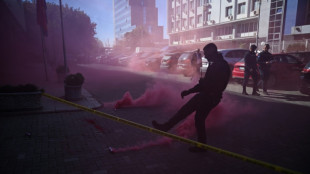 Clashes erupt outside Kosovo parliament over war crimes court
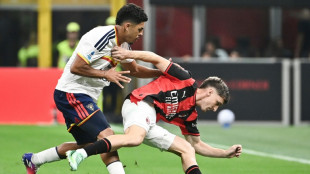 Milan's Saelemaekers suffers ankle setback, faces lengthy spell out
 Rubio arrives in Iceland to push for greater US presence in Arctic
 Putin allows Italy's UniCredit to sell part of Russian business
 Djokovic into China Open final as Medvedev out for hitting fan with ball

 ICC unseals arrest warrants for Taliban education ministers
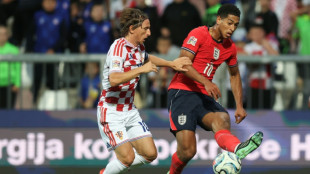 Modric hopes fans back Croatia against Spain after England shame
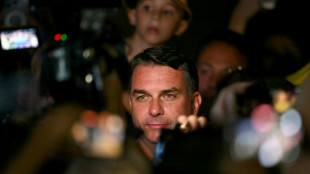 Bolsonaro rides right-wing surge into Brazil's election runoff

 Turkey blocks X account of British reporter

 Ukraine says using AI robot guns to shoot down new Russian drones
 At Oct 7 memorial, Netanyahu says will be no Hamas rule in Gaza
 Ukraine blames Russia for deadly sinking of Turkish ship in Black Sea
 UN rights council slams Taliban's 'oppression' of women
 Norway eyes partial ban of smart glasses
The Red Cross, which has faced criticism for not doing enough for hostages and prisoners in the Gaza conflict, stresses it has no "superpowers" and relies on the warring parties for access.
The International Committee of the Red Cross, founded 160 years ago to serve as a neutral intermediary between belligerents in conflict and to visit and assist prisoners of war, has been accused by both sides in the Israel-Hamas conflict of not providing adequate help to those being held.
"From time to time, we have to tell people we're not bulletproof," ICRC spokesman Jason Straziuso told AFP.
"We don't have superpowers. We can only take humanitarian action when the authorities in a given area give us the permission."
In recent days, amid a temporary truce in fighting in Gaza, the Geneva-based organisation's vehicles have brought dozens of hostages out of the Palestinian enclave.
In their unprecedented October 7 attacks, Hamas militants broke through Gaza's militarised border into Israel, killing 1,200 people, mostly civilians, and kidnapping about 240, according to Israeli authorities.
In response, Israel vowed to eliminate Hamas and unleashed a relentless air and ground military campaign that the Hamas government says has killed nearly 15,000 people in Gaza, also mostly civilians.
- 'Uber' -
Since the truce began on November 24, 70 Israeli hostages have been freed in return for 210 Palestinian prisoners.
But instead of being hailed for its role in bringing out many of the freed hostages, the ICRC has been slammed on social media as a "glorified taxi service" or "Uber".
It has been criticised for not taking part in negotiations that led to their liberation, and for not visiting those remaining in captivity in Gaza.
It has also faced criticism for not pressuring Israel to liberate more Palestinian prisoners, and for not bringing more aid into Gaza.
Straziuso said much of the criticism showed "a lack of understanding of how we work or the limitations of our work".
"We are not an intelligence agency," he said stressing that to locate and access the hostages held in Gaza, for instance, the organisation needed Hamas authorisation and safety guarantees.
"We couldn't possibly just simply start walking through Gaza and trying to locate hostages," he said.
Such an action, he said, "could directly put the hostages in danger and it could put our team in danger".
- 'Neutral' -
Julie Billaud, an associate professor at Geneva's Graduate Institute of International and Development Studies, agreed.
"The humanitarian organisations in general and ICRC in particular cannot substitute the political work needed to, first, end this war and, second, the apartheid regime that kindled it," she told AFP.
Marco Sassoli, an international law professor at Geneva University who used to work for the ICRC, meanwhile explained why the organisation could not take part in negotiating the hostages' release.
If international humanitarian law was being respected, "hostages, unlike prisoners, must be freed unconditionally and without negotiation", he told AFP.
Thus, "the ICRC can offer its services as a neutral intermediary, but it will not negotiate the hostages' liberation".
- 'Bad guys and good guys' -
Gaza is not the only place where the ICRC has faced criticism.
Ever since Russia's full-scale invasion of Ukraine in February 2022, Ukrainian President Volodymyr Zelensky has repeatedly and publicly questioned its lacking access to prisoners of war held by Moscow and its allies.
The organisation, which relies on discretion and discussions with all sides in a conflict to ensure its neutrality and the access it needs to carry out its work, has also been criticised for not detailing how many PoWs it has been able to visit and for its continued high-level contact with Moscow.
Sassoli lamented that there today was "less and less understanding of neutrality", with everyone, including the ICRC, pressured to "take a position and say there are bad guys and good guys".
"If the ICRC only negotiates with good guys, they will have barely anyone to negotiate with in armed conflicts," the professor warned.
P.Serra--PC