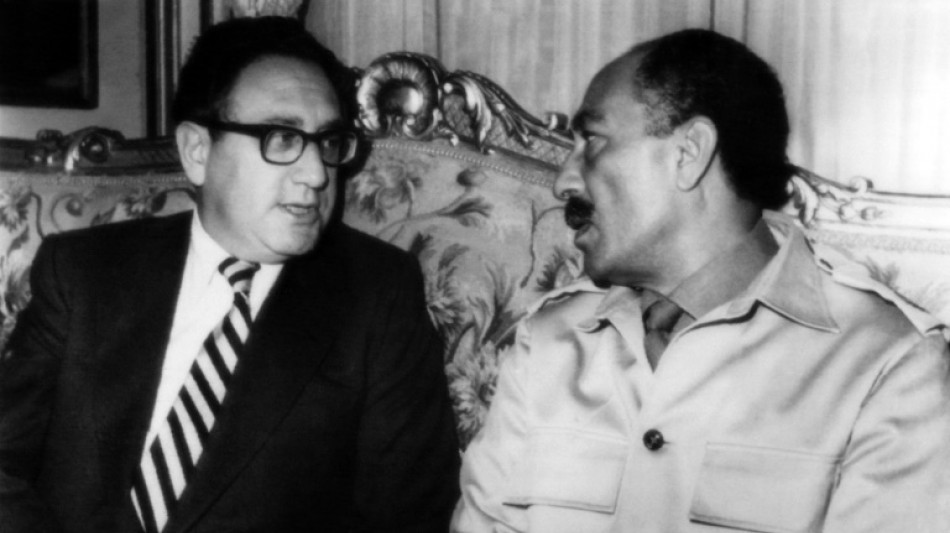
Kissinger transformed Middle East, where turmoil reigns again / Photo: - - AFP/File

 American Nobel laureate in medicine hopes to illuminate the brain

 Trump approves firing squad for convicted US military base shooter

 Grappling with 'homework scams,' US universities shun AI detectors

 Separatists win Quebec election in test for Canada PM

 Leaders visit Pacific atoll at frontline of climate change

 Yemen's Houthis claim striking Riyadh airport, other Saudi sites

 Best-selling British author Jeffrey Archer dies aged 86

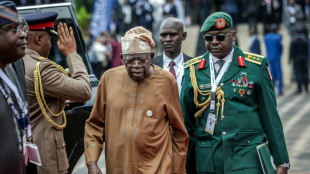 Military plane crash kills 32 in Nigeria

 Olise powers France to win over Belgium in Nations League

 High-flying Blazy turns to birdlife at Chanel
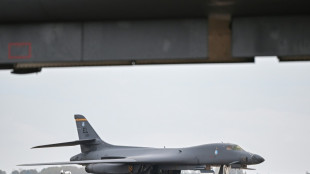
 Riyadh's allies pledge troops as Yemen, Saudi Arabia attack Houthis

 Clashes erupt outside Kosovo parliament over war crimes court

 Milan's Saelemaekers suffers ankle setback, faces lengthy spell out
 Rubio arrives in Iceland to push for greater US presence in Arctic
 Putin allows Italy's UniCredit to sell part of Russian business

 Djokovic into China Open final as Medvedev out for hitting fan with ball

 ICC unseals arrest warrants for Taliban education ministers

 Modric hopes fans back Croatia against Spain after England shame

 Bolsonaro rides right-wing surge into Brazil's election runoff

 Turkey blocks X account of British reporter

 Ukraine says using AI robot guns to shoot down new Russian drones
 At Oct 7 memorial, Netanyahu says will be no Hamas rule in Gaza

 Ukraine blames Russia for deadly sinking of Turkish ship in Black Sea
 UN rights council slams Taliban's 'oppression' of women

 Norway eyes partial ban of smart glasses
It was the original shuttle diplomacy. Nearly 50 years ago, Henry Kissinger was flying across the Middle East, seeking a new US-led order following war between Israel and Arab states.
Kissinger, the titan of US diplomacy who died Wednesday at 100, left a deeply controversial legacy in much of the world but, at least inside the United States, he won wide praise for transforming Middle East politics.
Yet the region has still not found peace, with Kissinger's death dueling for headline space with tales of carnage in the war between Israel and Palestinian militants Hamas.
The 1973 Yom Kippur War, in which Egypt and Syria attacked Israel on the Jewish holiday, came as Kissinger was at the pinnacle of influence, with president Richard Nixon embroiled by the Watergate scandal and believed to be drinking heavily.
Kissinger found that Egyptian leader Anwar Sadat, who would later be assassinated, was eager to shift his focus from Israel to boosting the troubled economy of the Arab world's most populous country.
"He quickly grasped the strategic opening that President Sadat and his actions offered," said Gordon Gray, a veteran former US diplomat in the Arab world.
Kissinger was able to be a tough negotiator and "very tenacious" when required, said Gray, now a professor at George Washington University.
- US interest first -
Mourning Kissinger as he met the current secretary of state, Antony Blinken, Israeli President Isaac Herzog credited the late diplomat for having "laid the cornerstone of the peace agreement" between Israel and Egypt.
But Kissinger, the arch-realist who believed all countries would ruthlessly pursue self-interest, himself did not speak of peace accords but rather simply of agreements not to go to war.
A key goal -- on which Kissinger scored major success -- was to weaken the rival Soviet Union, which lost Egypt as an ally.
Salim Yaqub, a historian of US foreign policy at the University of California, Santa Barbara, said the Kissinger strategy was at once "brilliant" and "destructive."
Kissinger, reading Sadat's intentions, paid lip service to addressing other regional issues but knew Egypt would agree its own deal.
"What Kissinger realized was that once Egypt was taken out of confrontation with Israel, once Egyptian power was subtracted from the Arab-Israeli military equation, then the ability of other Arab actors who had claims against Israel -- Syria, Jordan, the Palestine Liberation Organization -- would be significantly diminished," Yaqub said.
Kissinger believed Israel then could more easily keep territories seized in 1967 -- the West Bank and Golan Heights, which Israel still holds, and the Gaza Strip, run by Hamas.
Kissinger left office after Jimmy Carter defeated Gerald Ford in the 1976 election. Carter, who sought a new foreign policy based on human rights, painstakingly negotiated the historic Camp David peace treaty between Egypt and Israel.
- Complicated Jewish identity -
Kissinger, whose family fled Nazi Germany, was the first Jewish secretary of state. But he was careful not to stress his Jewish identity -- especially around Nixon, notorious for anti-Semitic remarks.
Coldly cynical, Kissinger faced accounts, which he denied, that he sought to delay airlifting weapons to Israel in 1973, hoping Arab countries would negotiate better if they enjoyed some battleground victories.
In one Oval Office conversation, Kissinger scoffed at Israeli appeals for Washington to press Moscow to let Jews emigrate, quipping that it would not be a US concern even if the Soviet Union "put Jews in the gas chambers."
That comment, after it was released in 2010, prompted a rare public apology by Kissinger. In another unusual tone for Kissinger, after leaving office he gave a speech calling Israel's security a "moral imperative for all free people."
- Was caution right? -
Martin Indyk, a former US ambassador to Israel who wrote a glowing book on Kissinger's Middle East policy, said the late diplomat believed states would inevitably clash and so it was best not to pursue peace compromises but to establish an order, much as Austrian diplomat Metternich did in Europe after the Napoleonic wars.
Indyk, involved in the last major attempt to broker Israeli-Palestinian peace a decade ago, acknowledged at a 2021 launch for his book that he did not proceed with Kissinger's sense of caution.
By rushing peace instead of incremental steps, "in the end it blew up in our faces," he said.
But Yaqub, the historian, said Kissinger's refusal to take up the Palestinian issue proved "quite catastrophic."
"It's not all Kissinger's fault. There are many missteps by people who came after him," he said.
"But the essential policy of refusing to take on board the Israel-Palestine issue, I think, has helped us get to the point where we are today."
A.Magalhes--PC