
-
 Ready, set, snooze: Sleep-deprived Japanese compete for best-rested
-
Changer+ Launches Stablecoin-First Self-Custodial Wallet to Make Stablecoins Easier to Use

-
 Falcons thump Saints 45-24 as New Orleans marks Katrina anniversary
-
White Sox down Guardians, Yankees on brink after Rays loss

-
 Tuvalu govt adviser says Australia overstepped in pre-COP visit
-
COP31 eyes modest steps as climate disasters multiply

-
 Asian stocks mixed despite tech-led Wall St record
-
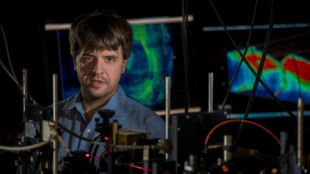
American Nobel laureate in medicine hopes to illuminate the brain
-
 Tens of thousands expected in Paris for high school protests
-
Trump approves firing squad for convicted US military base shooter

-
 AI borrowing binge rattles US markets
-
Grappling with 'homework scams,' US universities shun AI detectors

-
 Young Canadians sue government over alleged climate failures
-
Separatists win Quebec election in test for Canada PM

-
 White Sox down Guardians to take 2-0 series lead
-
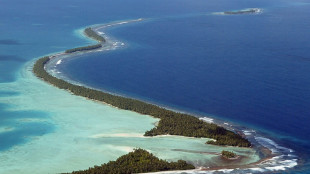
Leaders visit Pacific atoll at frontline of climate change
-
 NHL record-breaker Ovechkin says current season will be his last
-
Yemen's Houthis claim striking Riyadh airport, other Saudi sites

-
 France roar back in Nations League as Italy beat Turkey
-
Best-selling British author Jeffrey Archer dies aged 86

-
 Messi readies for final farewell in Argentina send-off
-
Military plane crash kills 32 in Nigeria

-
 Esposito seals Italy win over Turkey in Nations League
-
Olise powers France to win over Belgium in Nations League

-
 Russia downplays plague reports as Trump offers US help
-
High-flying Blazy turns to birdlife at Chanel

-
 Trump says US moved bombers from UK base after 'threats'
-
Riyadh's allies pledge troops as Yemen, Saudi Arabia attack Houthis

-
 Brazilian stocks surge to record after Bolsonaro election lead
-
Clashes erupt outside Kosovo parliament over war crimes court

-
 Leaders to visit Pacific atoll at frontline of climate change
-
Milan's Saelemaekers suffers ankle setback, faces lengthy spell out

-
 ICC gives more details about arrest warrants for Taliban ministers
-
Rubio arrives in Iceland to push for greater US presence in Arctic

-
 Nigeria's Tinubu confirms 32 dead after military plane crash
-
Putin allows Italy's UniCredit to sell part of Russian business

-
 'Reckless' AI firms can't control models, says whistleblower
-
Djokovic into China Open final as Medvedev out for hitting fan with ball

-
 Switching on brain cells: the Nobel-winning science of optogenetics
-
ICC unseals arrest warrants for Taliban education ministers

-
 Quebec votes as separatist surge poses test for Canada PM
-
Modric hopes fans back Croatia against Spain after England shame

-
 Euro slides as concerns about French debt mount
-
Bolsonaro rides right-wing surge into Brazil's election runoff

-
 Former Trump press secretary Leavitt joins Fox News
-
Turkey blocks X account of British reporter

-
 Djokovic advances to China Open final as Medvedev out for hitting fan with ball
-
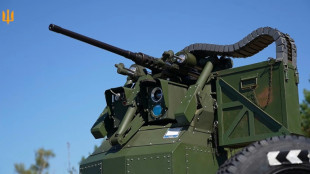
Ukraine says using AI robot guns to shoot down new Russian drones
-
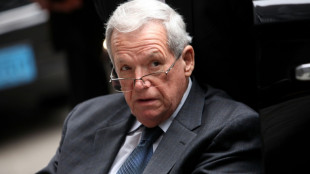 Disgraced former US House speaker dies at 84
-
At Oct 7 memorial, Netanyahu says will be no Hamas rule in Gaza

South Korea confirms first spy satellite in orbit
South Korea confirmed Saturday its first military spy satellite had reached orbit after a successful SpaceX rocket launch and that communication was established with ground control.
Seoul's reconnaissance satellite, carried by one of Elon Musk's SpaceX Falcon 9 rockets, intensifies a space race on the Korean peninsula after the North launched its own first military eye in the sky last week.
South Korea's defence ministry said Saturday its satellite reached orbit soon after the "KOREA"-emblazoned SpaceX rocket lifted off from the Vandenberg US Space Force Base in California at 10:19 am local time (1819 GMT) Friday.
"The satellite was launched 0319 Seoul time and was successfully separated from projectile 11 minutes later and put into targeted orbital trajectory," the ministry said in a statement.
"We have confirmed its communications with the ground command."
Reaching orbit means that South Korea now has its first domestically built spy satellite to monitor nuclear-armed North Korea.
Seoul plans to launch four additional spy satellites by the end of 2025 to bolster its reconnaissance capacity over the North.
Set to orbit between 400 and 600 kilometres (250 to 370 miles) above Earth, the South's satellite is capable of detecting an object as small as 30 centimetres (11.8 inches), according to the Yonhap news agency.
"Considering resolution and its capacity for Earth observation... our satellite technology ranks in the top five globally," a defence ministry official said, as quoted by Yonhap.
The launch comes less than two weeks after Pyongyang successfully put its own spy satellite into orbit.
"Until now, South Korea has relied heavily on US-run spy satellites" when it comes to monitoring the North, Choi Gi-il, professor of military studies at Sangji University, told AFP.
While the South has "succeeded in the launch of a military communications satellite, it has taken much longer for a reconnaissance satellite due to higher technological hurdles", he said.
Following the North's successful launch of its spy satellite, Choi said, "the South Korean government needs to demonstrate it can also pull this off".
- 'Destroy' US spy satellites -
The nuclear-armed North's launch drew international condemnation which the North Korean leader's powerful sister, Kim Yo Jong, called "absurd", declaring that her country would never relinquish its space programme.
North Korea is barred by successive rounds of UN resolutions from tests using ballistic technology, and analysts say there is significant technological overlap between space launch capabilities and the development of ballistic missiles.
On Saturday, Pyongyang threatened to "destroy" US spy satellites if Washington "tries to violate the legitimate territory" of North Korea, referring to its satellite programme.
If the United States attempts to breach its space rights "by weaponizing the latest technologies illegally and unjustly", said a spokesperson of the North's defence ministry in a statement carried by state-run KCNA, "the DPRK will consider taking responsive action measures for self-defence to undermine or destroy the viability of the US spy satellites".
Experts have said putting a working reconnaissance satellite into orbit would improve North Korea's intelligence-gathering capabilities, particularly over South Korea, and provide crucial data in any military conflict.
Since last week's launch, the North has claimed its new satellite has already provided images of major US and South Korean military sites.
It has not yet disclosed any of the satellite imagery it claims to possess.
The North's launch of "Malligyong-1" was Pyongyang's third attempt at putting such a satellite in orbit, after two failures in May and August.
Seoul has said the North received technical help from Moscow, in return for supplying weapons for use in Russia's war with Ukraine.
kjk-burs/sco
A.F.Rosado--PC