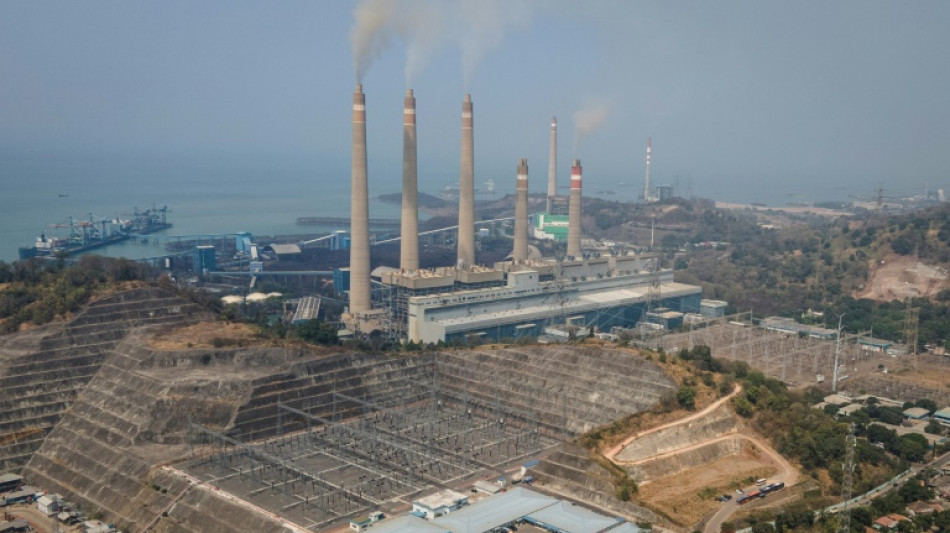
'National circumstances' key to COP28 fossil fuel deal: S.Africa minister / Photo: Ronald SIAGIAN - AFP

 EU vows AI rules will protect Europeans. Will they?

 Myanmar leader to visit Malaysia after migrant returns begin
 Germany's AfD poised to preside over state assembly for first time
 Australia's opposition vows 'largest cut to immigration' in country's history
 Ready, set, snooze: Sleep-deprived Japanese compete for best-rested

 Falcons thump Saints 45-24 as New Orleans marks Katrina anniversary

 Tuvalu govt adviser says Australia overstepped in pre-COP visit
 Asian stocks mixed despite tech-led Wall St record
 Tens of thousands expected in Paris for high school protests

 AI borrowing binge rattles US markets

 Young Canadians sue government over alleged climate failures
 White Sox down Guardians to take 2-0 series lead
 NHL record-breaker Ovechkin says current season will be his last
 France roar back in Nations League as Italy beat Turkey
 Messi readies for final farewell in Argentina send-off
 Esposito seals Italy win over Turkey in Nations League

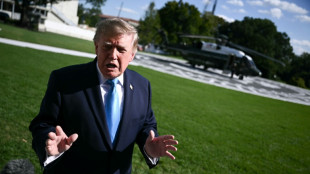 Russia downplays plague reports as Trump offers US help

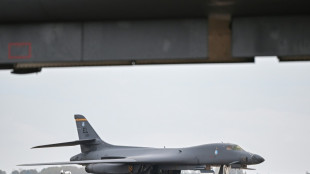 Trump says US moved bombers from UK base after 'threats'
 Brazilian stocks surge to record after Bolsonaro election lead
 Leaders to visit Pacific atoll at frontline of climate change

 ICC gives more details about arrest warrants for Taliban ministers
 Nigeria's Tinubu confirms 32 dead after military plane crash
 'Reckless' AI firms can't control models, says whistleblower

 Switching on brain cells: the Nobel-winning science of optogenetics
 Quebec votes as separatist surge poses test for Canada PM

Any eventual agreement on a fossil fuel phase-out at the COP28 climate summit in Dubai must take into account "different national circumstances", South Africa's environment minister Barbara Creecy told AFP.
Creecy has been appointed by the Emirati presidency to facilitate discussions on how countries are making progress on meeting their Paris Agreement climate goals.
The 2015 Paris deal saw nearly 200 nations agree to limit global warming to "well below" two degrees Celsius since the preindustrial era, and preferably a safer threshold of 1.5C.
Here Creecy talks to AFP about the challenges facing her country and her role in negotiations.
QUESTION: How is South Africa affected by the climate crisis?
ANSWER: We are already living through the climate crisis in our country.
The African continent is warming at twice the global average rate.
In our country we've already warmed by an average of 2.2 degrees (Celsius) and we are experiencing extreme weather events: we've had floods, we've had droughts, we've had wild fires, we've got storm surges and sea level rise.
We are committed to making the best contribution that we can make in the light of domestic circumstances, to reducing greenhouse gas emissions.
But we are also calling on the international community and in particular the developed countries to assist us in achieving our mitigation objectives, but also to assist us in building climate resilience.
Q: What are the challenges facing South Africa in its energy transition?
A: South Africa currently has energy insecurity and an energy shortfall.
We are 90 percent dependent on coal-fired generation. With the underperformance of coal-fired power stations, it's very difficult to continue with the scheduled decommissioning of coal-fired units.
However, we remain committed to the energy transition, but it will be very important to make sure that we have more megawatts of energy on the grid before we can decommission sites.
Q: Does the world need to agree on the phase-out of all fossil fuels at this COP28?
A: COP26 Glasgow agreed to a coal phase-down, so I suppose one would recognise that we need a fossil fuel phase-down, not just coal.
But I think the question that we confront as developing countries is the question of national circumstances: we have common responsibilities, but we have different national circumstances and different capabilities.
There are two issues here: developing countries shouldn't have to choose between building climate resilience and achieving the Sustainable Development Goals. We need to do both.
And the second issue is that we need assistance to achieve both. New, predictable finance at scale for achieving both is not forthcoming.
Q: Alongside your Danish counterpart, you have been appointed to facilitate negotiations between the ministers of almost 200 countries. What will your task be over the next few days?
A: From Friday we will have to be consulting with the different countries and different negotiating groups on their approach to the Global Stocktake (of the world's progress in respecting the Paris Agreement).
It's got to take account of the best available science and equity.
Like everything in COP, the devil's in the detail.
We will have to be sitting and listening very hard so that we can try and identify landing sites so that we have an agreement that is extremely ambitious, but also promotes the maximum equity that is required by developing countries.
Nogueira--PC