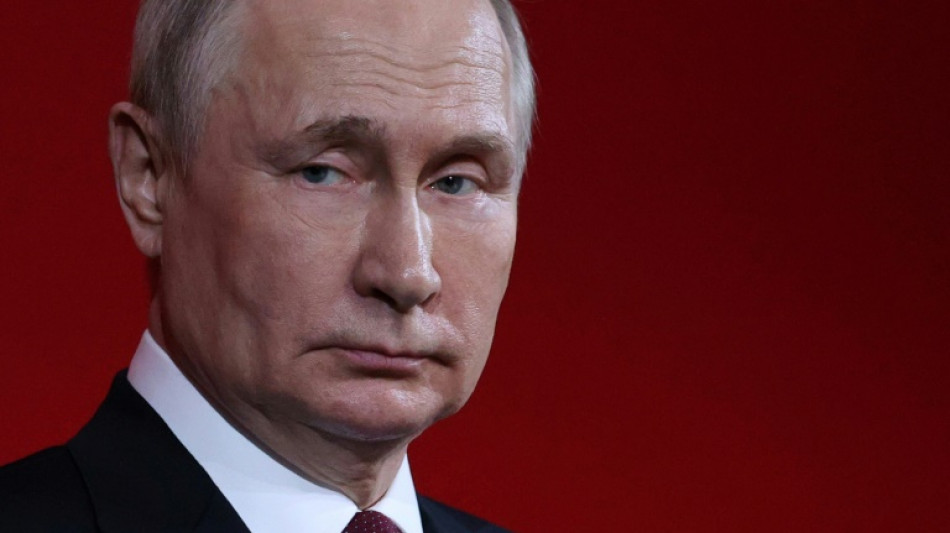
Key moments in Vladimir Putin's rule / Photo: Sergei BOBYLYOV - SPUTNIK/AFP/File

 EU vows AI rules will protect Europeans. Will they?

 Myanmar leader to visit Malaysia after migrant returns begin
 Germany's AfD poised to preside over state assembly for first time
 Australia's opposition vows 'largest cut to immigration' in country's history
 Ready, set, snooze: Sleep-deprived Japanese compete for best-rested

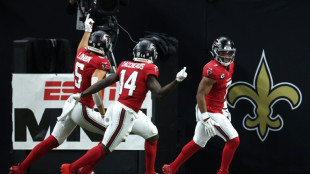 Falcons thump Saints 45-24 as New Orleans marks Katrina anniversary
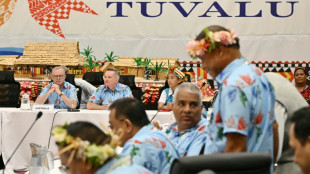 Tuvalu govt adviser says Australia overstepped in pre-COP visit
 Asian stocks mixed despite tech-led Wall St record
 Tens of thousands expected in Paris for high school protests
 AI borrowing binge rattles US markets

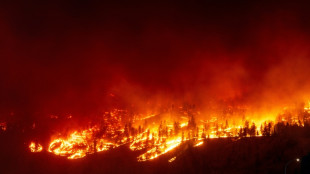 Young Canadians sue government over alleged climate failures
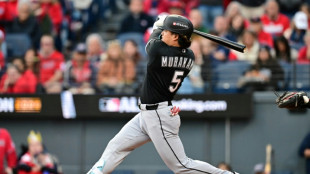 White Sox down Guardians to take 2-0 series lead
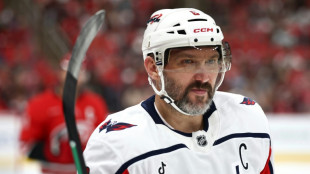 NHL record-breaker Ovechkin says current season will be his last
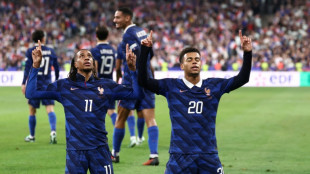 France roar back in Nations League as Italy beat Turkey
 Messi readies for final farewell in Argentina send-off
 Esposito seals Italy win over Turkey in Nations League

 Russia downplays plague reports as Trump offers US help

 Trump says US moved bombers from UK base after 'threats'
 Brazilian stocks surge to record after Bolsonaro election lead
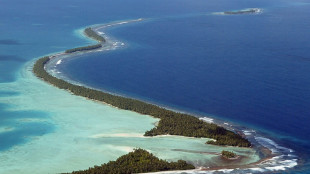
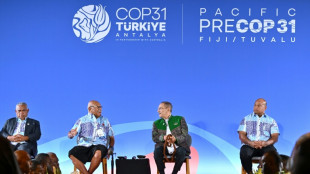 Leaders to visit Pacific atoll at frontline of climate change
 ICC gives more details about arrest warrants for Taliban ministers
 Nigeria's Tinubu confirms 32 dead after military plane crash

 'Reckless' AI firms can't control models, says whistleblower
 Switching on brain cells: the Nobel-winning science of optogenetics
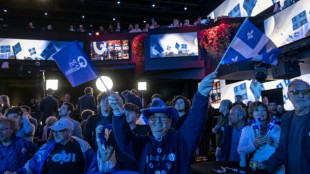
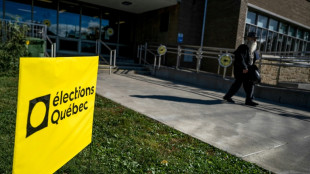 Quebec votes as separatist surge poses test for Canada PM
From the rise of the former KGB officer to the Kremlin to his invasion of Ukraine, AFP looks at key moments in the rule of Russian President Vladimir Putin, who is bidding to remain in power until 2030.
- Yeltsin's heir -
In August 1999, Russia's first president after the collapse of the Soviet Union, Boris Yeltsin, makes a little-known former head of the FSB security service (ex-KGB) his prime minister.
Less than five months later, Yeltsin resigns after succumbing to alcoholism and illness. Putin succeeds him, first as acting president and then as elected leader after a March 2000 vote.
- Trio of disasters -
Disaster strikes early in his presidency, when the nuclear-powered submarine Kursk sinks in the Barents Sea in August 2000 with 118 crew members aboard. Putin's muted response to the catastrophe is heavily criticised.
He also takes heat over his handling of two attacks by Chechen rebels -- a hostage-taking at a Moscow theatre in 2002, where 130 people are killed, and a siege of a school in Beslan in 2004, where 330 people are killed, including 186 children.
The security forces are accused of botching both rescue operations.
- War in Chechnya -
The theatre and school attacks came during the second of two wars launched by Putin against separatists in the predominantly Muslim North Caucasus region.
Between 1999 and 2009, the war leaves tens of thousands dead and the Chechen capital Grozny completely flattened.
- Putin tightens grip -
After re-election in 2004, Putin strengthens his grip on power.
He sidelines oligarchs such as Russia's richest man Mikhail Khodorkovsky, who is removed as CEO of the oil giant Yukos and jailed in 2005 on charges including tax fraud.
In 2006, the murder of investigative journalist Anna Politkovskaya and the fatal poisoning of former Russian spy Alexander Litvinenko in London spark global outrage.
- Medvedev interlude -
With Russia's constitution forbidding a third straight presidential term, Putin trades places with Dmitry Medvedev to become prime minister, and Medvedev is elected president in 2008.
Putin continues to wield significant influence as premier.
- Georgia intervention -
In August 2008, the Russian army intervenes in the former Soviet republic of Georgia to bolster the breakaway, pro-Russian territories of South Ossetia and Abkhazia.
The five-day war leave hundreds dead on both sides, including scores of civilians.
- Back in the Kremlin -
Putin returns to the presidency in 2012, and is re-elected again in 2018.
In 2020, authorities pass a constitutional reform package allowing him theoretically to remain in office until 2036, when he will turn 84.
- Critics poisoned -
His second stint as president brings a wider crackdown on dissent.
In 2015, a prominent Putin critic, former deputy premier Boris Nemtsov, is gunned down outside the Kremlin.
In 2018, the former Russian double agent Sergei Skripal is poisoned in England, and in 2020 the anti-corruption campaigner Alexei Navalny falls seriously ill after being poisoned. He is jailed in 2021.
Abroad, the Kremlin is accused of interfering in elections, particularly the 2016 election that brought Donald Trump to power in the United States, which it denies.
- Crimea and Sochi -
Early 2014 offers stark contrasts -- in February, the $50 billion Winter Olympics jamboree in the Russian city of Sochi offers a picture-postcard image of a modern superpower.
But a month later, Putin annexes the Crimean peninsula from Ukraine in response to the overthrow of a Russian-backed leader in Kyiv's Maidan revolution.
- Tipping the scales in Syria -
Putin also seeks to cement Russian influence beyond the former Soviet bloc.
In 2015, he enters the Syrian war on the side of President Bashar al-Assad, with Russian airstrikes on rebel-held areas helping tip the scales for the regime.
- Ukraine invasion -
On February 24, 2022, Russia invades Ukraine in what Putin presents as a "special military operation" to "demilitarise" and "de-nazify" the former Soviet state.
The West imposes crushing sanctions in response to the biggest invasion of a European country since World War II, marked by multiple allegations of war crimes and crimes against humanity.
Russian forces, who rely heavily on mercenaries from the Wagner group, fail to take Kyiv but occupy a swathe of territory in Ukraine's east and south.
- Surviving rebellion -
In June 2023, Wagner leader Yevgeny Prigozhin leads a short-lived mutiny against Moscow's military leadership that Putin describes as a "stab in the back".
Two months later, Prigozhin dies in a plane crash over Russia.
By the end of 2023, with Ukraine's much-touted counteroffensive stalling and Russia's oil revenues soaring, Putin is in ebullient form.
Despite being wanted by the International Criminal Court for alleged war crimes, he visits the United Arab Emirates and Saudi Arabia.
burs-cb/js
F.Santana--PC