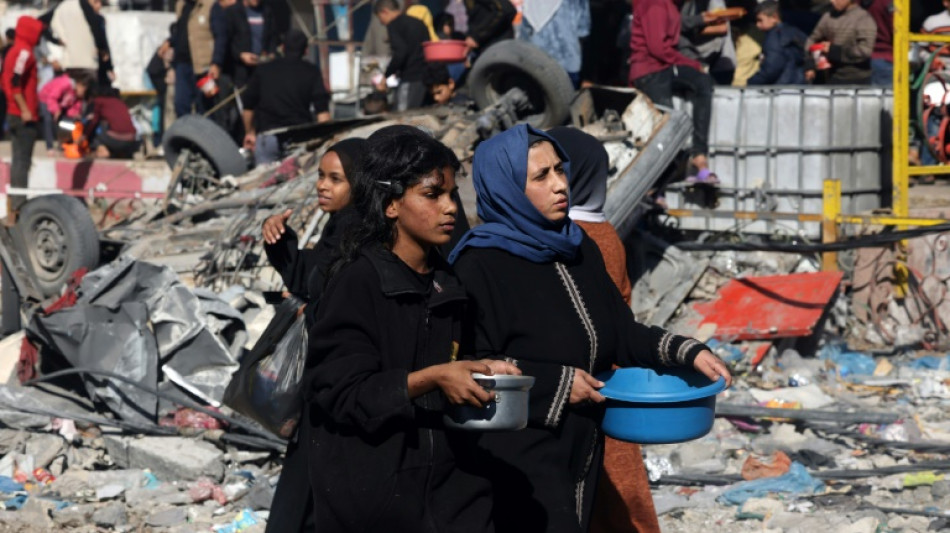
Menstrual periods an ordeal, health risk for Gaza women and girls / Photo: MOHAMMED ABED - AFP

 Moscow denies sanitary measures over plague reports
 Samoa look to recreate 2022 final run at Rugby League World Cup

 Asian stocks mostly up after tech-led Wall St record

 German factory orders plunge as recovery still fragile

 Coco Gauff calls out online racism following China open video review

 KVB Accelerates Middle East Footprint with Strategic MENA Regional Expansion
 Purple reign: Philippines seeks to keep grip on ube throne

 Seoul weighs steps to force North Korea landmine apology

 Yemen's Houthis say struck Riyadh airport, other Saudi sites
 Changer+ Launches Stablecoin-First Self-Custodial Wallet to Make Stablecoins Easier to Use

 White Sox down Guardians, Yankees on brink after Rays loss

 COP31 eyes modest steps as climate disasters multiply

 American Nobel laureate in medicine hopes to illuminate the brain
 Trump approves firing squad for convicted US military base shooter

 Grappling with 'homework scams,' US universities shun AI detectors
 Separatists win Quebec election in test for Canada PM

 Leaders visit Pacific atoll at frontline of climate change

 Yemen's Houthis claim striking Riyadh airport, other Saudi sites

 Best-selling British author Jeffrey Archer dies aged 86

 Military plane crash kills 32 in Nigeria

 Olise powers France to win over Belgium in Nations League

 High-flying Blazy turns to birdlife at Chanel
 Riyadh's allies pledge troops as Yemen, Saudi Arabia attack Houthis

 Clashes erupt outside Kosovo parliament over war crimes court

 Milan's Saelemaekers suffers ankle setback, faces lengthy spell out
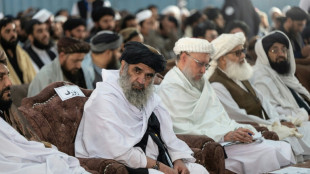
Women and girls getting their periods in Gaza face humiliating conditions and infections, forced to use diapers or scraps of cloth after more than two months of war.
Food, water and sanitary items are in desperately short supply across Gaza as around 80 percent of its 2.4 million people have been displaced by the conflict between Israel and Hamas.
"I cut up my kid's clothes or any piece of cloth I find, and I use them like sanitary towels for my period," said 25-year-old Hala Ataya in the southern city of Rafah where many have fled.
"I barely shower every two weeks," she added.
Forced to leave her home in Jabalia refugee camp in northern Gaza, she came with her three children to a United Nations-run school, sharing a toilet and shower with hundreds of others.
The stench is nauseating in the toilet, which is filled with flies.
The streets of Rafah, adjacent to the Egyptian border, have been transformed into open-air latrines.
Piles of rubbish cover the city, which has become a vast refugee camp as most Gazans have been prevented from leaving the territory.
"We've gone back to the Stone Age. There's no security, no food, no water, no hygiene. I'm ashamed, I feel humiliated," said Samar Shalhoub, 18, who was displaced from Gaza City.
She has been surviving in various makeshift shelters which she described as overflowing with "filth".
The war was triggered by the unprecedented October 7 attacks by Hamas militants who killed around 1,200 people in Israel, mostly civilians, according to local officials.
Retaliation by the Israeli military has killed around 18,000 Palestinians, also mostly civilians, according to the latest toll by the health ministry in Hamas-run Gaza.
- 'She started to cry' -
Unable to obtain sanitary products, Shalhoub has been using rags when she gets her period which have caused "chafing and skin infections".
Requests for contraceptive pills have quadrupled as women seek to control their periods, said Marie-Aure Perreaut Revial, of Doctors Without Borders (MSF).
ActionAid said there was little water for washing, and that some shelters had only one shower for every 700 people and one toilet for every 150.
"There's absolutely nothing: no privacy, no soap to keep themselves clean, no menstrual supplies," the NGO said.
Ahlam Abu Barika, facing her third month of displacement, described personal hygiene as a "daily battle".
"Women wear diapers or baby swaddling cloths. There's not enough water," said Abu Barika.
She has been eating and drinking less -- to give more to her five children and to limit her trips to the toilet.
"I've lost 15 kilos," she said.
Action Against Hunger, another NGO, said many women's clothes were stained with menstrual blood and they were "using period products for longer than anticipated, increasing the risk of infection."
In a classroom serving as a bedroom for displaced Gazans, Umm Saif said her five daughters were "all using Pampers" for their periods.
Diaper prices have almost doubled since the war so they cut each one in two, but one daughter still needed to use scraps of cloth.
"She started to cry, but I can't do anything," said Saif.
L.Mesquita--PC