-
 Kenya reports first-ever Ebola death
-
Le Pen vows drastic cost savings to prevent French 'default'

-
 Tennis world No.1 Sinner's season over due to knee injury
-
'Eats through a straw': French teens wounded in high school protests
-
 Yemen's Houthis claim attack on Riyadh airport, deny losing territory
-
Thousands mass in France for high school protests

-
 7-Eleven exits India amid mounting competition
-
Moscow denies sanitary measures over plague reports

-
 The alleged murder by US marine on Okinawa: five things to know
-
Samoa look to recreate 2022 final run at Rugby League World Cup

-
 End of an era as Messi prepares to hang up Argentina boots
-
Asian stocks mostly up after tech-led Wall St record

-
 Superstar duo headline strong New Zealand squad for Rugby League World Cup
-
German factory orders plunge as recovery still fragile
-
 South Korea warns of possible AI use in banking hacks
-
Coco Gauff calls out online racism following China open video review

-
 EU vows AI rules will protect Europeans. Will they?
-
KVB Accelerates Middle East Footprint with Strategic MENA Regional Expansion

-
 Myanmar leader to visit Malaysia after migrant returns begin
-
Purple reign: Philippines seeks to keep grip on ube throne
-
 Germany's AfD poised to preside over state assembly for first time
-
Seoul weighs steps to force North Korea landmine apology
-
 Australia's opposition vows 'largest cut to immigration' in country's history
-
Yemen's Houthis say struck Riyadh airport, other Saudi sites

-
 Ready, set, snooze: Sleep-deprived Japanese compete for best-rested
-
Changer+ Launches Stablecoin-First Self-Custodial Wallet to Make Stablecoins Easier to Use

-
 Falcons thump Saints 45-24 as New Orleans marks Katrina anniversary
-
White Sox down Guardians, Yankees on brink after Rays loss

-
 Tuvalu govt adviser says Australia overstepped in pre-COP visit
-
COP31 eyes modest steps as climate disasters multiply
-
 Asian stocks mixed despite tech-led Wall St record
-
American Nobel laureate in medicine hopes to illuminate the brain
-
 Tens of thousands expected in Paris for high school protests
-
Trump approves firing squad for convicted US military base shooter

-
 AI borrowing binge rattles US markets
-
Grappling with 'homework scams,' US universities shun AI detectors

-
 Young Canadians sue government over alleged climate failures
-
Separatists win Quebec election in test for Canada PM

-
 White Sox down Guardians to take 2-0 series lead
-
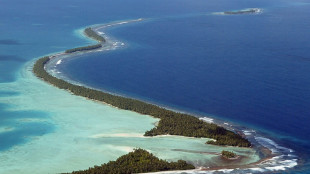
Leaders visit Pacific atoll at frontline of climate change
-
 NHL record-breaker Ovechkin says current season will be his last
-
Yemen's Houthis claim striking Riyadh airport, other Saudi sites

-
 France roar back in Nations League as Italy beat Turkey
-
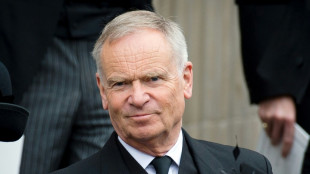
Best-selling British author Jeffrey Archer dies aged 86
-
 Messi readies for final farewell in Argentina send-off
-
Military plane crash kills 32 in Nigeria
-
 Esposito seals Italy win over Turkey in Nations League
-
Olise powers France to win over Belgium in Nations League

-
 Russia downplays plague reports as Trump offers US help
-
High-flying Blazy turns to birdlife at Chanel

Dubai climate summit adopts world-first 'transition' from fossil fuels
Nearly 200 nations meeting in Dubai on Wednesday approved a first-ever call for the world to transition away from fossil fuels, tackling the top culprit of climate change after years of avoidance although at-risk countries said far more action was needed.
After 13 days of talks and several sleepless nights in a country built on oil wealth, the Emirati president of the UN-led COP28 summit banged a gavel to signal the world had reached consensus.
"You did step up, you showed flexibility, you put common interest ahead of self-interest," said COP28 president Sultan Al Jaber, whose role as head of the United Arab Emirates' national oil company raised suspicion among many environmentalists.
Describing the deal as bringing "transformational change" on climate, Jaber said of the UAE's diplomacy: "We have helped restore faith and trust in multilateralism, and we have shown that humanity can come together."
EU climate chief Wopke Hoekstra called the agreement "long, long overdue", saying it had taken nearly 30 years of climate meeting to "arrive at the beginning of the end of fossil fuels".
But with the UN talks requiring consensus, Jaber carefully calibrated the text to bring onboard countries from islands that fear extinction from rising sea levels to oil giant Saudi Arabia, which led the charge to keep exporting its petroleum.
Toughening language from an earlier draft that was roundly denounced by environmentalists, the agreement calls for "transitioning away from fossil fuels in energy systems, in a just, orderly and equitable manner".
It calls for expanding action "in this critical decade" and recommits to no net greenhouse gas emissions by 2050 in hopes of meeting the increasingly elusive goal of checking warming at 1.5 degrees (2.7 Fahrenheit) above pre-industrial levels.
The planet has already warmed by 1.2 degrees and scientists say 2023 was likely the warmest in 100,000 years, as storms, droughts and lethal wildfires expand around the world.
- Islanders still alarmed -
The negotiator from the Marshall Islands had warned that an earlier draft marked a "death warrant" for his nation, which is just 2.1 metres (seven feet) above sea level.
The small islands did not block the Dubai deal, but a representative from Samoa criticised the language as too weak after contending the group had not arrived yet in the room at Dubai's sprawling Expo City when Jaber declared consensus.
"We have made an incremental advancement over business as usual when what we really needed is an exponential step change in our actions," Samoan chief negotiator Anne Rasmussen said on behalf of the island nations, drawing a standing ovation and polite applause from Jaber.
Brazil, which will lead the climate talks in 2025 in the Amazon, said that wealthy nations must now deliver on another key climate pledge -- providing assistance to worst-hit developing nations.
But US climate envoy John Kerry said that no side can ever achieve everything in negotiations and praised the deal as a sign a war-torn world can come together for the common good.
"I think everyone has to agree this is much stronger and clearer as a call on 1.5 than we have ever heard before, and it clearly reflects what the science says," Kerry said.
A Saudi representative voiced "gratitude" to the UAE efforts, calling the outcome a "great success".
The text stopped short of backing appeals during the summit for a "phase-out" of oil, gas and coal, which together account for around three-quarters of the emissions responsible for the planetary crisis.
But it goes well beyond Jaber's earlier draft that merely suggested that nations "could" reduce the consumption and production of fossil fuels, among other options.
Environmentalists virtually all saw the agreement as a step forward, although many cautioned that there will still far more to do.
"We are finally naming the elephant in the room. The genie is never going back into the bottle and future COPs will only turn the screws even more on dirty energy," said Mohamed Adow, director of the Power Shift Africa think tank, referring to the annual UN climate meetings known as Conferences of the Parties.
"Some people may have had their expectations for this meeting raised too high, but this result would have been unheard of two years ago, especially at a COP meeting in a petrostate," he said.
- More ambition, but with loopholes -
The agreement also made more explicit the near-term goals in the goal of ending net emissions by 2050.
It called for the world to cut greenhouse gas emissions by 43 percent by 2030 compared with 2019 levels.
But Jean Su of the Center for Biological Diversity, while seeing progress, said there were still "cavernous loopholes" for fossil fuels.
The agreement tackles only fossil use in energy, not in industrial areas such as production of plastics and fertiliser.
She also voiced alarm at the recognition of the role of "transitional fuels", which she saw as a codeword for producers of natural gas and other fossil fuels such as the United States on the grounds of energy security.
The deal backs a phase-down of "unabated" coal power -- meaning it preserves a role for the dirty but politically sensitive energy source if there is use of carbon capture technology, panned by many environmentalists as unproven.
V.Dantas--PC