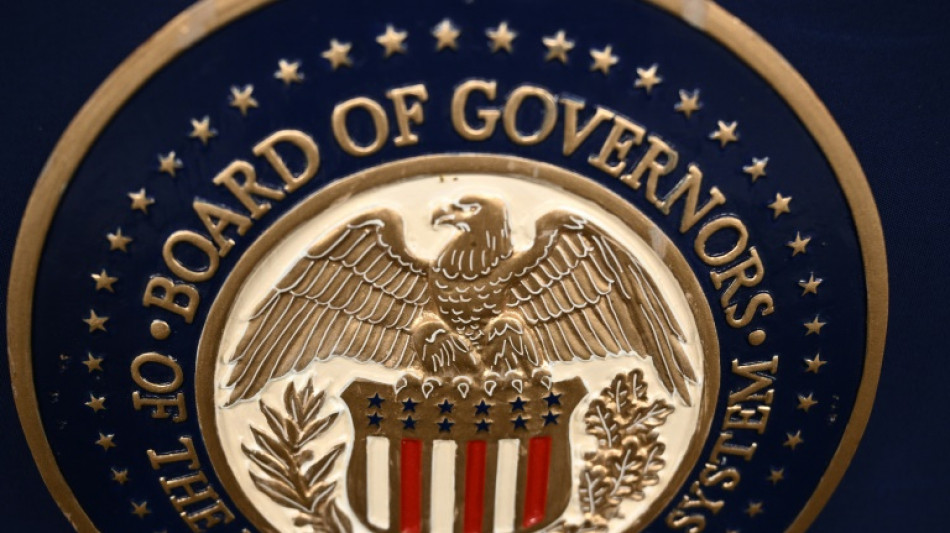
Has the Fed won the battle against inflation? / Photo: Brendan SMIALOWSKI - AFP

 Kenya reports first-ever Ebola death

 Tennis world No.1 Sinner's season over due to knee injury

 Yemen's Houthis claim attack on Riyadh airport, deny losing territory

 7-Eleven exits India amid mounting competition

 The alleged murder by US marine on Okinawa: five things to know

 End of an era as Messi prepares to hang up Argentina boots

 Superstar duo headline strong New Zealand squad for Rugby League World Cup

 South Korea warns of possible AI use in banking hacks

 EU vows AI rules will protect Europeans. Will they?

 Myanmar leader to visit Malaysia after migrant returns begin

 Germany's AfD poised to preside over state assembly for first time

 Australia's opposition vows 'largest cut to immigration' in country's history

 Ready, set, snooze: Sleep-deprived Japanese compete for best-rested

 Falcons thump Saints 45-24 as New Orleans marks Katrina anniversary

 Tuvalu govt adviser says Australia overstepped in pre-COP visit

 Asian stocks mixed despite tech-led Wall St record

 Tens of thousands expected in Paris for high school protests

 AI borrowing binge rattles US markets

 Young Canadians sue government over alleged climate failures

 White Sox down Guardians to take 2-0 series lead

 NHL record-breaker Ovechkin says current season will be his last

 France roar back in Nations League as Italy beat Turkey
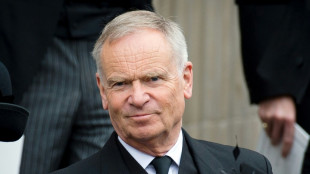
 Messi readies for final farewell in Argentina send-off
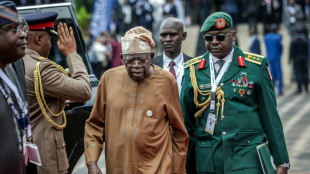
 Esposito seals Italy win over Turkey in Nations League

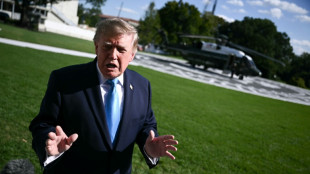 Russia downplays plague reports as Trump offers US help

The US Federal Reserve's decision to hold its key lending rate on Wednesday and pencil in three interest rate cuts next year has fueled optimism that its inflation battle is won.
Following the Fed's decision, the Dow Jones Industrial Average index surged to an all-time high, while yields on US government bonds plummeted, reducing borrowing costs on everything from car loans to home mortgages.
Against the backdrop of falling inflation, low unemployment and persistent economic growth, analysts are increasingly asking the question: Has the Fed won the battle against inflation?
What has the Fed accomplished?
As the US economy was rebounding from the Covid-19 pandemic, a supply-side crunch caused a rapid surge in inflation.
In March 2022, amid a rise in energy prices following Russia's invasion of Ukraine, the Fed began aggressively hiking interest rates in a bid to control rising prices.
Over the next 18 months, policymakers lifted the Fed's key lending rate to a 22-year high, and successfully cooled consumer inflation from a 40-year high of 9.1 percent last year to just over 3.1 percent in November 2023.
The economic picture today is a surprisingly positive one, with unemployment at close to historic lows, and an economy that is on track to avoid a damaging recession.
Fed policymakers are increasingly confident that they are on track to achieve this rare monetary policy success known as a "soft landing."
The Fed now expects economic growth to rise to 2.6 percent this year, before slowing down in 2024.
But despite the good news, the Fed's favored inflation gauge remains stuck stubbornly above its long-run target of two percent, underscoring the challenges that still remain.
What happened this week?
On Wednesday, the Fed voted to hold interest rates steady for a third straight meeting, and predicted 0.75 percent points of interest rate cuts in the year ahead.
Fed Chair Jerome Powell told reporters that the language of the Fed's decision had been changed as "an acknowledgement that we believe that we are likely at or near the peak rate for this cycle."
He added that policymakers had even discussed when it would be "appropriate" for the Fed to begin cutting interest rates -- while refusing to rule out another hike.
On the face of it, Powell expressed a cautious view of unfolding events, as is often the case among central bankers.
But when compared against his recent threats to raise interest rates further, Powell's remarks were seen as a sign that the Fed is confident it is winning the inflation fight.
"The Fed thinks that it is done," KPMG Chief Economist Diane Swonk wrote in a note published shortly after Powell's remarks on Wednesday.
The Fed's statement and economic projections "provided a more dovish signal than we or the market were expecting," Steve Englander, Standard Chartered Bank's head of North America macro strategy, wrote in a note to clients.
What risks remain?
The financial markets are increasingly convinced that the Fed is done hiking rates, and are pricing in as many as six cuts next year, according to CME Group data.
This is more aggressive than the Fed's own forecast, reflecting optimism that the US economy has turned the corner on inflation.
The major risk facing the Fed as it looks to pivot from its prolonged pause to interest rate cuts is that inflation returns.
An external shock, such as an escalation of the wars in Ukraine or Gaza, could cause another surge in food or energy prices, and complicate the Fed's battle to definitively slow the rate of price increases to two percent.
"Inflation is still too high, ongoing progress in bringing it down is not assured, and the path forward is uncertain," Powell told reporters on Wednesday.
L.Henrique--PC